


 844-937-8679
 Login
Login


What can you do with a master's in education?


Written by Michael Feder
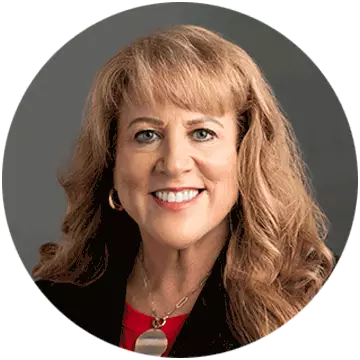
Reviewed by Pamela M. Roggeman, EdD, Dean, College of Education

For anyone looking to enhance their career in education, pursuing higher levels of education, like a master's in education, teaches skills employers look for in qualified candidates. A master’s degree in education can help specialize a student's career path and prepare them to take on leadership roles as well. This article explores some of the career paths open to individuals who earn a master’s degree in education.
What is a master's in education program like?
The curriculum in a master's in education program focuses on helping students build leadership, instructional and student-support skills.
Education isn’t just about teaching. Students interact both face-to-face and indirectly with principals, counselors, curriculum developers and administrators, in addition to teachers.
Leadership roles with a master's in education
From school principals to student behavior analysts, these roles can have a major impact on the community and the future. Please note that some jobs listed below may require additional education beyond a master's degree in education, such as licensure or training.
Principal
Overview: Whether they work at the elementary, middle or high school level, school principals oversee the entire learning environment for students. They manage the instruction of teachers and staff, as well as class schedules, defining course requirements, general instruction, discipline and school budgets.
Education requirements: This position typically requires a master’s degree in education leadership or education administration. To work in a public school, principals are generally required to achieve certification as school administrators, in addition to completing an education program at a master’s degree level.
Salary range: As of May 2024, elementary, middle and high school principals earned between $72,400 and $165,820, with a median wage of $104,070, according to BLS.
Job outlook: Employment of elementary, middle and high school principals is projected to decline 2 percent from 2024 to 2034, according to BLS.
Salary ranges are not specific to students or graduates of University of Phoenix. Actual outcomes vary based on multiple factors, including prior work experience, geographic location and other factors specific to the individual. University of Phoenix does not guarantee employment, salary level or career advancement. BLS data is geographically based. Information for a specific state/city can be researched on the BLS website.
BLS Occupational Employment Projections, 2024-2034 is published by the U.S. Bureau of Labor Statistics. This data reflects BLS’ projections of national (not local) conditions. These data points are not specific to University of Phoenix students or graduates.
Postsecondary education administrator
Overview: Postsecondary education administrators perform a number of roles at colleges and universities. They can work in different departments, ranging from admissions to the registrar’s office to student affairs. This can include work in undergraduate, graduate and doctoral programs. Their work is determined by the position they hold. For example, an admissions officer is a type of administrator who determines how many and which students to admit to a school.
Education requirements: A master’s degree is typical for this role, according to BLS.
Salary range: In May 2024, postsecondary education administrators earned between $63,820 and $212,420, with a median wage of $103,960, according to BLS.
Job outlook: Employment of postsecondary education administrators is projected to grow 2% from 2024 to 2034, according to BLS.
Instructional roles with a Master's in Education
Instructional coordinator
Overview: By managing the overall school curriculum and teaching standards of a school or school district, instructional coordinators make sure that students and teachers are aligned and poised for success. Instructional coordinators can work in elementary and secondary schools, colleges and professional schools, as well as for state or local governments.
Education requirements: This position typically requires completion of an education program at the graduate level. A master's degree in education or curriculum development and instruction is a common prerequisite, according to BLS. In addition, instructional coordinators may require certification, like a teaching license or an education administrator license to work in public schools.
Salary range: As of May 2024, instructional coordinators earned between $46,560 and $115,410, with a median wage of $74,720, according to BLS.
Job outlook: Employment of instructional coordinators is projected to grow 1% from 2024 to 2034, according to BLS.
School counselor
Overview: School counselors take a personal approach to developing student skills, assessing student interests and strengths, and helping students plan their work or education future after they graduate. This can involve work at several grade levels, as well as collaboration with parents and teachers.
Education requirements: Almost every state requires that school counselors have a master’s degree in school counseling or psychology, according to BLS. In addition, state-by-state certification and credentials will also likely be required, which means a graduate degree as a prerequisite.
Salary range: School and career counselors and advisors earned between $43,580 and $105,870, with a median wage of $65,140 in May 2024, according to BLS.
Job outlook: Employment of school and career counselors and advisors is projected to grow 4% from 2024 to 2034, according to BLS.
Student behavior analyst
Overview: Behavior analysts in schools help students overcome mental and social disabilities that can be obstacles to their educational development. They perform psychological work based in practice and theory to help students succeed. They can help teachers accommodate the needs of particular students.
Education requirements: Most student behavior analysts require a specialized degree, such as a master’s degree in special education. A state-issued certification and/or licensure will also likely be required to work in public schools. While University of Phoenix has degrees in special education, job outcomes do not directly align to this position.
Salary range: BLS does not offer provide salary information for this role at this time.
Job outlook: BLS does not offer job outlook projection for this role at this time.
Special education teacher
Overview: Special education teachers focus on designing curriculum and teaching students with learning, mental, emotional, and physical disabilities. Special education teaching can be demanding but rewarding. Teaching with an emphasis on the unique needs of students with disabilities, these educators implement a curriculum to make sure that such disabilities don’t get in the way of teaching students the skills they need to succeed.
Education requirements: A bachelor’s degree is required at minimum to begin teaching special needs students, according to BLS. Teachers in this field will also likely need to gain field experience in a student-teaching education program. A master’s degree in special education can enhance the skill set of a current teacher, such as in the area of classroom management.
Salary range: As of May 2024, special education teachers earned between $47,380 and $103,290, with a median wage of $64,270 according to BLS.
Job outlook: Overall employment of special education teachers is projected to decline 1 percent from 2024 to 2034, according to BLS.
Interested in a Master's in Education?
Professionals exploring career advancement in education may find that a master’s in education supports paths in leadership, instruction and student services. University of Phoenix education programs include several master's degrees:
- Master of Arts in Education/Administration and Supervision
- Master of Arts in Education/Adult Education and Training
- Master of Arts in Education/Curriculum and Instruction
- Master of Arts in Education/Elementary Teacher Education
- Master of Arts in Education/Secondary Teacher Education
Contact a University of Phoenix admissions representative with questions.



ABOUT THE AUTHOR
A graduate of Johns Hopkins University and its Writing Seminars program and winner of the Stephen A. Dixon Literary Prize, Michael Feder brings an eye for detail and a passion for research to every article he writes. His academic and professional background includes experience in marketing, content development, script writing and SEO. Today, he works as a multimedia specialist at University of Phoenix where he covers a variety of topics ranging from healthcare to IT.
ABOUT THE REVIEWER
As dean of the University of Phoenix College of Education, Pamela Roggeman has spent over a decade in higher education teacher preparation in both the public and private sector. Her experience has included national partnerships that help to advance thought leadership in the field of education. Dr. Roggeman also serves as the President of the Arizona Educational Foundation’s Board of Directors.

This article has been vetted by University of Phoenix's editorial advisory committee.
Read more about our editorial process.