


 844-937-8679
 Login
Login


Building a career as a working mom

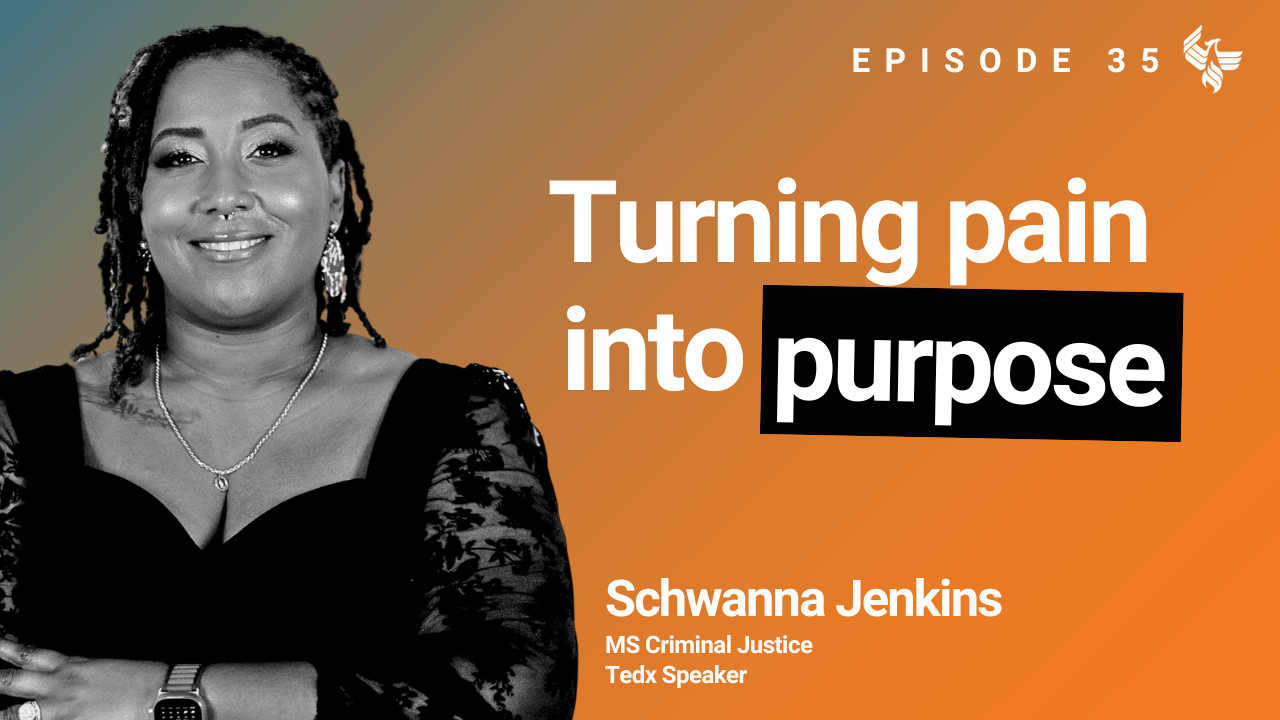
Listen to the podcast episode How a Working Mother Built a Career in Mental Health Advocacy
In this episode of Degrees of Success, University of Phoenix alum Schwanna Jenkins shares how she navigated single motherhood, career pivots, and higher education while becoming a mental health advocate and epilepsy awareness leader.
Chapters in this video:
00:00 - The Journey of Purpose and Service
07:27 - Navigating Life's Challenges and Military Service
14:09 - Finding a Path in Social Work
17:30 - The Impact of Epilepsy on Family Life
23:48 - Advocacy and Raising Awareness for Epilepsy
Chapter 1: The Journey of Purpose and Service
Schwanna Jenkins (0:00)
I started asking myself first, I was asking why. Why him? Why me? Why us? Why is he going through these things? Because God knew I would take care of this kid. He knew I would fight hand, tooth, nail, whatever I needed to do to make sure this kid not only lives, but thrives. And so at this point, I’m honored. I’m honored to know that I was entrusted to be his mother and to be here to fight for him and everyone who is also living with epilepsy.
Host (0:36)
Hello and welcome to the Degrees of Success podcast. I’m your host, Keith Chandler.
Host (0:41)
Today, we’re joined by Schwanna Jenkins, a University of Phoenix alum whose journey is rooted in purpose and impact. Schwanna is a dynamic leader, speaker, and advocate who has dedicated her career to empowering others and creating opportunities for growth.
Host (0:57)
From her early realization that helping others was her calling, to her work in education and leadership, and even sharing her insights on a TEDx stage, Schwanna’s story is one of resilience, vision, and service.
Host (1:09)
Please welcome Schwanna Jenkins. Thank you for joining Degrees of Success, Schwanna.
Schwanna Jenkins (1:12)
Thank you, Keith. I appreciate the opportunity to join you all and chit-chat with you today.
Host (1:17)
Looking forward to our conversation.
Host (1:20)
I want to start off by going back a little bit, because you had mentioned that you knew from a young age that helping others was your calling. That’s such a powerful statement. Can you take us back to that moment of what exactly called you to serve others when you were so young?
Schwanna Jenkins (1:39)
I naturally have always been not just a leader, but also had the urge to want to help people. Sometimes it was met with some resistance. Other times, just the gratitude of, “You heard what I said. Thanks for listening. I appreciate what you were able to do.” I think that started somewhere between probably as young as five or six.
Schwanna Jenkins (2:05)
My grandmother, she not only named me, but every time I turned around, she would give you the shirt off her back. I remember friends of hers coming to stay with her and my grandfather a couple of times, and they might have been on hard times. She would literally open her door and the kitchen to them, and that would be it.
Schwanna Jenkins (2:27)
Just seeing her do that, and seeing her butt in sometimes too when she would overhear people saying they needed help, definitely caused me to feel like, you know what, that’s a really great thing to do just to be able to help folks.
Schwanna Jenkins (2:41)
And after that, between that and being the oldest of three siblings plus a bonus sibling, that was my role: just to help and pitch in instead of waiting for someone to say they needed something, almost anticipating people’s needs around me.
Host (2:52)
I was the youngest of three, and so you were the oldest. How did that inform your family and sibling dynamic in taking on that leadership role?
Host (3:07)
What role did you play for your family along that journey?
Schwanna Jenkins (3:11)
I’m going to say, as much as my siblings hate for me to say it sometimes now, I was the bossy older sibling.
Host (3:20)
Would they describe you as the bossy one?
Schwanna Jenkins (3:20)
Yes. Even to this day now, when I say “my little sister” or “my youngest sister,” they’re like, “You know I’m grown, right? You don’t have to keep calling me that.” I’m like, “Oh, okay.”
Schwanna Jenkins (3:28)
But I was almost like a third parent to them. Sometimes they loved it, other times they were like, “Why are you always telling on us?” And I’d say, “Okay, well, sorry. Don’t do that next time.”
Schwanna Jenkins (3:45)
I remember even when I first went into the Army and then came back home to visit my dad and my siblings, one thing you learn in the military is language. I remember thinking to myself that when I come home, I can’t use that language around them because I don’t want them picking it up and thinking it’s okay to say those kinds of things.
Schwanna Jenkins (4:00)
So I would go around the house curbing what I was saying. And then the next time I knew it, they were picking it up, so I’d be like, “Oh—” and they’d be like, “What?” and I’d say, “Never mind, it’s okay.”
Schwanna Jenkins (4:26)
As an older sibling, I do believe birth order is a real thing. As the oldest, even without someone telling you, you have this desire to make sure you’re a great example for the people behind you, and maybe even make it easier for them when they come behind you.
Schwanna Jenkins (4:55)
Other times I’m sure it was bothersome to my siblings, you know, “You’re Schwanna’s sister.” Yeah, I have a name too, but okay.
Schwanna Jenkins (5:03)
But I definitely wanted to make a great example for them so they would know they can do amazing things too, despite some of the things we might have seen.
Host (5:21)
You had mentioned your military service. Thank you so much for your service. Can you describe what your calling to the military was like? What drew you to that level of service?
Schwanna Jenkins (5:33)
This is a great story for Degrees of Success for Phoenix because it’s important for people to understand that wherever your journey takes you, when they see where you are today, it wasn’t always that easy. You had to go through some things. And just like the phoenix, we rise from the ashes and keep it moving.
Schwanna Jenkins (5:58)
I went right after high school, actually with the persuasion of my best friend. She was going and said, “Hey sis, I think we should do this together.” And I was like, “Okay, you said you’re going to pay for school, right? Because I’m going to college.” She said yes, and I went in with her.
Schwanna Jenkins (6:12)
We both had 91 Bravo jobs. I was there for a very short time because during training my arches fell and I hurt my knee. At the time they asked if I wanted to continue to the next training or go home. I said I wanted to go home because I felt like I needed to pick up the pieces and figure out what to do next.
Schwanna Jenkins (6:43)
I came home and instantly stepped right back into helping my dad and my sisters, working two jobs, and then getting my associate’s in political science from Central Piedmont Community College.
Schwanna Jenkins (7:04)
Initially I thought, “My God, this is not what I wanted to do. I planned on doing all these other things in the military.” But then I realized everything happens for a reason. And somewhere in there I decided this was never really my dream. This was my best friend’s idea, and I wanted to go along with her because she’s like a sister to me.
Schwanna Jenkins (7:24)
So at some point I was okay with it, and I just moved forward.
Chapter 2: Navigating Life’s Challenges and Military Service
Schwanna Jenkins (7:29)
I developed a mantra years ago. If something tragic happens, whether it’s a loss or anything else, I give myself 24 hours. 24 hours to feel all the emotions. If I need to ugly cry, if I need to be in the floor, all of that.
Schwanna Jenkins (7:48)
But after the 24th hour, what do you do the next hour? What’s next? You don’t get to stay in that space, because staying in that space is what leads a lot of people to make permanent decisions based on temporary feelings.
Schwanna Jenkins (8:01)
So I decided in that moment, I had to do something else. I had to plot forward on a new path.
Host (8:10)
That leads perfectly into what you’re doing now. Tell us a little bit about your work today and a little about your education journey that led you to where you are today.
Schwanna Jenkins (8:21)
After I got my associate’s in political science, I worked for a while. I was trying to figure out what I wanted to do next. I had said as a little kid that I wanted to go to law school because I love to argue and debate. My dad will still tell you I like to do that with him now.
Schwanna Jenkins (8:44)
I was working at Bank of America around 2010, and a good friend of mine said, “Hey, you know Bank of America has an agreement with University of Phoenix that gives you a small percentage off your tuition, and you can pursue your degree.” I said, “Okay, let me look into this.”
Schwanna Jenkins (9:10)
At the time I was newly separated from my husband with my son. I had this handsome little three-year-old kid, and I was trying to navigate what life looked like now. So I got into Phoenix, and the process was very easy.
Host (9:34)
Was that your first experience with higher education too?
Schwanna Jenkins (9:39)
Yes. Outside of my associate’s at Central Piedmont Community College, that was my first real experience with, “This paper is due,” and “You have a group assignment to do.”
Schwanna Jenkins (9:55)
I pursued my bachelor’s in criminal justice, and I graduated from Phoenix in 2014. It was such a moment for me. I made sure my son was there because I wanted him to understand, “This is why I always tell you to do your homework.”
Schwanna Jenkins (10:18)
I actually got into law school. I think I scored like a 170 on my LSAT. I went to a strong school of law. I’m a little bit of a nerd about that.
Schwanna Jenkins (10:37)
I went for two years, but the school unfortunately ended up closing down. Several of my classmates dispersed, and I thought, “I can’t leave because I’m at the bank, I’m a single mom, and my son has already been diagnosed with epilepsy.” I needed to stay here.
Schwanna Jenkins (11:01)
Again, I was looking at life and trying to pick up the pieces: what do I do next? I leaned on faith, talked to peers, and figured out what that would look like.
Schwanna Jenkins (11:15)
I saw a lot of people in the bank moving around and making a significant amount of money in tech, so I thought maybe I needed to go for that.
Schwanna Jenkins (11:23)
I went back to school, and University of Phoenix welcomed me with open arms. I pursued my master’s in criminal justice cybersecurity and graduated in 2018.
Schwanna Jenkins (11:49)
I got into tech, and it was a great adjustment. The money was much better, and I thought, “Why didn’t I come over here before?” I started with cloud assessments, then moved into issue management, spotting issues and figuring out how to fix them before something broke in the bank.
Schwanna Jenkins (12:35)
Then COVID-19 happened and the world shifted. I thought, “What else do I want to do?” I told my husband, “I want to help people. I don’t feel like I’m helping people here. I’m helping the bank, but I’m not helping people.” I felt like my soul wasn’t being fed.
Schwanna Jenkins (13:05)
I prayed about it and talked to my best friend, the same one I followed into the military. She was studying too, and I asked what she was doing. She told me she was going for mental health counseling and said I should look into it too.
Schwanna Jenkins (13:34)
I told her I didn’t want to go back to school. I was tired of writing papers and doing group assignments. But she said, “No, sis, I think you’d be great.”
Schwanna Jenkins (13:50)
I talked to my husband and a few friends, including one very blunt friend who had been in the field for about 20 years. She told me I already had the listening, the empathy, and the desire to help people. She said I should take it a step further and go for my MSW.
Schwanna Jenkins (14:23)
At the time I was ignorant to social work, and I said, “I don’t want to take anyone’s kids.” She said, “Schwanna, that’s not all social workers do.” So I did my research and found out how amazing the field is and how they touch almost every single thing you can think of, from the NFL to DSS.
Schwanna Jenkins (14:47)
I got admitted to Walden, and the rest is history. Now I’m able to fully be myself in a field where I can help people mentally, help them with resources they may need, and continue advocating, which I was already doing in the first place.
Chapter 3: Finding a Path in Social Work
Host (15:23)
It matches the philosophy of really loving the work you do or finding a way to get paid to do the work you love.
Schwanna Jenkins (15:32)
Absolutely.
Host (15:32)
You’ve definitely found that path. It may have taken a little time to get there, but you found your way. So in your work today, you’ve built this wonderful career around helping others. What are some of your principal philosophies in how you approach your work with counseling individuals and social work?
Schwanna Jenkins (15:53)
My methods include meeting the person where they are. The amazing thing about counseling, mental health, and social work is that you can bring your whole self.
Schwanna Jenkins (16:09)
I remember when I first started going to therapy myself, it was so great to see my therapist who looked like me and had this big row of hair. I was like, “Oh my gosh, she’s gorgeous. She looks like me. Okay, let’s talk.”
Schwanna Jenkins (16:26)
She would do a little personal disclosure too, which was great, because I think sometimes we forget that just because I’m seeing my therapist doesn’t mean my therapist isn’t human too. They have bad days like I do.
Schwanna Jenkins (16:41)
I’ve adopted a lot of principles from her, and I still see her on a regular basis because I thoroughly believe that if your therapist doesn’t have a therapist, they should not be the therapist for you. We’re all still going through things every day, no matter how healed you are.
Schwanna Jenkins (16:59)
I would say meeting people where they are, letting them know I’m just as human as they are, and making sure they feel heard and acknowledged before we even get into how I can help them.
Schwanna Jenkins (17:12)
I think the worst thing you can do is make someone feel like they’re not seen or counted.
Schwanna Jenkins (17:19)
For example, when I was in internship last year before graduation, I was in the middle of a therapy session with a client who was grieving the loss of her father from a couple of years back.
Schwanna Jenkins (17:38)
She was crying and said, “I’m so sorry.” I told her, “You never have to apologize for having emotion. This is the best place to do that.”
Chapter 4: The Impact of Epilepsy on Family Life
Schwanna Jenkins (17:46)
We were on a virtual session, and all of a sudden I heard a noise. I asked her to give me a moment and turned my camera off.
Schwanna Jenkins (18:00)
My son had a seizure next door, right beside my office space. I could hear him. I tended to him and made sure he was okay. It took him about three minutes to come back.
Schwanna Jenkins (18:17)
When I returned, she was upset and apologetic, and I told her it was okay. I wanted her to understand that I’m human too, and things still happen to me that can trigger anxiety or stress. My son had just had a seizure, and that’s why I stepped away.
Schwanna Jenkins (18:38)
I told her this is exactly the reason why I’m here. I want to serve because I know that no matter how much healing and work you do, things still happen and we have to find ways to manage around that.
Host (18:49)
You just touched again on your son’s epilepsy, which is also the topic of your TEDx speech. Let’s go back in time to the moment where that first impacted your life. What was that like? You addressed it in your TEDx talk—the first time you witnessed your son having a seizure and how that changed things for you.
Host (19:12)
This was earlier, long before that.
Schwanna Jenkins (19:12)
Yes, he was three. He had had a seizure before that, but I hadn’t witnessed it. He had been with my mom about 14 months before that.
Schwanna Jenkins (19:30)
He was two at the time. My mom spoils him rotten. He was her first boy; she never had any sons.
Schwanna Jenkins (19:53)
I dropped him off, went to work, and as soon as I sat down I got a phone call saying, “I think Marcus had a seizure.” I had never seen one before. I knew of a family member who had one, but I had never seen it.
Schwanna Jenkins (20:19)
I took off from work, drove straight to the hospital, and I beat them there. They pulled into the emergency room bay and I was already there asking what was going on.
Schwanna Jenkins (20:36)
They said he wasn’t doing anything at the moment, so maybe it had been a fever or something. My mom said he had been watching something flashing, and maybe that was what happened.
Schwanna Jenkins (20:54)
For the first three or four months after that, I watched him like a hawk. I didn’t see any more seizures, so I thought maybe it was a fluke.
Schwanna Jenkins (21:03)
Fast forward 14 months, and it was the Saturday after Thanksgiving 2010. We had walked to the grocery store and came back. He was taking his shoes off, getting ready to eat, and I heard a thump.
Schwanna Jenkins (21:33)
I came around the corner and found him on the floor on his side, convulsing. It scared the hell out of me. I picked him up and took him straight to the emergency room, which was about a mile away.
Schwanna Jenkins (21:56)
I said, “I think he had a seizure.” The doctor said this was the first one. I told them my mom had seen one 14 months earlier, but this was the first one I’d seen.
Schwanna Jenkins (22:05)
The doctor said he might have epilepsy. I didn’t understand what that meant. I said, “But he hit all of his developmental stages. His APGAR was fine. He doesn’t have any issues.” They told me that’s not what it means.
Schwanna Jenkins (22:24)
Right there, I challenged myself and said I would never have another conversation about epilepsy without knowing more about it. So I went to do research and educate myself.
Schwanna Jenkins (22:31)
From November 2010 to January 2011, he didn’t have any more. They scheduled him for an MRI on MLK Monday in 2011, and the results showed no brain abnormalities.
Schwanna Jenkins (22:46)
The very next day he had three seizures. I thought, how do we go from 14 months, to a couple of months, to three in one day? That’s when they said he definitely had epilepsy.
Schwanna Jenkins (23:05)
Life changed overnight. He had already been raised to be fairly independent, so it was an adjustment for both of us.
Schwanna Jenkins (23:26)
Somewhere in that time I started asking, why him? Why me? Why us? Why is he going through this?
Schwanna Jenkins (23:43)
I spoke to a cousin whose daughter passed away because she was a preemie. She said, “Why not me?” And I thought, no, you’re right. Why not me? Because God knew I would take care of this kid. He knew I would fight.
Chapter 5: Advocacy and Raising Awareness for Epilepsy
Schwanna Jenkins (23:57)
I would do whatever I needed to do to make sure this kid not only lives, but thrives. At that point, I was honored. I was honored to be entrusted to be his mother and to fight for him and everyone else living with epilepsy, and also their families because it is a major adjustment.
Schwanna Jenkins (24:23)
A lot of people are not necessarily ready to talk about it, but it’s important to recognize that we all do have to go through that period of mourning, where you grieve the life you thought they would have.
Schwanna Jenkins (24:32)
That’s not to say he won’t have an amazing life, because I believe he will, but it’s going to look different.
Schwanna Jenkins (24:41)
He’s trying to decide if he wants to go to college now, and there are a lot of things to consider that you would never have thought about before. He wants to drive, but he can’t drive yet.
Schwanna Jenkins (24:58)
In my state, he has to be six months seizure-free before they’ll sign off on driver’s ed. His mother—me—I’m saying 12 months.
Schwanna Jenkins (25:16)
I didn’t know how much epilepsy would affect academics, mood, and every single part of life. Epilepsy is like a spider; it touches every single piece of it. You have to prepare for everything.
Host (25:40)
What was the moment like for you when you decided to tell your story about you, your son, and your family’s experience with epilepsy?
Schwanna Jenkins (25:51)
Before the TEDx, every single year, in fact I think it’s probably the first year that I haven’t done something major, but I guess I did do TEDx. Every November is Epilepsy Awareness Month, and I challenge myself with something.
Schwanna Jenkins (26:06)
Usually I go by his birthday and his age. His birthday is December 2nd, right after Epilepsy Awareness Month. A couple of years ago, I said I was going to challenge myself to do 17 speaking engagements because he was turning 17.
Schwanna Jenkins (26:23)
Even if it’s five people or 20 people in a room or more, I’m going to speak out about epilepsy and raise awareness because a lot of people still don’t understand what it looks like.
Schwanna Jenkins (26:36)
They think seizures always involve convulsions, but what about seizures that don’t? What about the ones where you’re talking and then just stare off for 15 seconds?
Schwanna Jenkins (26:55)
Right now he literally has two devices in his body—one connected to his brain, and a seizure watch that he sleeps with at night. If he has a seizure, it calls my phone and my husband’s phone so we know he needs help.
Schwanna Jenkins (27:15)
Every year I try to figure out how I can spread awareness. Next year I’m planning to go around to some local churches and talk for five to ten minutes about what this looks like.
Schwanna Jenkins (27:35)
I also realized that sometimes in the African American community people are not talking about it for fear of being judged. I wanted to make it a conversation.
Schwanna Jenkins (27:50)
I see so many things about autism and ADHD, but no one really talks about how you’re also neurodivergent if you have epilepsy. So that’s what drove me to want to speak up.
Host (27:58)
I personally want to thank you for speaking out and being an advocate for those who have epilepsy.
Schwanna Jenkins (28:06)
Thank you. As someone who also has epilepsy personally, it’s something that I think is such an invisible disability. People don’t necessarily realize it, and you have to take a lot of things into consideration. There’s also stigma attached to it.
Host (28:30)
I feel very fortunate that I don’t have it as a debilitating case as many people do, such as your son. It sounds like his surgery was reasonably successful and he’s doing pretty well. Is that accurate?
Schwanna Jenkins (28:46)
Yes, he’s only had two seizures since the surgery.
Schwanna Jenkins (28:51)
Ironically enough, those two happened the night before TEDx during rehearsal. I have video somewhere of me in the hallway pacing, phone in one hand and cue cards in the other, trying to go over my points and look at the slides, and then I got a text from my husband that said he had a grand mal seizure.
Schwanna Jenkins (29:21)
We made it 26 days with no seizures, and then he had that big one. Then 10 minutes later my husband texted again and said, “Baby, he just had another one, but it’s petite mal.”
Schwanna Jenkins (29:37)
Janice, who is the president of the University of Phoenix Charlotte Alumni Leadership Council, walked over to me and asked if I was okay and ready. I was still trying to pull myself together because my son had had two seizures.
Schwanna Jenkins (29:53)
She asked if I needed to leave, and I thought about it for a second. She told me I could come back. But I said no—I needed to be here. This is why I need to be here.
Schwanna Jenkins (30:10)
I have to prepare myself to get this content out. This is why it’s so important, because life has to go on. There have been so many times when he’s had a cluster of seizures and I’m still challenged with, “No, you still have to keep going. You can cry tomorrow, but today you have to get the work done.”
Host (30:41)
Thank you so much for listening to me today and for sharing so much of your story, your son’s story, why you do the things that you do, and what motivates you.
Host (30:50)
Schwanna Jenkins, that brings us to the end of this episode of the Degrees of Success podcast. Don’t forget to like, subscribe, and comment. Thank you very much for joining us, and we’ll see you next time.

“I'm able to fully be myself in a field where I'm able to help people mental health wise, help them with resources that they may need, and genuinely continue to advocate.”
About the Degrees of Success® Podcast
The Degrees of Success podcast by University of Phoenix brings you inspiring stories of UOPX alumni who have transformed their careers through education. Each episode highlights personal journeys of overcoming obstacles, achieving professional milestones and using education to unlock new opportunities. Whether you’re looking for motivation, career advice or guidance on how education can propel you forward, these alumni stories offer invaluable insights to help you succeed.
Watch all episodes of Degrees of Success on YouTube.
Listen to the Degrees of Success® Podcast


