


 844-937-8679
 Login
Login


University of Phoenix faculty spotlight: Dr. Mohammed J. Miah


For Dr. Mohammed J. Miah, teaching at University of Phoenix is a natural extension of his twin loves: research and mentorship. His career in aerospace and defense research informs his classroom approach where he strives to “connect theory to practice.” In this Q&A, Dr. Miah reflects on the power of watching students grow their confidence and skills, and why the online classroom can create more of a community than one might guess.
Q: What was the catalyst for teaching at University of Phoenix?
A: A deep commitment to education and a desire to make complex, quantitative subjects accessible to working adults.
Having spent years in research and applied statistics, I recognized the importance of bridging theory with real-world application. This perspective, combined with my passion for mentoring and developing others, led me to join the University in 1995.
Q: What do you do professionally outside of teaching?
A: I worked as a senior scientist at an aerospace and defense company for 10 years, where I focused on estimation uncertainty, artificial intelligence in data validation and statistical modeling.
Q: What are some ways you apply your professional experience to your classroom instruction?
A: I integrate real-world applications, guide students to think critically and make evidence-based decisions, and emphasize practical scenarios (such as resource allocation, quality control and business analytics) so students can directly apply what they learn to their careers.
My goal is to ensure that students not only understand concepts but also know how to use them effectively in professional settings.
Q: How would you describe the online classroom?
A: The online classroom is a dynamic and collaborative learning environment that fosters meaningful engagement. Despite being virtual, students build strong connections through discussions, shared experiences and collaborative problem-solving. The variety of backgrounds enriches conversations, allowing students to learn not only from course materials but also from each other’s real-world insights.
Q: Tell us about a lesson, class or moment that made a meaningful difference in a student’s life.
A: One of the most meaningful moments in my teaching career occurs when students who initially struggle with quantitative subjects begin to gain confidence and mastery. I have seen students transform their mindset from fear of statistics to using data analysis confidently in their workplace. These moments are especially rewarding because they demonstrate the lasting impact of education on both personal and professional growth.
Q: What does University of Phoenix do differently when it comes to higher ed?
A: University of Phoenix tailors education to working adults. The flexibility of the online format, combined with career-relevant curriculum, allows students to balance work, family and education. Additionally, faculty members bring extensive professional experience, ensuring that learning is practical, applicable and aligned with current industry trends.
Q: What strategies or resources do you recommend to students who are juggling work, kids and life alongside school?
A: I recommend that students develop a structured schedule and adhere to a consistent study routine. Utilizing tools such as pacing guides, academic resources and support services is essential. Most importantly, students should focus on incremental progress — small, consistent efforts lead to long-term success.
Q: Please finish this sentence, “If I weren’t teaching, I would …”
A: Read more books to expand my limit of perception and conduct research on investments.
About University of Phoenix faculty Dr. Mohammed J. Miah
As a Fulbright Scholar and former senior scientist, Dr. Mohammed J. Miah has dedicated his career to helping students transform complex ideas into practical, career-ready skills. Since joining the University in 1995, he has taught mathematics, statistics, economics and business research courses, impacting numerous students across both campus and online environments.
Before transitioning fully into academia, Dr. Miah specialized in statistical modeling, estimation uncertainty and the application of artificial intelligence in data validation. Throughout his career, Dr. Miah has been recognized for both teaching excellence and scholarly contributions. His achievements include multiple international conference awards, Faculty of the Year honors and a long record of publications and presentations.
Read more University of Phoenix faculty profiles and learn about real-world faculty at UOPX.



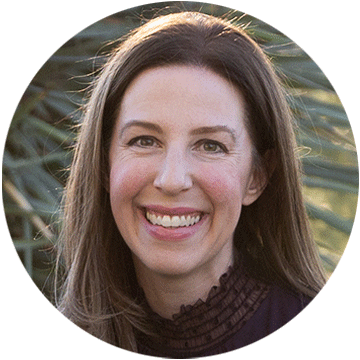
ABOUT THE AUTHOR
Elizabeth Exline has been telling stories ever since she won a writing contest in third grade. She's covered design and architecture, travel, lifestyle content and a host of other topics for national, regional, local and brand publications. Additionally, she's worked in content development for Marriott International and manuscript development for a variety of authors.
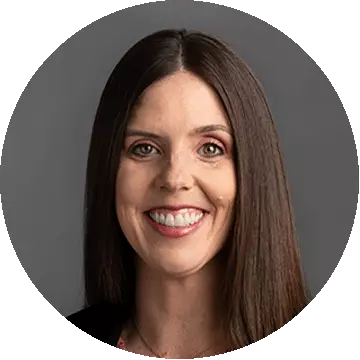
ABOUT THE REVIEWER
Currently Dean of the College of Business and Information Technology, Kathryn Uhles has served University of Phoenix in a variety of roles since 2006. Prior to joining University of Phoenix, Kathryn taught fifth grade to underprivileged youth in Phoenix.

This article has been vetted by University of Phoenix's editorial advisory committee.
Read more about our editorial process.