Skip to Main Content Skip to bottom Skip to Chat, Email, Text

Degrees of Success Alumni Podcast Episode 19 - Rich Valerga

From Military to Education
From Military to Education


Opening Thoughts on Education 0:00 - The major theme in my life has been education. 0:02 And education is really important for a host of reasons, 0:05 and then where you get educated matters. 0:08 The University of Phoenix really allowed me to continue 0:10 to work and finish my degree. 0:12 At the same time. I find myself back known number 0:16 of years later going to graduate school again 0:18 and choosing University of Phoenix again 0:20 because it does allow for that flexibility. 0:22 And I do appreciate the expertise 0:25 that comes from the professors 0:26 that are working in industry while they're 0:28 also teaching at night. 0:29 I think that's really important. 0:31 You could ask for a better 0:32 institution to help you through that. Podcast Introduction 0:46 - Hello and welcome to the Degrees of Success podcast. 0:49 I'm your host Freda Richards. 0:51 And today we have an incredible guest, Rich Valerga. 0:54 He is a two-time University 0:56 of Phoenix alumni getting his bachelor's 0:59 and a master's here at University of Phoenix. Guest Introduction: Rich Valerga 1:02 And he's currently enrolled to get his doctorate 1:05 of management as well. 1:08 He has a great passion for it, leadership and education. 1:13 His journey has been nothing but incredible 1:16 and we are excited to have him here to learn more about it. 1:19 Rich, tell me, diving directly into your story, 1:22 I wanna know all about the foundation of 1:24 where you came from and how you grew up. 1:26 - I was born in the Philippines, Early Life in the Philippines and Moving Around 1:28 so I was born in Subic Bay next to Subic Bay Naval Base. 1:33 I lived there for a number of years 1:35 and then I think when I was three we came back 1:37 to the States on the east coast. 1:40 I was in Maryland and then in Virginia for a number 1:43 of number of years 1:44 and then ended up moving to Iceland to Catholic, Iceland 1:50 in middle school and then to Naples, 1:52 Italy towards the middle of middle school 1:55 and start of high school there. 1:56 High school was seventh to 12th grade 1:59 and then we moved to eCOA Japan 2:02 and I did a couple years of high school there 2:04 and then back to California where I ultimately 2:08 graduated from high school and joined the Marine Corps. 2:11 But in the process of that, I also spent a few years 2:14 with my grandparents on both sides of my family. 2:17 And I had the, you know, the pleasure of getting that, 2:23 that information from that generation 2:25 and the upbringing from that generation that 2:30 has been kind of a, you know, a rock in my life of 2:35 things to do and things not to do. 2:37 - Well, we have so much in common. 2:38 So one, I am currently getting my doctorate here at 2:42 University of Phoenix as well. 2:43 And I believe we are in the same program 2:45 because I'm getting my doctorate of management as well. 2:49 And then I'm also, I'm an army brat. 2:52 My husband is a Marine 2:53 and my grandfather was a Marine 2:55 as well and so was my father. 2:58 And so my and my mom was an E nine. Shared Military Family Experiences 3:01 I always forget her title in the Army. 3:03 - Okay. - So I traveled a lot. 3:06 So I was Germany, Japan, and then all over the us. Right. 3:11 And we have the great opportunity to meet 3:14 so many different people that I feel like it ends up being, 3:19 to your earlier point, A, a blessing and a curse. 3:21 Right. Because there was no Facebook back in the day. 3:23 I tell people that all the time, 3:24 like I don't get super connected to people 3:27 because you would meet people as children 3:30 and enjoy that relationship 3:32 and then know that you would never see them again 3:33 as you got on. 3:35 - Yeah. Interesting how to, once you get out of 3:37 that environment, you have to really adjust your mindset 3:40 to long-term relationships 3:42 because you really were, you know, you'd get, 3:45 you'd move somewhere 3:47 and you knew you were gonna be there for an exact period 3:51 of time normally, And you got really deep relationships 3:55 for a very short period of time. 3:56 And then trying to call them 3:58 or keep in touch by letter was always difficult. 4:00 You try to start when you move to the same new place 4:03 and soon the letters got longer and longer 4:06 and then you're moving again. 4:08 So you're doing that with a new set of people. 4:10 And I was able 4:12 to keep some relationships from my early childhood, 4:16 but into my adulthood. 4:17 It was very difficult to keep those younger, you know, 4:21 friendships going unlike, you know, folks I know 4:24 that were born and raised in a hometown 4:27 and they know, like they go back there on Thanksgiving, 4:29 people say, where are you from? 4:31 And I tell 'em the state of confusion. 4:32 That's my answer for that question. 4:36 - I may have to steal that one from you. 4:37 That's, that's really good. 4:39 Yeah, someone asked me once like, where's your accent from? 4:43 And I was like, I couldn't tell you. I couldn't tell you 4:47 - Wherever you want it to be from. 4:48 You can pick. So 4:50 - Exactly. 4:51 Let me just give you this list 4:52 of places I've been, any of those. 4:55 Well, thank you for your service. 4:57 I can't, I commend you and your family. Life Lessons from Military Upbringing 5:00 It is a huge sacrifice, so thank you for that. 5:03 And the marines of all first to serve, I would tell you my 5:08 husband would say hurrah, but I know that that's the army 5:12 and I don't remember the, the Marine one 5:16 - Hurrah. 5:17 It's a little bit different, but yeah. Rah. 5:21 - So with that said, you have done so much, 5:26 and this is just, I mean this is, we're only at 17, right? 5:30 So at 17 you enlist 5:33 and then you move from that to serving pizzas 5:37 or delivering pizzas. 5:38 Coming to Phoenix, working for both Caesars and 5:43 - Papa - John's. 5:44 Papa John's. Right. So do you make a mean pizza right now? 5:47 - I do. We try, we try as a family to 5:51 have pizza night, you know, once a month 5:54 or a couple times a month. 5:56 And so teaching the kids how to flatten dough 5:59 and how to stretch a pizza and slap a pizza 6:02 and how to put sauce on a pizza the right amount. 6:05 And the little ones really like it. 6:07 The older ones when they're, they come to visit, 6:10 they don't participate as much as they used to 6:11 and they were little, they just want to eat it. 6:13 They don't care about making it. 6:15 But the little ones like to throw the cheese 6:16 and eat the pepperoni while you're trying 6:18 to put it on the pizza instead of 6:21 the, the little ones really like it. 6:23 So it's a good family. 6:24 - So since you're such a pizza pro, you're gonna have 6:26 to give us at least a few tips for us to be able to go 6:29 and try to make some incredible pizza. Pizza Making and Family Life 6:32 - I really like Neapolitan pizza. 6:33 I like just plain cheese with light sauce 6:37 and a lot. 6:40 That's the, if you can find a place for me with, you know, 6:44 good mozzarella and good light sauce 6:46 and a like fire crust, 6:48 that's the best pizza you can make. So 6:51 - A fire crust. 6:52 But I know that you're currently in Chicago. 6:55 - Yeah. And pizza's a big thing here. 6:57 Yeah, the deep dish pizza. 7:00 So I don't, I don't care for the Chicago style pizza. 7:05 It's probably criminal to say that here, 7:06 but I don't like the, the deep dish pizza. 7:09 I like a very thin wood fired pizza. So 7:14 - They're gonna come get you, they're gonna make 7:15 you come back to Arizona. 7:19 Oh my goodness. So after having, 7:22 after making pizzas, you decide I need to go back to school, 7:26 you end up deciding to be a driver 7:28 and you're driving at night. 7:30 - Yeah, like I did like three, three 7:33 to 11:00 PM like the afternoon, 7:36 late night shift, the last shift. So, 7:39 - So you're doing that and going to school. 7:42 - Correct. - Where did you get this hustle from? Returning to School and Night Driving Job 7:45 Like where did your inspiration come from? 7:47 - I think I did. I didn't, you know, I saw a lot of friends 7:52 having ended up in California, being on the beach, you know, 7:55 people would get stuck in the beach life 7:59 where they were just kind of bumming around 8:00 and surfing during the day 8:02 and working in a restaurant in the evening. 8:04 And I saw my friends get older, they were older than me 8:09 to start with and I saw them continue to age 8:12 and I realized I didn't want that for me in life. 8:15 Like it, it took a while to get to that point, 8:18 but there is definitely a point where it clicked 8:20 and it's like, I want more than this 8:23 and the only way I'm gonna be able to do this is 8:25 to do something else. 8:27 So, you know, that's something else. 8:29 At the time when I went to college, you know, 8:33 it was the big, you know, you're having the 8:37 2000 turnover stuff going on 8:40 and you had the early two thousands bubble 8:43 that was happening and it seemed like that would be, 8:47 you know, I really just looked for the highest bang 8:50 for your buck in a career 8:52 and thought, you know, I could do this 8:54 and make a decent living and have a family. 8:57 And so that really kind of kept me focused at the time Choosing IT and Career Motivation 9:01 to just get it done 9:05 and do it, you know, go to school in something 9:09 that would be meaningful for me in a career going forward. 9:13 Not just, you know, I had picked it at the time 9:16 and I really enjoyed that work. 9:18 I, you know, my friends 9:19 and I would at that point do a lot 9:24 of computer programming and other things. 9:26 But I did realize early on 9:28 that I didn't wanna become a programmer. 9:29 I wasn't quite excited about sitting and, 9:34 and typing for a career. 9:36 I preferred the telecommunications aspect of things 9:40 that seemed, so network 9:41 and telecommunications seemed a little more interesting 9:43 to me and that's what I focused on in school. 9:45 And then with certifications, 9:48 'cause what I did when I was about to graduate is I packed 9:53 my daytime classwork 9:55 or my nighttime classwork with daytime certification classes 10:00 at a another school 10:02 that was doing like certifications at the time. 10:04 That was just like a learning center. 10:06 And so I would get my certifications 10:09 and then go to school, then go to work 10:11 or just to try to be marketable when I got out 10:16 of got outta college. So. 10:18 - So how old were you at this time? 10:20 - 23. Yeah, 23, 24. 10:25 - So you're 23 and 24, you're getting a certificate 10:29 during the day, also going to school during the day Education and Certifications 10:31 and then working at night 10:34 as a driver at 23 to 24. 10:37 That's not the typical behavior of 10:42 23 to 24-year-old there. 10:45 There has to be like, I know that you said you spent a lot 10:47 of time with your grandparents as well 10:49 and your, your parents had you traveling a lot 10:52 due to the military. 10:53 - Right. - What did they instill in you 10:58 or what did your situation instill in you that you 11:03 at 23 to 24 recognized? 11:07 Hmm, I don't wanna be like these other gentlemen 11:09 that are just kind of getting older on the beach, kind 11:12 of letting life pass by. 11:13 I'm going to completely change my life. 11:18 - Yeah, I think, you know, both of my, both sets 11:21 of my grandparents worked really hard 11:22 and one, one 11:25 of my grandfathers drove a truck on the west coast. 11:27 My other grandfather had worked in the mines, 11:29 was in the military, had worked for a dry cleaner, had, 11:34 I mean he had hustled 11:35 and he opened his own small business in a small town in 11:39 Colorado where he had a meat market 11:42 and my grandmother had a bookstore that she owned. 11:44 And I think just watching their, their work ethic growing up 11:49 and you know, it doesn't necessarily, 11:52 it doesn't hit you at the moment, 11:54 but those are the memories that kind of, 11:57 when you're having those, those moments in life Influence of Family and Grandparents 12:00 where you're thinking about what's next, those are the rock, 12:03 the bedrock moments that are in your, you know, 12:06 thought process of, okay, you know, this is 12:09 what I should be doing. 12:10 And you know, like you discussed 12:12 before, I had, I had done a lot 12:13 of stuff early on in my early teens and late teens. 12:18 I didn't really feel the need to continue on in 12:20 that lifestyle of a typical 20-year-old. 12:23 I maybe I felt like I was 10 years older in my mid thirties 12:27 or you know, having my quarter life crisis at 12:29 25 or whatever. 12:32 So I think, you know, watching my grandparents, you know, 12:36 and their work ethic and my, my mother, she had gone 12:40 to college later in life 12:42 and I think it took her eight years to graduate 12:44 for her bachelor's degree. 12:46 But she stuck to it and she also worked in IT 12:49 and she got her her undergraduate in 12:54 computer information systems. 12:55 So it was kind of an interesting coincidence that my mom 12:59 and I were doing the same kind 13:01 of classwork at the same time. 13:03 So I had someone to talk 13:04 - To about, oh was at the same time 13:06 - It was at the same, my mom was either, either finishing up 13:08 or she, I know she was working still at 13:13 that point in the federal government doing it 13:16 work in the federal government. 13:17 So when I had questions about classwork 13:19 and the practical application of, you know, classwork 13:23 or certification program she had, she was doing it 13:27 for a job so she could answer my questions at the time. Working at University of Phoenix 13:30 And so, you know, school, the military 13:32 and school both were like big impacts in my life to kind 13:37 of reconnect me to my family and 13:39 - Yeah, - Kind 13:40 - Of friends connect you back to your parents, the military 13:42 with your father and school with your mom 13:45 and you ended up getting the same degree. 13:48 - Yeah, she got one in com. 13:49 Computer science was a little bit different than the network 13:52 and telecommunications work, 13:53 but she did basically the job I wanted to do 13:57 and which was network administration. 14:00 So when I was offered a job in Northern Arizona by 14:05 University of Phoenix at the time, that's what I, 14:08 I was doing the regional IT work for them, 14:12 which was exciting. 14:14 And then we quickly realized 14:17 that our campus doing expansion work, that 14:20 there was no one there to do it. 14:22 And that become, that kind of became the second part 14:25 of my life was I was just in the right 14:28 place at the right time. 14:29 So I got additional experiences 14:31 that you wouldn't normally get at a young age. 14:33 So, you know, I had a lot of responsibility in my early 14:38 to late twenties or early to middle twenties 14:41 in my late twenties actually. 14:44 And it really helped me understand what I wanted to do 14:46 and be when I grew up I guess you could say. 14:51 So yeah, 14:53 - So you came here, you got a lot 14:54 of hands-on experience here at the University of Phoenix, 14:57 working here at the University of Phoenix. Pursuing a Master's and Working at the University 15:01 You ended up using that hands-on experience 15:03 and the opportunity to get another degree. 15:07 - I did. That was, that was really nice, you know, 15:11 education, esp, you know, now the inflation 15:14 and at the time when I was looking at getting a 15:19 master's degree, it was, how am I gonna afford to do this? 15:22 And you know, it's a, I think a question a lot 15:25 of parents ask when their kids are going into college 15:27 or a lot of people ask themselves when they're going into 15:30 college, is this affordable? 15:31 And University of Phoenix was always affordable. 15:34 And then having that additional benefit as an employee 15:37 to get reduced tuition was fantastic. 15:40 And it gave you both sides 15:43 of the story as well. 15:46 Like, you know, I had, 15:47 I didn't know higher education very much. 15:51 I knew kind of the K 12 from being a student 15:53 and teaching for a couple years, 15:56 but I didn't know the back end of working in a university 16:00 and all the things that go into the production of class. 16:04 You know, people just think it's Right an easy thing. 16:06 You just step in and act your couple hours and go home 16:10 and you know, the professors have a lot of, they put a lot 16:13 of time and effort into, excuse me, into their work 16:16 and you know, having office hours helping 16:19 students that are struggling. 16:20 You know, you as a student, you took it for granted 16:24 and as an employee you watched those really great people 16:29 spend that time with students to help them 16:31 through their process. 16:32 And you know, once you get into advanced statistics 16:35 and other things that people normally have problems with, 16:38 it's not your everyday, you know, work. 16:41 It was great to see, you know, the, the staff at university, 16:44 if Phoenix spend that time, I guess my coworkers spend 16:47 that time with students to help them. 16:49 And whenever I had a problem I had a ready set group 16:52 of teachers that I worked with. 16:54 So they couldn't really say no to me 16:55 'cause I could make sure their computers didn't work in the 16:58 morning if I had to and they would have Career Shift Post-MBA 17:00 to run into me sooner or later. 17:02 Sabotage. Yeah. 17:04 So no, it was really good to get both sides of that, 17:09 that story and then being able to expand that mission 17:12 when I worked for them at the same time was even better. 17:16 You don't see a lot of expansion in K 12, you see such, 17:18 or in higher ed right now you see a lot 17:20 of contraction going on in a lot of brick 17:23 and mortar universities that are closing up shop due to, 17:26 you know, the slide and birth rates 17:29 and you know, various other issues 17:31 that people are having these days. 17:32 But yeah. 17:35 - But University of Phoenix has, 17:36 was not the last school you would help expand. 17:40 - No, that was, 17:41 - It is not kind of a startup. 17:42 And I wanna jump into that part of your journey 17:45 because your career is exceptional. 17:47 Thank you. Tell after the NBA, what was next? 17:53 - I was still working in Northern Virginia 17:56 and I was getting kind of an niche 17:59 to go back into teaching full-time. Rebuilding Schools After Hurricane Katrina 18:01 'cause I had saw, I had noticed what good 18:05 that our professors were doing 18:07 and I knew that I couldn't be a teacher. 18:10 I wasn't really called to be a everyday in front 18:13 of the classroom teacher type, 18:15 but I still wanted to work in that environment. 18:18 And it, in 2005, hurricane Katrina hit 18:22 in New Orleans pretty hard and I took a job right 18:27 after that in New Orleans to help rebuild the schools 18:31 after they had closed down from that. 18:33 And at that time you saw a lot of young professionals. 18:36 I was 28 I think when I moved there, 28 or 29. 18:41 You saw a lot of young professionals moving to New Orleans 18:45 to kind of help in that rebuild effort. 18:48 And in the early days, 18:50 school started reopening essentially in December 18:53 and January of 2006, 2005, 2006. 18:58 You had this great diversity of talent 19:00 that came from all over the country down to New Orleans. 19:03 And I got to work for a great company at the time 19:08 as their head of IT 19:10 and operations for a charter school network. 19:13 And we opened a few different schools, 19:16 we started expanding there 19:19 and that was really quite a blessing for me personally. 19:23 And you know, I had my sons, two 19:27 of my two older sons were both born in New Orleans 19:30 and it was really great to have that time to be able 19:34 to help a community rebuild from 19:38 a pretty bad travesty. 19:39 You know? And it was even better that I, that's a bad way 19:44 to discuss Katrina, but it really did, 19:48 it really did bring in a lot of talent that 19:50 otherwise wouldn't have come to New Orleans at that time. 19:53 And I got to work alongside of really smart people that kind 19:57 of drove me to like, wow, you know, Experiences in New Orleans Post-Katrina 20:00 I didn't know you could do that or I didn't know this. 20:02 And you know, I got to see a lot of different 20:05 viewpoints from people I respected and trusted. 20:11 - Your perspective is so intriguing you are saying it was a 20:14 blessing for me to be able to go 20:17 after Katrina to help build this new charter school 20:21 and to meet so many other talented people that also came 20:24 after this horrible event happened 20:27 that devastated Louisiana and 20:31 - Right. 20:32 - So many lives were lost houses. 20:35 Generational pain 20:39 and loss happen in that hurricane. 20:44 It's humbling to me to hear you say that it blessed 20:47 because clearly the people who were brave enough 20:52 who had the heart to serve 20:54 to leave wherever they were comfortably to go to a place 20:59 that the grocery stores were, were flooded. 21:03 The, I mean it was, 21:04 it was literally the grounds were literally destroyed. 21:07 And from what I understand it took a while for them 21:10 to recover some remains. 21:13 - It took a a long time and, 21:14 and schools were kinda shelters of last resorts. 21:19 So as we began to open up schools, you often 21:24 opened up tragedies that happened in those schools 21:26 that maybe people were missing family members that had 21:30 ended up in a school at the end of end of their lives. 21:35 It's, yeah, it was interesting. 21:37 We opened, I think we were up to eight schools 21:40 and you know, throughout the city, you know, 21:45 I didn't, I took it for granted that, you know, you hear it 21:47 and you see it on tv 21:49 but I didn't realize that hospitals weren't really back 21:53 and my wife at the time was eight 21:55 and a half months pregnant. 21:57 So we kind of needed a hospital soon to 22:00 have my first son out there. 22:02 So, and you would drive like underpasses 22:05 and see cars still stacked up. 22:07 'cause it really took a while to get the city back into kind 22:11 of operations, you know, back into 22:13 where it could function again. 22:16 And then definitely back to 22:17 where it could start receiving its citizens again. 22:20 It took a little bit of time to get through that so, 22:24 but it was, it was, I mean I learned so much from that 22:27 and I got to meet so many interesting people 22:31 that again, 22:33 otherwise I wouldn't have gotten the chance to meet them 22:36 had I not volunteered 22:38 to go down there and help with that. So 22:40 - Tell me your favorite memory from that time. 22:44 Something that sticks with you 22:45 and reminds you of your, your passion and drive. 22:52 - I think it, the memory that sticks with me the most came 22:58 on the next hurricane that was down there, 22:59 Gustav that was coming. Facing Hurricane Gustav and Staying Behind 23:02 I had to make those decisions. 23:04 So I wasn't from New Orleans, 23:05 I'd never actually visited New 23:07 Orleans, I'd never been there. 23:08 We just up and moved And so I didn't 23:13 experience the should I stay 23:14 or should I go portion of that hurricane. 23:18 So while you feel like you can understand why people make 23:21 decisions, you really don't understand 23:24 until you're put in those situations 23:26 where you have to make that decision. 23:27 So I was put in that decision 23:29 and I had two small children at the time 23:32 and I was standing in my 23:36 bedroom looking at my stuff 23:39 and realizing that I couldn't fit all my stuff in a 23:41 car to evacuate. 23:43 And my kids had gone up to my mother's house and a few days 23:47 before, so I was there alone 23:50 and the power hadn't gone out yet, 23:51 but I was kind of looking 23:53 to see should I stay or should I go? 23:55 And we had just put a lot of money into these new schools 23:58 that we opened 'cause there was in, 24:03 you hear a lot about 24:04 how the federal government didn't respond to that tragedy, 24:09 but in the end they did respond well 24:12 and they put a lot of money into the city, into schools 24:14 and we had put a lot of money and time 24:17 and effort into getting the schools back up and open again. 24:20 And you know, having to make that decision 24:24 of do I leave or do I stay here 24:27 and help protect, you know, the assets we just put in. 24:29 Because essentially it becomes a free 24:31 for all when everybody leaves the city. 24:33 Like as much, you know, as much law 24:36 and order as they try to put and the national guards out 24:40 and people are out. 24:42 There's still a lot of either, you know, people trying 24:46 to find a shelter, which like I said 24:47 before, they often came to schools. 24:50 The mayor at the time suggested they go to schools 24:53 and us that ran those schools were like, no, no, no, 24:56 like leave the city, don't do this again. 24:59 You know, this was Gusav supposed to be a, you know, huge 25:01 and it turned out to be in for somewhere 25:03 else other than New Orleans. 25:04 But I think that experience of just sitting there making 25:08 that decision and first making the decision that none 25:10 of this stuff matters. 25:12 So I just took pictures of my stuff 25:14 'cause I figured I could give it 25:15 to my insurance agent when I came back 25:18 and that I really just needed a, you know, couple days, 25:22 a week's worth of clothes in my car. 25:24 So if I had to leave, I had some clothes for that time 25:28 and I ended up staying with our head of security 25:32 at the time he had two horses. 25:34 So, you know, making that decision 25:36 and then being able to ride around the city on horseback 25:39 with our head of security was really, it's a memory 25:42 that really sticks with me. 25:43 'cause everybody was gone. My neighbors were gone. 25:46 My neighbor across the street worked 25:47 for New Orleans police department 25:49 and a bunch of other of his coworkers were staying with him. 25:52 So I had, you know, my house 25:54 and his house on the block 25:56 where essentially were the only people that were there. 25:58 And I felt pretty safe personally 25:59 'cause I had, you know, a lot Lessons on Stuff vs. Experience 26:01 of the precincts staff members living 26:04 across the street at the time. 26:05 So I wasn't, I didn't have to worry about my house 26:08 or my property, which was great. 26:10 I could go and worry about other people's 26:12 property and Right. 26:14 You know, doing that on horseback was quite interesting 26:17 and that, you know, it took until right 26:21 before the storm hit where I went in 26:23 and I grabbed all of our important data 26:27 and I took those machines in my trunk 26:29 and drove out state just far enough 26:32 for the night when the hurricane was supposed to hit. 26:34 I went and stayed in a hotel for a night 26:36 and then I drove back in with the National Guard, 26:38 tucked into the National Guard to go back 26:40 and put it back online and get the system 26:44 because we had payroll coming up in a couple days. 26:46 So we had to have our systems online 26:48 to get our employees paid 26:49 that were scattered everywhere at the, you know, 26:51 they had left, we had given everybody time off so 26:55 that they would leave. 26:57 So I went and put that back 26:58 and that was really, you're kind of alone. 27:02 You have family, but you're alone. 27:04 And then you're pondering this notion of like, 27:05 I've collected all this stuff, what 27:08 of it should I leave with? 27:09 And you realize that stuff really doesn't matter. 27:12 Like you can, you can rebuy stuff 27:15 and that was, you know, 27:19 and I was what, 31 at 30 at that point, you know, 27:22 at 30 years old to realize that the stuff game wasn't really 27:26 that important was, it was a great lesson to learn 27:29 that young, although you fall back into those bad habits, 27:33 sometimes you're like, oh I want one of those 27:35 'cause everybody has 'em or I one of these. 27:37 And I really, you know, I try to instill with my kids that, 27:42 you know, stuff isn't that important. 27:45 You know, the experiences 27:46 and relationships you have are much more 27:48 important than stuff. 27:50 'cause you can, you can always get stuff, 27:52 but you can't always get the opportunity to travel overseas 27:55 or get the opportunity to go to college 27:57 or, you know, get the opportunity to spend with your family. Reflection on Pandemic Blessings 28:00 Like even with the pandemic, I have two, 28:05 my daughter was born in 2020 in January 28:08 and then we had the pandemic 28:10 and she got to spend all this time with me 28:12 that my two older sons didn't get. 28:14 'cause I had to go back to work two days later 28:16 and my daughter got, you know, I was able to work from home 28:21 and she got all that time with me 28:24 and it's really made a difference in her life. 28:26 And I think, you know, with my youngest son now 28:29 that he's two, he's gotten some of that time not quite 28:32 as dedicated as my daughter, 28:35 but it's been, you know, in, in that, you know, pandemic, 28:39 I've really gotten more blessings from that to be able 28:43 to stay home and work from home. 28:44 And while it's challenging to do the work, you know, 28:48 I was again lucky where I am now to have the opportunity. 28:52 - Thank you so much for sharing that with us 28:55 and that somehow brings us to the end of this episode 28:57 of Degrees of Success. 28:59 I'm your host, Frida Richard, reminding you Closing Remarks 29:02 that your next chapter just might be your best one yet. 29:05 Don't forget to like, subscribe and comment 29:08 and we'll see you soon.

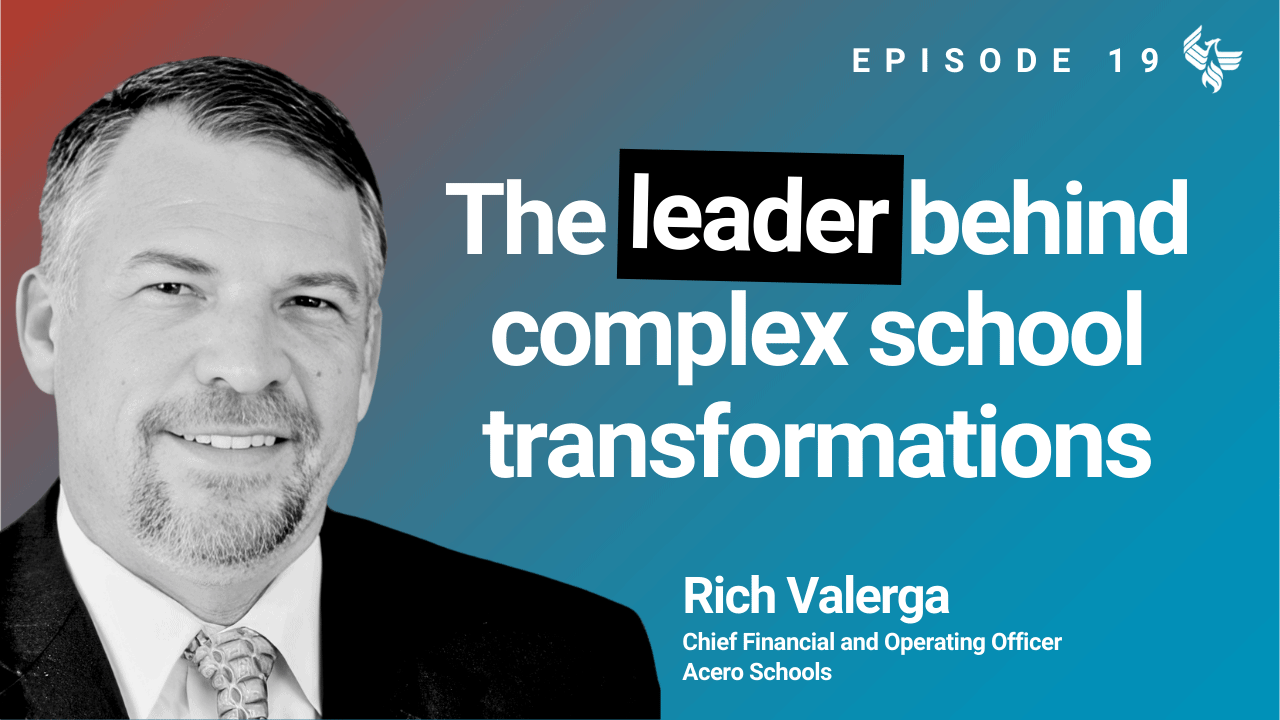
University of Phoenix alumnus Rich Valerga shares his journey from a diverse upbringing across various countries to his experiences in the military and education.

The video was uploaded on 6/19/2025.
The video lasts for 29 minutes and 23 seconds.

Key Moments
00:00 - Welcome and Guest Introduction: Rich Valerga
01:27 - Early Life in the Philippines and Moving Around
05:00 - Life Lessons from Military Upbringing
07:45 - Returning to School and Night Driving Job
09:00 - Choosing IT and Career Motivation
10:30 - Education and Certifications
15:00 - Pursuing a Master's and Working at the University
17:00 - Career Shift Post-MBA
18:00 - Rebuilding Schools After Hurricane Katrina
23:00 - Facing Hurricane Gustav and Staying Behind
26:00 - Lessons on Stuff vs. Experience
29:00 - Closing Remarks