Skip to Main Content Skip to bottom Skip to Chat, Email, Text

Degrees of Success Alumni Podcast Episode 17 - Roselyn Tao

Improving healthcare for Native Americans
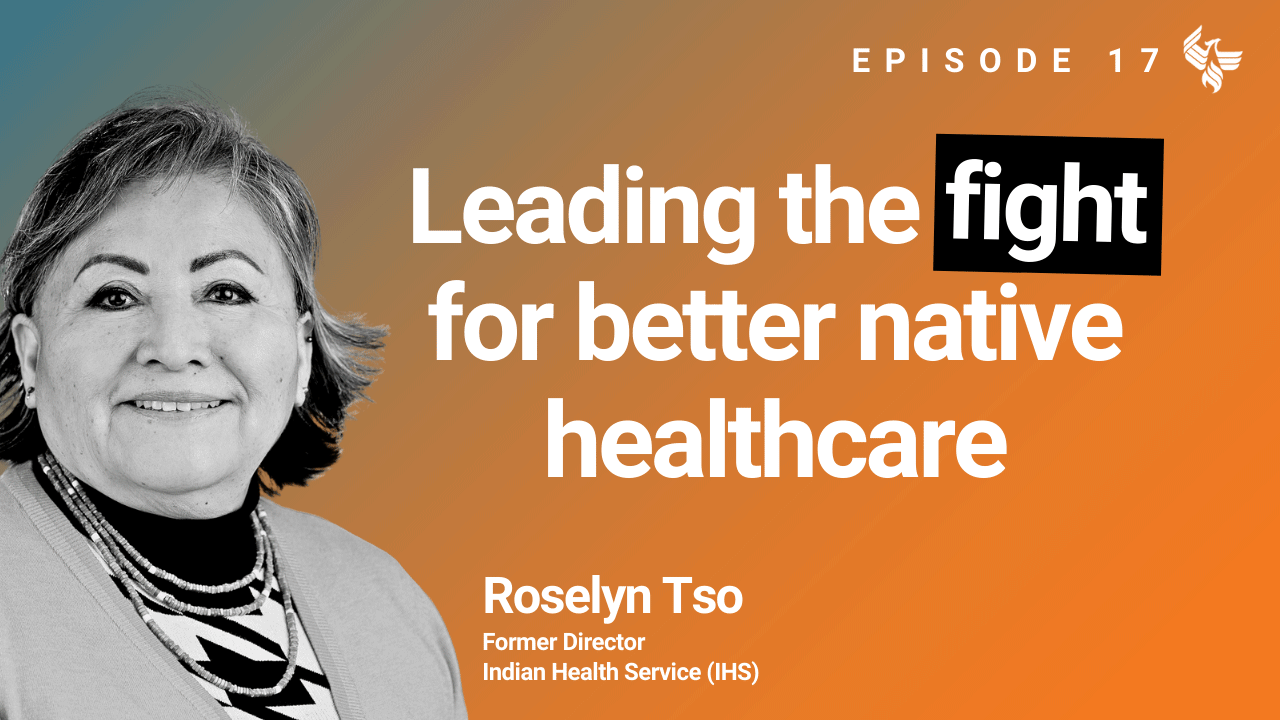
Improving healthcare for Native Americans


Chapter 1: Opening Remarks 0:00 - Tell me about your passion for healthcare and what steps you have completed. 0:05 5 seconds - I've gone to places as the IHS director that no other IHS director has visited, 0:12 12 seconds and that set the stage for, i, I would say, one of the most transformative approaches from the federal 0:19 19 seconds government's perspective, that we can work side by side with each of the 574 federally recognized tribes 0:28 28 seconds in their space for their travel communities the way they want it. 0:46 46 seconds - Hello and welcome to the Degrees of Success podcast. 0:49 49 seconds I'm your host, Frida Richards, and today we have the great honor of having Ms. Roselyn Tso join us. 0:56 56 seconds She is the director of Indian Health Services. She's also a member of the Navajo Nation. 1:03 1 minute, 3 seconds She has a great passion for enhancing healthcare for all native Americans. And of course, she's a University of Phoenix alum. 1:12 1 minute, 12 seconds Help me welcome Ms. Roselyn Tso. 1:14 1 minute, 14 seconds Tell me how you grew up, what your childhood was like, and where you're from. So - I am from a little town in Arizona. Chapter 2: Growing Up in Arizona 1:21 1 minute, 21 seconds It's called Page Arizona, north northern part of the state of Arizona. I grew up there. I grew up on the Navajo Reservation. 1:29 1 minute, 29 seconds I'm, I am the daughter of a Korean War veteran. 1:33 1 minute, 33 seconds I am also the daughter of a longtime minister on the Navajo reservation. 1:40 1 minute, 40 seconds And then my father was a rancher and he was also a businessman. 1:43 1 minute, 43 seconds And my mother's role, she was there side by side with him for more than 66 years. 1:48 1 minute, 48 seconds And so I grew up in a home with imagine a rancher and a military and businessman. 1:55 1 minute, 55 seconds You know, you bring up, you, you, you're raised with a lot of structure and a lot of discipline. So I, I carry that, those with me. 2:02 2 minutes, 2 seconds I cherish those memories and the work that my parents did to raise, to raise me as they did. 2:10 2 minutes, 10 seconds And then from there, of course, going to high school and in small town, and then from there just, just keep moving forward. 2:17 2 minutes, 17 seconds - So what was it like growing up in a small town in page Arizona? - It was great, you know, I mean, it was great. 2:24 2 minutes, 24 seconds But, you know, the, some of the challenges that I still worked through today as, as my job as the Indian Health Service, for example, the home 2:32 2 minutes, 32 seconds that I grew up in, we didn't have electricity and we didn't have water. 2:35 2 minutes, 35 seconds The home that, that is still there today, that was our family home, finally got electricity in 2014, and then still today, there's no running water. 2:45 2 minutes, 45 seconds So there are still many, many homes on our tribal, tribal lands that don't have sufficient sewer and water or even electricity. 2:54 2 minutes, 54 seconds So as, as we talk about healthcare and as we talk about public health, those are still factors that, that are fundamental needs for our people across Indian country. Chapter 3: Public Health Challenges 3:06 3 minutes, 6 seconds - So you have a great passion for your people, as you said, your culture wanting to give back, 3:13 3 minutes, 13 seconds growing up in page Arizona, in a home that had no electricity, or excuse me, no running water, you've been able to experience what you're trying to change. 3:26 3 minutes, 26 seconds Tell me clearly that passion comes from your, your childhood and experiencing it, but what, what else drives you in getting involved in healthcare and making a change in the community? 3:36 3 minutes, 36 seconds - Thank you. So there are many, many parts of that that great question. 3:41 3 minutes, 41 seconds First is just the challenges that our people still live with today. 3:46 3 minutes, 46 seconds I mentioned earlier diabetes, you know, we, we have the highest rates of diabetes across any country. 3:54 3 minutes, 54 seconds We have challenges with regards to just public health infrastructure that impact our ability 4:01 4 minutes, 1 second to raise, you know, raise up some of our travel communities to the level that we would like to see them. 4:07 4 minutes, 7 seconds But part part of that was, again, reinforced just recently with the Covid pandemic. 4:13 4 minutes, 13 seconds It just reminds me of how important it's that we continue to improve our travel communities with that infrastructure, 4:21 4 minutes, 21 seconds that infrastructure builds success, that infrastructure build what we need for our travel communities to be successful as we move forward. 4:30 4 minutes, 30 seconds So whether it is broadband, whether it is improved roads, whether it's housing, whether it's food insecurities 4:38 4 minutes, 38 seconds that many of our travel communities live with, all of that is impacts a person's health. 4:45 4 minutes, 45 seconds So when we talk about transportation and, and, and if we can't get a person from point A to point B 4:52 4 minutes, 52 seconds to their, to their appointments or whatever, and not take into consideration transportation, then, then we are not addressing the the person's need. Chapter 4: Reconnecting with Traditional Practices 5:01 5 minutes, 1 second If we're talking about food insecurities, where many of our families today struggle with that across, across the nation struggle with food insecurity and what do we do about that? 5:11 5 minutes, 11 seconds How do we build sustainability? 5:14 5 minutes, 14 seconds How do we build systems back into our travel communities where we're less reliant and we go back to some of our traditional practices. 5:21 5 minutes, 21 seconds And so we're seeing this as we move forward. 5:24 5 minutes, 24 seconds We're seeing that progress across Indian country is being the most successful places that we see progress. 5:32 5 minutes, 32 seconds It's where travel communities are thriving. 5:35 5 minutes, 35 seconds When they go back to the traditional practices, they go back to the traditional foods, they go back to the traditional traditions of just, just the, the, 5:45 5 minutes, 45 seconds the practices of customs for dancing and singing and those kinds of things that are being brought back into their health, into their communities. 5:54 5 minutes, 54 seconds There's that, those are the communities that are thriving the most. 5:58 5 minutes, 58 seconds And I think that investment that reinvestment to tribal communities are, is so important. 6:04 6 minutes, 4 seconds The the flip side of that is also that Indian policies of the history, the history 6:11 6 minutes, 11 seconds of Indian policies and how they still impact negatively impact tribal communities today. 6:19 6 minutes, 19 seconds If you go to just the basic elements of Indian policies that were established years and years ago, they were to eradicate us. 6:29 6 minutes, 29 seconds They were to do away with the American Indians and Alaska native people. 6:33 6 minutes, 33 seconds But as I've traveled throughout, particularly over the last 27 months to see travel communities thriving, 6:40 6 minutes, 40 seconds to see travel communities say we wanna change the outcomes of our, our community so we can be healthier community. 6:47 6 minutes, 47 seconds That has been the best. That has been just an absolute rewarding experience. 6:51 6 minutes, 51 seconds And there are other places where, and other areas that we still have to work on. 6:56 6 minutes, 56 seconds But I think that we are on the right path to take to, to make sure that any country is healthy. Chapter 5: Historical Context and Systemic Issues 7:03 7 minutes, 3 seconds - Well, I'm gonna have to agree, you've been at the helm of that will for 27 months. 7:07 7 minutes, 7 seconds So I'm confident as we move forward into this conversation and hear more about your accomplishments with those native tribes, that we will see that. 7:18 7 minutes, 18 seconds But before that, I, I wanna ask this. 7:21 7 minutes, 21 seconds Tell us the why, why were Native American or the tribal communities placed in this situation? 7:31 7 minutes, 31 seconds Tell me why this is that it, that it's common for them not to have running water or for them to have diabetes. 7:39 7 minutes, 39 seconds Tell me the root, the why. - So that, that's a very loaded question 7:46 7 minutes, 46 seconds and I don't feel that I can speak for tribes or tribal leaders in, in this particular area. 7:53 7 minutes, 53 seconds But we do know that the lands that, that were, that that tribal communities were moved from was part of it. 8:02 8 minutes, 2 seconds And what is on that land? 8:04 8 minutes, 4 seconds What is on that land that those precious minerals or whatever, that there was, that the government was looking 8:10 8 minutes, 10 seconds for, to relocate American Indian people from their tribal lands to different location. That's one of them. 8:18 8 minutes, 18 seconds And and so as we look at the why of where, of why we are where we are today, you know, you, you look at just 8:26 8 minutes, 26 seconds the boarding school era where many, many, many children were relocated, taken from their families and placed in, in government led boarding schools. 8:37 8 minutes, 37 seconds There's just, we've just completed through the, the Secretary of Interior just completed a, a study on this and the impacts. 8:46 8 minutes, 46 seconds And even though that some of those might have ended in the, in the mid sixties, they're still impacting 8:55 8 minutes, 55 seconds the relocation of people taken from their tribal lands and relocated into other places that were foreign to them. 9:03 9 minutes, 3 seconds Maybe they could grow things in the land that they used to live on, and the new land maybe doesn't support that. 9:10 9 minutes, 10 seconds Maybe there's not that infrastructure, infrastructure that's in place for that. 9:14 9 minutes, 14 seconds All of these things, you see, those, those to me lead up to the why. 9:20 9 minutes, 20 seconds And so when you look at diabetes, when you look at these other challenges that we have of heart disease, you know, I, 9:26 9 minutes, 26 seconds we've been working very hard at Indian Health Service about food is medicine and everything that we take in impacts our body one way or another. 9:37 9 minutes, 37 seconds And so if they are unhealthy, if they are not good, or if that's not what we were traditionally accustomed to eating, then those make a change. 9:48 9 minutes, 48 seconds Moreover, just the environments that we live in, I've traveled several times to the state of Alaska and just, you know, again, to understand 9:56 9 minutes, 56 seconds and appreciate their challenges just for transportation, they have to go, I, I might be able to fly into Anchorage, Chapter 6: Alaska Visit: Cost and Access Issues 10:05 10 minutes, 5 seconds Alaska, but from there to get to any village, this has to be by air or by boat. There's no roads in Alaska. 10:13 10 minutes, 13 seconds So how do you, how do you, we manage that, not just from a healthcare perspective, but just the way people live. 10:21 10 minutes, 21 seconds In, in a recent visit that I had, I visited a small village, about 500 people, and I always like to look in the stores of the, the little stores. 10:30 10 minutes, 30 seconds I like to look at how, how their homes are and how people live. 10:34 10 minutes, 34 seconds I went into the store and it's $14 for a gallon of water, 14 for a gallon of water, 10:43 10 minutes, 43 seconds and then right next to it, it's maybe a dollar 20 for a can of soda. 10:49 10 minutes, 49 seconds So you look at those options that people have and, and the resources or limited resources that they might have if they're choosing the soda because they can afford that. 11:02 11 minutes, 2 seconds The challenge that that creates is by the time children are school age, they need reconstructive dental work. 11:10 11 minutes, 10 seconds So all of these things that we talk about, and that's why I think from a healthcare perspective, we have to take a step back 11:18 11 minutes, 18 seconds and really look at those social drivers of health and how those impact the health of our community because you can't just deal with the, the medical side. 11:31 11 minutes, 31 seconds You can't just deal with the pharmaceutical side and say that we've done our part without looking at 11:37 11 minutes, 37 seconds what are these other factors that impact that patient and for them to be successful, for them to be where we want them to be as healthy tribal communities. 11:48 11 minutes, 48 seconds So it's more than just medical at ihs. 11:52 11 minutes, 52 seconds And when you look at our mission statement, we talk about the, the physical, the mental, the social and spiritual health of our people. Chapter 7: Holistic Health at IHS 12:02 12 minutes, 2 seconds When you look at it, that that's the whole person. 12:05 12 minutes, 5 seconds And so that does take time as we start to really think about, you know, you can, you can imagine a if there's not sufficient housing in a tribal community, what happens? 12:16 12 minutes, 16 seconds Somebody's worried about that and somebody's gonna be impacted by that and probably less in thinking of their health. 12:24 12 minutes, 24 seconds So that goes to the bottom of the list until it, until it came be at the bottom of the list anymore. 12:31 12 minutes, 31 seconds And then of course, that has its own challenges with it. 12:34 12 minutes, 34 seconds So we know that policies across even policies today continue to negatively impact our people. 12:41 12 minutes, 41 seconds But the, at the same time, we have many, many travel communities that continue to thrive because they are taking the approach 12:50 12 minutes, 50 seconds of addressing the whole person and therefore building up each tribal community to be healthier. 12:58 12 minutes, 58 seconds - I heard you say that it's very important for, or that you have, there's current, there's current tribes 13:04 13 minutes, 4 seconds that are thriving now that they're having the opportunity to invest back into their traditions, 13:11 13 minutes, 11 seconds invest back into the food that that was traditionally what they ate prior to being introduced to 13:20 13 minutes, 20 seconds others, other food such as soda or maybe burgers or something along those lines. 13:25 13 minutes, 25 seconds I wouldn't necessarily be in line with the native nutrition that was done in the past or that was participated in the past. 13:36 13 minutes, 36 seconds My question to you is, what, what are, what are those foods one that you think that 13:44 13 minutes, 44 seconds are helping the Native Americans get back to their health and those traditions? 13:49 13 minutes, 49 seconds And then secondly, I wanted to acknowledge that I absolutely agree with you and I've seen studies, 13:57 13 minutes, 57 seconds I'm currently getting my doctorate right now here at University of Phoenix. 14:01 14 minutes, 1 second And in in those studies I've actually seen that all of our bodies are aligned to traditional foods. 14:11 14 minutes, 11 seconds Like, so we're not all supposed to be eating the same thing. A burger for me is very different. 14:16 14 minutes, 16 seconds Well, my body will handle that very differently than a burger for our producer or so on and so forth. And so I think that that in itself is very important. 14:25 14 minutes, 25 seconds You're speaking about preventative, eat, eat this food to, to prevent having to heal yourself or have a medicine save you. 14:39 14 minutes, 39 seconds Tell me more about the food that the Native Americans are accustomed to that's actually aligning with them staying healthy in those traditions. 14:49 14 minutes, 49 seconds - Well, there again, you know, there's over, there's over 500, actually 574 federally recognized tribes across, 14:58 14 minutes, 58 seconds across the country at the Indian Health Service being the 18th largest healthcare system. Chapter 8: Region-Based Traditional Foods 15:04 15 minutes, 4 seconds We span about 37 states of where we have those tribes that, that live in those 37 states. 15:10 15 minutes, 10 seconds And so, you know, again, taking one of those 574 federally recognized tribes and, 15:17 15 minutes, 17 seconds and not layering that we're all like this or we're all the same because we're not so by regions perhaps. 15:23 15 minutes, 23 seconds So we're different foods that people were, were, we're more accustomed to than other regions in Alaska, for example, you know, they, they rely on the salmon. 15:34 15 minutes, 34 seconds They, they, that was their choice, that was their food. 15:38 15 minutes, 38 seconds And down in, in the lower 48, they were different kinds of foods that that, that were traditionally, that our people were traditional accustomed to. 15:47 15 minutes, 47 seconds And those, again, back, back when they were grown and then they were utilized. 15:53 15 minutes, 53 seconds And then, so as you, as we, so I can't quite answer your question specifically. 15:58 15 minutes, 58 seconds I can talk about maybe this tribe or that tribe, but what, what's important to understand is that what I, 16:05 16 minutes, 5 seconds what I experienced as a young child and what my parents tried to, what my mother tried to prepare for us as, as a young child, IWI wouldn't even say we're, we're our traditional foods. 16:17 16 minutes, 17 seconds She was just trying to put food on a table that she could put together to, to make sure that all all of us ate. 16:23 16 minutes, 23 seconds Children were able to have something to eat at any given time. So, so I think, I think it's bigger than that. 16:31 16 minutes, 31 seconds And what I see though, what I've seen in tribal communities is that each tribe is, is making those decisions for themselves. 16:40 16 minutes, 40 seconds What can they, what can they go back to? How do they foster that? 16:45 16 minutes, 45 seconds I've been in, in a visiting a tribe in Oklahoma, for example, and they have their own little grocery store 16:53 16 minutes, 53 seconds and they put in there what they believe is best for their tribal communities they put in there. 17:00 17 minutes So, so we don't, they don't just go to any grocery store. 17:03 17 minutes, 3 seconds So they're supporting that travel community with the healthy choices from, from a a, a community perspective. 17:12 17 minutes, 12 seconds And I think that if each community could do that, as opposed to what I explained in what I experienced at Alaska and what I observed in terms of prices 17:21 17 minutes, 21 seconds and so forth, if those things could be met in each tribal community, that's what's gonna drive improvement for that community. 17:29 17 minutes, 29 seconds Moreover, coupling that with education today, why it's so important that we need to move around, why it's so important for us to exercise or walk or whatever it is. 17:41 17 minutes, 41 seconds And many of the services that we do at IHS through our diabetes program supports that many tribes have taken those resources 17:50 17 minutes, 50 seconds and built wellness centers or working on building wellness centers. 17:54 17 minutes, 54 seconds And again, a place, a safe place where people can go to do their exercise or to do their walk walking or just to do food lessons. Chapter 9: Role of Education and Wellness Centers 18:04 18 minutes, 4 seconds How do you, how do you cook with the foods that we have today and how do you make them healthier? How do you make these, these quick meals? 18:12 18 minutes, 12 seconds Because we're all busy and we're all running from, from point A to point B. 18:16 18 minutes, 16 seconds So I see that happening in tribal communities, and if they, each tribal community can really invest in that for their people, it's gonna make change. 18:26 18 minutes, 26 seconds It's making changes in our, in our tribal communities. - That is very powerful. 18:31 18 minutes, 31 seconds And I wanna hear more about your passion for healthcare because again, in my studies I've also found 18:39 18 minutes, 39 seconds that there's like in low income African American communities there, there's food scarcity, there's less grocery stores, 18:49 18 minutes, 49 seconds but there'll be in like within five to 10 miles, there'll be eight McDonald's, 10 Burger Kings, Wendy's, 18:57 18 minutes, 57 seconds pizza Hut, smoke shops, the cash advance stores, all of that within a small amount of space and maybe two grocery stores. 19:10 19 minutes, 10 seconds That in itself is completely destructive for that community. 19:17 19 minutes, 17 seconds And it is only encouraging them to spend money recklessly 19:24 19 minutes, 24 seconds and to possibly indulge in tobacco or other things from the smoke shop. And then the same thing with the food. 19:33 19 minutes, 33 seconds How much cheaper is it to get a Happy meal or something along those lines as opposed to going to your grocery store where there's only two of them. 19:42 19 minutes, 42 seconds And to your point, soda is substantially cheaper than the healthier options. 19:48 19 minutes, 48 seconds You have made some very important moves and changes for your community. 19:53 19 minutes, 53 seconds Tell me about your passion for healthcare and what steps you have started within this 27 months Chapter 10: 27 Months of Leadership 20:02 20 minutes, 2 seconds and, and completed to help move that forward. 20:08 20 minutes, 8 seconds - Thank you. So Indian Health Service is part of the Department of Health and Human Services. 20:13 20 minutes, 13 seconds And through many treaty agreements, through many commitments of the federal government, the the exchange for land 20:22 20 minutes, 22 seconds or exchange for resources in Indian country was dependent on the government providing healthcare to American Indians and Alaska natives. 20:31 20 minutes, 31 seconds That's what makes our relationships with the federal government, each tribal relationship with the federal government unique 20:38 20 minutes, 38 seconds because it is a nation to nation agreements that were had way back when. 20:43 20 minutes, 43 seconds And, and many of those agreements, if not all, include a component. So Indian Health Service is that federal component. 20:51 20 minutes, 51 seconds We are the, the lead organization, if you will, the lead government organization that provides that healthcare for American Indians and Alaska natives. 21:01 21 minutes, 1 second One of the great things about the Indian Self-Determination Act that was developed in 1975 provides 21:10 21 minutes, 10 seconds for tribal governments to assume they're part of their healthcare system. 21:16 21 minutes, 16 seconds So since that time, tribes have contracted or compacted their part of what I, what the government used 21:25 21 minutes, 25 seconds to pro provide for their tribal communities in terms of healthcare. 21:29 21 minutes, 29 seconds Again, that self-determination, that self-governance act that tribes have taken now has led IHS to be about 40. 21:40 21 minutes, 40 seconds Less than 40% of IHS remains as a federal government. 21:45 21 minutes, 45 seconds The rest, or 60 plus percent of the tribes have taken their portion of the federal government to provide healthcare for them, for their own communities. 21:56 21 minutes, 56 seconds That is thriving. 21:58 21 minutes, 58 seconds That is where the change is going to come, is when tribal communities take responsibility for their own healthcare because they know what is best for their tribal communities. 22:09 22 minutes, 9 seconds The government can't say, oh, we should do this here for this tribe, or we think that this is gonna work for no, because we're not in their space. 22:17 22 minutes, 17 seconds We're not in those tribal communities. 22:20 22 minutes, 20 seconds We don't know how many grocery stores they have or don't have. 22:25 22 minutes, 25 seconds We don't know what resources that they have or they don't have. 22:28 22 minutes, 28 seconds So I think as we, as the government keeps moving forward and fostering this relationship with the, with tribal communities 22:36 22 minutes, 36 seconds and tribal governments, that the more that tribal communities can take responsibility for their healthcare system 22:44 22 minutes, 44 seconds or for their whole community, that that is where they're going to make the best decisions. 22:51 22 minutes, 51 seconds And I think as we continue to embrace that from the federal government, our role is to assist. 22:56 22 minutes, 56 seconds Our role is to support our role is to foster those steps that the tribes choose to take. Chapter 11: Rural Health Access and Challenges 23:02 23 minutes, 2 seconds I will say, you know, just the amazing work that is happening in Indian country as a result of self-governance and self-determination on, on in Cherokee Nation. 23:13 23 minutes, 13 seconds For example, in Oklahoma, we have the first medical school on tribal land. 23:19 23 minutes, 19 seconds So I wish we could have a medical school in every, you know, in every region on tribal land. But that's the beginning. 23:27 23 minutes, 27 seconds That's the beginning Out in Arizona, we have one of the first cancer centers in a tribal community, so people don't have to drive hours and hours to get to for cancer care. 23:38 23 minutes, 38 seconds So we're getting there. They are small steps and we have a long ways to go. 23:43 23 minutes, 43 seconds But the more that tribal governments can take responsibility or when they choose to and when they want to, then they're going to be the catalyst. 23:52 23 minutes, 52 seconds They are making those changes. They are showing that we can do this work as we move along. 23:59 23 minutes, 59 seconds And then most of our care is in rural America. 24:02 24 minutes, 2 seconds Most of our care is in, in, in isolated locations where we have to drive four hours. 24:10 24 minutes, 10 seconds When you drive from Fort Peck, Montana to get to Billings, Montana, if you need higher level of care, it's a four hour drive. 24:18 24 minutes, 18 seconds So you're thinking about somebody that has dialysis, you're thinking about somebody that's a cancer patient and have to make that drive, you know, maybe two or three times a week for dialysis. 24:29 24 minutes, 29 seconds How do we change this? 24:31 24 minutes, 31 seconds How do we really look at creative ways that we bring services closer to the people in their, in their tropical communities And not just for American, 24:39 24 minutes, 39 seconds Amy Alaska names, names for all, for all Americans, that we deserve better healthcare across the nation. 24:46 24 minutes, 46 seconds The other thing I would say is that over the years we sometimes at Indian Health Service, we have made our system more complicated. 24:56 24 minutes, 56 seconds It's navigating the healthcare system today is already complicated and we don't need to put more layers on that for our American Indians and Alaska native people. 25:07 25 minutes, 7 seconds So dialing it back, simplifying it, going back and saying, where do we need to streamline? 25:12 25 minutes, 12 seconds Where do we need to cut out these layers of, of steps that maybe our people have to take? Those are really important for us to do. 25:21 25 minutes, 21 seconds So as I look at healthcare or as I've looked at it while being in this role, has really been trying to look at it from that, that patient perspective. 25:32 25 minutes, 32 seconds During the last part of my father's life, this is my father's a decorated veteran, but he chose not to go to the va. 25:42 25 minutes, 42 seconds He chose to go to his, his small healthcare facility on the Navajo reservation. That was his choice. 25:51 25 minutes, 51 seconds And even though I, I thought you, you have the VA owes you this, you, you're entitled to this, 25:57 25 minutes, 57 seconds they're entitled to the best care possible, whether it's IHS or the VA or however they choose to do it. Chapter 12: Personal Inspiration and Future Goals 26:05 26 minutes, 5 seconds So, and then I had then I also went through the same experience of navigating my mother's care as, as a cancer patient. 26:12 26 minutes, 12 seconds She had breast cancer and, and navigating that for her. 26:15 26 minutes, 15 seconds But as, as what I saw with her was that was during the pandemic and that opened the door for, 26:22 26 minutes, 22 seconds even though it was always there for telehealth or, or audio health. 26:28 26 minutes, 28 seconds And so she didn't have to drive as far we could take a call with her at home and she didn't have to wait in a car or drive in a car for hours to get to her appointment. 26:38 26 minutes, 38 seconds So those things are changing as we see technology changing us as we see these opportunities to make sure 26:46 26 minutes, 46 seconds that we have better outcomes or even better experiences for our patients is very, very important. That's what drives me. 26:55 26 minutes, 55 seconds That's what reminds me that I see that. 26:58 26 minutes, 58 seconds And then I turn and look at my 5-year-old granddaughter and I'm thinking, what do I leave for her? What do I, what do I want? 27:06 27 minutes, 6 seconds What do I wanna make sure that my children have care, the best care that they should be, that they should have. 27:14 27 minutes, 14 seconds And so they're healthy. 27:15 27 minutes, 15 seconds Not just healthy today, but healthy 20 years from now, 40 years from now, and 50 years from now. 27:21 27 minutes, 21 seconds So I think all of these things that we're talking about when we're talking about these social drivers of health, what are we eating? How, what am my exam? 27:29 27 minutes, 29 seconds What, what is my responsibility to be an example to her and to my grandchildren about what I eat? 27:36 27 minutes, 36 seconds Because we give them what we're eating and we're, we're, if, if it's healthy, that's great. If it's not, then it's not good. 27:44 27 minutes, 44 seconds 'cause then we're just fostering this, these behaviors as we continue to drive. So that's what drives me every single day. The work that I do. 27:52 27 minutes, 52 seconds There's a face at the end of every patient experience. 27:57 27 minutes, 57 seconds When I'm looking at policy, when I'm looking at what is it that we're gonna work on at IHS, there's a, there's a face there, there, there's an, it's meaningful, 28:06 28 minutes, 6 seconds there's a tribe there, there's a tribal leader's voice I can hear saying, we want this and we want that, and this is the way we want it. 28:15 28 minutes, 15 seconds So again, it's not so much that we, we provide the care that way, but we provide the care the way 28:21 28 minutes, 21 seconds in this case, our people want it. Tell - Me what's up - Next. Well, I'll take a little bit of time for myself. Chapter 13: Closing Thoughts and Appreciation 28:27 28 minutes, 27 seconds I think there, you know, anyone that has been in these kinds of positions, you need time to sort of just step away and, 28:35 28 minutes, 35 seconds and, and decompress, if you will, just the, the past that, that we have dealt with. So I'm looking forward to that. 28:43 28 minutes, 43 seconds I'm looking forward to getting a little bit of rest, and then I'll decide, you know, what my next steps will be. 28:48 28 minutes, 48 seconds - Ms. So thank you so much for joining us and even more thank you for the 27 months of incredible service. Thank you. 28:56 28 minutes, 56 seconds - Thank you so very much. Thank you. 28:59 28 minutes, 59 seconds - That brings us to the end of this episode of Degrees of Success. Don't forget to like, subscribe, and comment. 29:06 29 minutes, 6 seconds I'm your host, Frida Richards,


University of Phoenix alumna Roselyn Tso is the retired director of the Indian Health Service, the federal health program for American Indians and Alaska Natives. She speaks about the urgent need for change in the healthcare system serving these populations.

The video was uploaded on 5/22/2025.
You can view the video on YouTube.
The video lasts for 29 minutes and 27 seconds.

Key Moments
00:00 - Opening Remarks
01:15 - Growing Up in Arizona
03:00 - Public Health Challenges
05:00 - Reconnecting with Traditional Practices
07:00 - Historical Context and Systemic Issues
10:00 - Alaska Visit: Cost and Access Issues
12:00 - Holistic Health at IHS
15:00 - Region-Based Traditional Foods
18:00 - Role of Education and Wellness Centers
20:00 - 27 Months of Leadership
23:00 - Rural Health Access and Challenges
26:00 - Personal Inspiration and Future Goals
28:25 - Closing Thoughts and Appreciation
29:27 - End