





Online degree programs
Prepare for today’s ever-changing employment landscape with an online degree.
Lisa L. | DNP, 2023
Find an online degree that fits you
What you earn a degree in matters. That’s why we’re empowering learners with degrees aligned to skills employers want that’ll enhance your knowledge in a chosen field. Browse our career-focused online degree programs from an accredited institution.
Find your program
Time is money. We could save you both. Get started.

What’s a field of study?
In higher education, a field of study or an academic discipline is a broad subject area. You pursue it as part of a degree program to enhance your knowledge. Delve deeper into a topic with an area of interest. Whether it's driving your career goals or igniting your passion, your field of study is where you start.
Explore our fields of study – spark your curiosity!
EXCEPTIONAL FLEXIBILITY
Start your online degree when you’re ready
Day or night – attend class online whenever it fits your schedule.
For most of our students, earning a degree is a second job, and we believe it shouldn’t make impossible demands on your schedule. Here, the choice is yours. That’s why we give you the freedom to learn when and where you want.


Online classes, always on — 24/7/365
Take your education wherever you go and balance it all — work, family and school.

Start your online degree year-round
Enjoy 20 opportunities a year to begin your bachelor’s and up to 17 to start your master’s degree.

Your time is valuable – make the most of it
By taking just one 5-to-6-week course at a time, you can focus on every assignment, skill and victory.
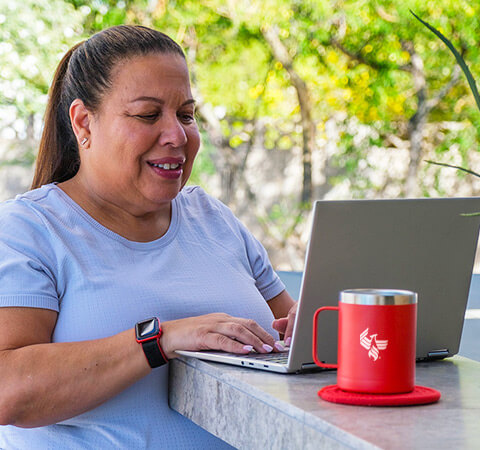
"As a working professional, I could fit my classes around my work and my life."
Dr. Rose Lorenzo
BSCJA 2014 | MBA 2016 | DM 2020
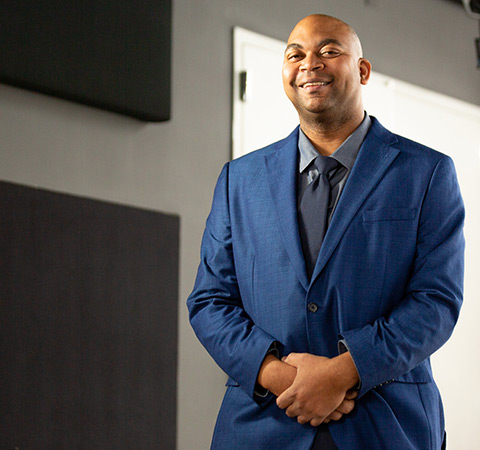
"I chose University of Phoenix because of its online learning platform. I didn’t have to put my life or career on hold while I pursued my education."
Vernon Wiggins
BSM 2012 | MBA 2021
- As a working professional, I could fit my classes around my work and my life.
- I chose University of Phoenix because of its online learning platform. I didn’t have to put my life or career on hold while I pursued my education.
What’s it like to earn a degree online?
Get to know your online learning classroom
Our online classes take place in Blackboard®, a learning management system that supports learning on your schedule in a virtual classroom. You’ll have access to all your course content, weekly assignments and a calendar with key due dates. You’ll also have a dedicated place for discussion about course topics with your faculty member and peers. Need extra support? Reach out to your instructor directly with questions.
Your schedule may vary. Our online classroom is mostly asynchronous. Asynchronous means you’re not typically required to attend a lecture at a specific time and date. You can navigate through weekly modules on your schedule, but you must still adhere to designated deadlines.
Our “secret sauce” for our online degree programs is our faculty. As professionals and leading practitioners in their fields, they bring an average of 28.8 years of professional experience into the classroom. Their real-world experience allows them to translate theory into practical examples, often from their own workplaces, so you can put what you learn into practice right away.
You’ll need regular access to a laptop or desktop computer. Mobile devices will not be sufficient to complete your online degree program. Your course assignments will require a computer to complete and submit them.
Think you’ll need to physically go to a library for your courses? Think again. Access our digital library 24/7 with support from our librarians. You can peruse 115 licensed scholarly and trade research databases, more than 200,000 scholarly journals and periodicals, and more than 270,000 general interest e-books from your home.


What support services are available to me?
Your life doesn’t stop when you’re attending school. That’s why you have a support team of real people you can lean on. Our academic counselors, career coaching teams and technical support staff are ready to assist you. Because we know you’re busy, we also offer a range of on-demand resources like tutorials, videos and more.
Tuition cost per course
Tuition is based on number of credit hours per course. Courses are typically 3 credits, but can range from 1-6 credits. Costs do not include savings opportunities like transfer credits and scholarships. Learn how to reduce cost.
Undergrad

Cost per credit
Credits per course
Resource fee
$398
x3
+ $170
Estimated cost per course
$1,364 / course
Master's

Cost per credit
Credits per course
Resource fee
$698
x3
+ $195
Estimated cost per course
$2,289 / course
Doctoral

Cost per credit
Credits per course
Resource fee
$810
x3
+ $205
Estimated cost per course
$2,635 / course

What affects the overall cost of my program?
Your full program cost can vary by:
- Savings opportunities. Your cost could be reduced with eligible transfer credits, scholarships, employer discounts and more. Students with eligible credits and relevant experience on average saved $11K and 1 year off their undergraduate degree at University of Phoenix.
- Specific program costs. Additional costs that may only apply to certain programs may be included such as background checks, health screenings or professional third-party exam fees. Fees vary by program. Please check your selected program pages for a complete list of specific fees.
Discover ways to save time and money on your degree with our Savings Explorer® tool.

Try our Savings Explorer® tool
Students with eligible credits and relevant experience on average saved:
$11,000
1 year
Off their undergraduate degree with University of Phoenix.

Benefit from a career-focused education
Our online degrees include a skills-aligned curriculum.
In today’s competitive job market, skills matter. Using labor analytics data, advisory board input, and academic and faculty insights, we make sure our programs align to specific, career-relevant skills — arriving at a truly innovative way of connecting curriculums to careers.
Earn career-relevant skills in weeks – not years
Develop skills and update your professional profile with every 5- to 6-week course in our degree programs.
Promote your skills through verified badges
We’ve teamed up with Credly® digital credentials to help you showcase your skills on LinkedIn®.
Enjoy our Career Services for Life® commitment
Your degree gives you access to career coaching, résumé building and interview prep. For life.

Explore careers aligned to our online degrees
Learn about jobs that may suit your education and experience.

Financial advisor

Business manager

Accountant

School principal

Nurse practitioner

Software developer
- Financial Advisor, Business Manager, Accountant
- School Principal, Nurse Practitioner, Software Developer
“
I needed a program that could fit into my life—not the other way around. University of Phoenix offered that flexibility.”
Matthew Phillips, BS in Business Management

Frequently asked questions about our online degrees
Yes, most likely, depending on the academic field or discipline you’d like to pursue. University of Phoenix offers nine fields of study, which include behavioral sciences, business, criminal justice, education, healthcare, information technology, liberal arts, nursing and psychology. Our fields of study are housed in seven specialized, career-focused colleges, with over 100 program options.
Yes, if you earn an online degree from University of Phoenix. We have been continually accredited by the Higher Learning Commission (HLC), hlcommission.org since 1978. Plus, we have programmatic accreditations for select programs in business, healthcare, nursing, counseling and social work fields of study.
Earning a degree online enables you to learn when and where you want – and get help anytime. So, whether you’re working an extra shift, making sure your kids eat their vegetables or trying to get chores done around the house, the best time for class is when it fits your schedule. But remember to meet your deadlines!
At University of Phoenix, you can learn online on your own time. Our online degree programs are mostly asynchronous, which means you’re not typically required to attend a lecture at a specific time and date. You also have a support team available up to 14 hours a day, 5 days a week.
University of Phoenix offers four levels of online degree programs, including associate degrees, bachelor’s degrees, master’s degrees and doctoral degrees. Read about each degree level to see what might suit you.
An associate degree starts you on your education journey and can help you identify the career path that drives your passion. You’ll develop career-relevant skills you can add to your resume, to share with potential employers in the field you want to pursue.
A bachelor’s degree helps you build foundational knowledge in a particular field of study or area of interest. You’ll expand your skillset and develop competencies that will help you pursue your career goals.
A master’s degree could help set you apart in the competitive landscape with next-level knowledge. For organizations that require a master’s degree for advanced positions, your graduate-level online degree can prepare you for more opportunities in your field.
A doctoral degree prepares you for leadership roles in an organization. Choose a doctoral degree if you are looking to become an authority in your field, an educator in your profession or a leader in your industry.


