





Online behavioral science degrees
Make your passion for care a career
Our online behavioral science degrees provide you with the problem-solving methodology to help others through personal and family crisis. Behavioral science degrees prepare you to help underserved communities with skills that make a difference.
Let's get started
Program finder

Why earn your behavioral science degree with us?
Our bachelor’s-level degree programs equip you to serve the underserved in community settings, while our master’s degrees in counseling prepare you to pursue licensure in mental health counseling or marriage, family and child therapy.

Save time and money
You’ll have the opportunity to get your prior academic and professional experience evaluated for potential credit, which could shorten your time to completion and save you money.

Affordable, fixed tuition
We’ve locked in tuition for the duration of your program. So, when you earn your behavioral science degree online, you can count on your tuition to be as dependable as your education.

Gain real-world knowledge
Our instructors average 28+ years of experience in the fields they teach. So, you won’t just study theory you’ll learn how to apply it.
Earn career-relevant skills in weeks – not years
Get value from your education before you even graduate. Update your resumé and LinkedIn profile with learned skills when you complete every 5- or 6-week course in our associate, bachelor's and master's programs.

Meet your college deans
Our college deans focus on developing a career-relevant curriculum. They bring industry experience to the classroom and lead a faculty of academic professionals with one goal in mind—to help you earn the skills you need to pursue your career.

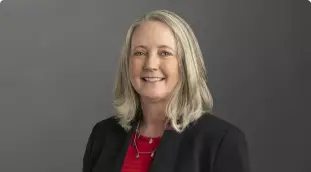
Sheila Babendir, EdD, LPC
Dean, College of Social and Behavioral Sciences
Samantha Dutton, PhD, LCSW(r), Lt Col(Ret)
Associate Dean, College of Social and Behavioral Sciences
How to apply
We're with you every step of the way
Set your goals
Select your behavioral sciences degree, course or certificate.
Begin online application
Complete your application on your own or with the help of an enrollment representative.
Start school
Register for class and get ready for the first day of school.

Frequently asked questions
To put it simply, behavioral science explores human behavior and how people interact in their world.
Choose behavioral science degrees if you want to support others and advocate for their well-being or rights.
Depending on the program you choose, our behavioral science degrees can prepare you to work in a variety of settings:
- Bachelor of Science in Social Work – Help ensure the safety of children, help those suffering from domestic abuse or serve the underserved in your community
- Bachelor of Science in Correctional Program Support Services - Manage cases, facilitate programs and address the needs of people impacted by the criminal justice system
- Master of Science in Counseling - Clinical Mental Health Counseling - Help clients improve relationships, advance personal growth and face crisis or trauma
- Master of Science in Counseling - Marriage, Family and Child Therapy - Assess family dynamics, offer comforting insights to children in need or help couples to communicate better
Here’s how long it can take to complete a behavioral science bachelor or master’s degree program without any prior academic or professional experience transfers:
- Bachelor of Science in Social Work (BSSW): approximately 4 years
- Bachelor of Science in Correctional Program Support Services (BSCPSS): approximately 4 years
- Master of Science in Counseling - Clinical Mental Health Counseling (MSC - CCMH): approximately 3 years, 6 months
- Master of Science in Counseling - Marriage, Family and Child Therapy (MSC -MFCT): approximately 3 years, 2 months
The Master of Science in Counseling program in Clinical Mental Health Counseling at the Phoenix Campus is accredited by the Council for Accreditation of Counseling and Related Educational Programs (CACREP™).
Council for Accreditation of Counseling and Related Educational Programs
500 Montgomery Street, Suite 350 Alexandria, VA 22314
For additional information please visit cacrep.org.
The Bachelor of Science in Social Work (BSSW) program is accredited by the Council on Social Work Education (CSWE).
Accreditation of a baccalaureate social work program by the Council on Social Work Education’s Board of Accreditation indicates that it meets or exceeds criteria for the assessment of program quality evaluated through a peer review process. An accredited program has sufficient resources to meet its mission and goals and the Board of Accreditation has verified that it demonstrates compliance with all sections of the Educational Policy and Accreditation Standards.
Accreditation applies to all program sites and program delivery methods of an accredited program. Accreditation provides reasonable assurance about the quality of the program and the competence of students graduating from the program.
For more information about social work accreditation, you may contact Accreditation.
Yes! Some of our behavioral science programs require field education, clinical hours, practicum hours, special exams or additional state requirements for licensure.
See additional details on program and state licensure requirements here:


Start a conversation about your future with an enrollment representative today.
*While widely available, not all programs are available to residents of all states. Please check with a University Enrollment Representative.