


 844-937-8679
 Login
Login


Online Master's in Counseling
Master of Science in Counseling - Clinical Mental Health Counseling
Gain skills to empower others to improve their lives. Our Master of Science in Counseling/Clinical Mental Health Counseling teaches you how to clinically assess and treat clients coping with anxiety, depression, abuse and more.
The mission of the Master of Science in Counseling - Clinical Mental Health Counseling is to prepare confident, competent and reflective clinical mental health counselors with a professional disposition and demonstrated knowledge and skills in all of the following areas:
- Professional counseling orientation and ethical practice
- Social and cultural diversity
- Human growth and development
- Career development
- Counseling and helping relationship
- Group counseling and group work
- Assessment and testing
- Research and program evaluation
Furthermore, students who are preparing to specialize as clinical mental health counselors will demonstrate foundational knowledge and skills necessary to address a wide variety of circumstances within the context of clinical mental health counseling practice.
Ignite Your Passion
Start when you're ready
Courses
Browse courses for your online clinical counseling degree
Education should hold practical value. That’s why our courses meet rigorous academic standards and provide you with skills and knowledge immediately applicable to your career.

Look for this icon to see which skills you’ll learn in a course.
Program Handbook: Master of Science in Counseling Program Handbook (online)
Requirements: 60 credits
You’ll need 60 credits to complete this Master of Science in Counseling - Clinical Mental Health Counseling. Your course schedule may vary based on transferable credits.
To be admitted into the program, students must successfully complete CCMH/502, Graduate Portfolio.
Program Purpose Statement
The Master of Science in Counseling - Clinical Mental Health Counseling program prepares students for licensure as a professional counselor in jurisdictions where it is offered. In order to practice as a counselor in most states, the student must be licensed as an LPC (licensed professional counselor), MFT (marriage and family therapist), or other comparable state professional license designation. License requirements vary by state. Student’s should ensure they stay updated on the licensure requirements in any state in which the student desires to practice. Review state licensure requirements.

California
The Master of Science in Counseling - Clinical Mental Health Counseling program meets the California Licensed Professional Clinical Counselor (LPCC) educational requirements for registration with the Board of Behavioral Sciences (BBS) as an Associate Professional Clinical Counselor (APCC). Upon successful completion of all educational requirements and required postgraduate supervised clinical hours, graduates are eligible to sit for LPCC licensure exam in California. Students should ensure they stay updated on the licensure requirements in any state in which the student desires to practice. Review state licensure requirements.
Schedule
Your academic counselor will help you plan your Master of Science in Counseling - Clinical Mental Health Counseling classes.

Earn career-relevant skills in weeks – not years.
Learning shouldn’t take years to put into practice. That’s why we’re empowering you to build career-relevant skills with every five- to six-week course.
We’ve worked with the labor market researcher Lightcast to identify in-demand skills for occupations and mapped those to our related associate, bachelor’s and master’s degree programs.
Tuition
Paying for school
Tuition is based on number of credit hours per course. Courses are typically 3 credits, but can range from 1-6 credits. Costs do not include savings opportunities like transfer credits and scholarships.

Master's cost per course
$2,289 / course

What affects the overall cost of my program?
Your full program cost can vary by:
- Savings opportunities. Get your degree faster and for less with eligible transfer credits, scholarships and work experience credits. Students with eligible credits and relevant experience can save up to $6,800 and 9 credits off their master’s degree.
- Admission requirement cost. You must take and pass Graduate Portfolio before being admitted into the program. This six-week, noncredit assessment costs $150.
- California Student Tuition Recovery Fund (STRF). If you’re a California resident or enrolled in a residency program, you must pay the state-imposed assessment for STRF which is currently $0 per $1,000 of institutional charges. The STRF assessment is nonrefundable.
- Additional estimated costs. The Master of Science in Counseling/Clinical Mental Health Counseling requires in-person residencies in Phoenix, Arizona. Approximate costs for airfare and accommodations are listed in the estimated cost table below.
- Liability insurance. This program requires liability insurance through the American Counseling Association for the practicum and internship. The estimated third-party cost is $105.
With our Tuition Guarantee, you pay one flat, affordable rate from the moment you enroll to the day you graduate from your program.
Earn your master’s degree faster and for less with eligible savings opportunities:
Additional estimated third-party costs for required program residencies:
Charge type
Cost
Airfare for travel to Residency I and Residency III ($250 for each Residency)
$500[1]
Hotel for travel to Residency I and Residency III ($300 for each Residency)
$600[2]
1 The amount shown for airfare travel to Residency I and Residency III represents the estimated cost of a round-trip, economy class airfare to Phoenix Sky Harbor International Airport from major California metropolitan airports (San Diego, Los Angeles, San Francisco, Oakland, Sacramento), and includes typical baggage and related fees. The actual amount the student pays will depend on the location of the student’s departure, the airline, and the type of ticket purchased.
2 The amount shown for hotel accommodations estimates $95-$150 per night, depending on the time of year, for a two-night stay at a select hotel near the University’s Phoenix campus, for students attending Residency I and Residency III.
Other ways to save on time and tuition
Because we believe everyone deserves an affordable education, we work hard to help our students achieve one. Here’s a few ways you can save time, save money and avoid starting from scratch.
Transfer credits
Your prior eligible college credits can lower your cost and help you graduate sooner. As a transfer-friendly university, we accept eligible credits from 5,000+ accredited institutions.
Employer tuition benefits
Are you employed? Check to see if your employer has an alliance agreement with us for education benefits. This can help you save money while gaining skills that could apply to your job.
Credit for life experience
We look at all your relevant experience, from parenting to past jobs, to help you get the college credits you deserve. For every 3 credits earned, shave 6 weeks off your degree.
Alumni savings
Are you a Phoenix alum? If so, you’re eligible for special tuition rates and can save up to $2,200 on a master’s degree. You can also save with an alumni scholarship.
Military savings
If you’re an active-duty service member in the U.S. Armed Forces or an eligible spouse or dependent, you may be eligible for a lower, military tuition rate and can save on tuition.
We can help you get started
Chat with an experienced advisor who can guide you through tuition, financial aid, scholarships, transfer credits and more.
- View 1
- View 2

Budget & borrow
How to pay for college
Paying for school can be intimidating, but we’re here to help you make sense of it. Our finance advisors can walk you through your options like federal financial aid and savings opportunities to minimize your debt. Plus, we can help you figure out your financial plan.
Careers & Outcomes
What can you do with a Master of Science in Counseling - Clinical Mental Health Counseling?
Discover where your degree might take you and make informed choices about your future.

When you earn your online Master of Science in Counseling/Clinical Mental Health Counseling, you’ll be equipped with a concrete set of skills you can apply in your career. You’ll learn how to:
- Develop a professional identity as an advocate and steward for the counseling profession.
- Integrate social and cultural diversity competencies into their practice as a professional counselor.
- Integrate human growth and development theories and principles into their counseling practices.
- Integrate career development theories and principles into their counseling practices.
- Integrate counseling theories, models, and techniques into their counseling practices.
- Integrate group counseling theories and practices into their counseling practices.
- Execute counseling assessment and testing processes and procedures to guide their practice as a clinical mental health counselor.
- Evaluate research and programs to inform counseling practice.

Top skills learned in this program:
Human Development
Psychotherapy
Professionalism
Diversity
Research
Clinical Assessments
Career Counseling
Group Dynamics

An MSC/CCMH can prepare you to be a:
- Licensed Professional Counselor
- Mental Health Counselor
- Counselor
Program Handbook: Master of Science in Counseling Program Handbook (online) (PDF)
Annual report: MSC/CCMH Annual Report 2025 (online) (PDF)
Program Outcomes report: MSC/CCMH Outcomes Report 2025 (online) (PDF)
17% growth
According to the Bureau of Labor Statistics, job growth for Substance Abuse, Behavioral Disorder, and Mental Health Counselors is projected to be much faster than average between 2024 and 2034.
The BLS Projected Growth for 2024-2034 is published by the US Bureau of Labor Statistics. This data reflects the BLS’ projections of national (not local) conditions. These data points are not specific to University of Phoenix students or graduates.
Admissions
Apply for free – no application fee, no obligation.
Starting your degree is a big decision — and we want you to feel great about it. That’s why we remove obstacles from your application.
- No cost to request prior transcripts
- No GMAT
- No essay required

How to enroll at University of Phoenix
Receive 1-on-1 support
You have a support team of real people you can lean on. And our academic counselors, who are with you every step of the way, have earned a 5-star rating from 90% of our surveyed students.[1] Start a conversation with an enrollment representative today.
[1] Transactional Survey, August 2021-22 (18,645 respondents)
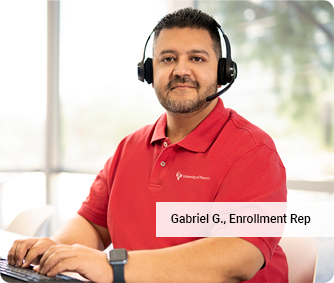

Call or chat with us 7 days a week.

Gabriel G., Enrollment Rep
Receive 1-on-1 support
You have a support team of real people you can lean on. And our academic counselors, who are with you every step of the way, have earned a 5-star rating from 85% of our surveyed students.[1]
[1] Transactional Survey, September 2022-August 2023 (23,739 respondents)
Start a conversation with an enrollment representative today.
Call us at 844-937-8679 or chat with us 7 days a week.
Student Experience
An education that fits your busy life
Balancing family, work and school
Work toward your degree without giving up what matters most. Start your degree year-round and take one class at a time.
Around-the-clock support and resources
You have a support team available up to 14 hours a day, 5 days a week.
Computer requirements for courses
Many course assignments will require you to use a computer to complete and submit your assignment.

Faculty Spotlight
Professionals dedicated to you
Start your clinical mental health degree with a dedicated faculty who brings experience and a hands-on perspective to your counseling education. Develop both academic and industry knowledge from professionals focused on developing the skills you need in the field.

Sheila Babendir Ed.D., LPC
Dean
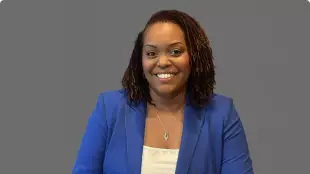
Yurandol Thompson, Ph.D., NCC, LPC
Associate Dean

Christine Karper, Ph.D., LMHC
Program Chair
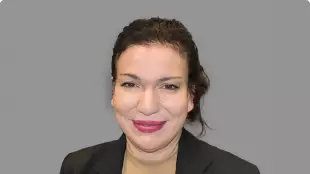
Monalisa McGee, Ph.D., NCC, LMHP, CPC, MAC, LMHC
Program Chair
Accreditation
Count on the quality of your education
programmatic accreditation
The Master of Science in Counseling - Clinical Mental Health Counseling online program is accredited by the Council for Accreditation of Counseling and Related Educational Programs (CACREP).
What does that mean? CACREP-accredited schools are committed to quality standards. Accreditation is granted for a specified period of time. A full CACREP accreditation cycle is eight years.
Effective February 6, 2025, the MSC - CCMH online program was granted by CACREP for an eight-year cycle, through March 31, 2033. Graduates of this program are considered CACREP graduates beginning February 6, 2023.
In addition, the University’s MSC - CCMH program at the Phoenix Campus has been continuously accredited by CACREP since 1995.


Frequently asked questions about this master's program
To be eligible for a master’s degree program, you must meet the following criteria:
- You are a U.S. citizen or permanent resident, or have a valid visa if you’re living in the U.S.
- You have earned a bachelor's (or comparable undergraduate) degree from an approved, college or university with institutional accreditation, or hold a comparable degree from a recognized institution outside the United States
- You have a cumulative GPA of 2.5 (on a 4.0 scale) shown on a bachelor's (or comparable undergraduate) degree posted transcript
- You have not previously been expelled from a higher education institution
- You will complete all required forms for admission, as well as submit official test scores and transcripts from all colleges and universities you've attended
No specific bachelor’s degree field is required to start a master’s degree. You must have a cumulative GPA of 2.5 (on a 4.0 scale) shown on a bachelor's (or comparable undergraduate) degree from an accredited institution. Learn about transferring credits.
Sign up for a University account to start the process. Complete your program application in about 20 minutes. Apply now.
We have an open admissions policy that allows you to apply without standardized test scores, so GMAT/GRE test results are not required. What is required for admissions?
No, application to University of Phoenix is free. We strive to remove barriers for new students that might interrupt higher education goals, including fees for application. Explore costs and tuition.
At University of Phoenix virtual learning creates an engaging online experience with the flexibility that fits your lifestyle. Experience one-on-one connections with experienced faculty and collaboration with your classmates—all without the commute to class. Know more about student life.
As a university for working adults, we’ve created the flexibility to balance family, work and school. With a classroom that’s open 24/7 you can take one 5-6 week course at a time, allowing you to go to school on your schedule. Find out more about learning online.
Academic advisors are available 6 am to 7 pm, 5 days a week to provide guidance and support throughout your educational journey. Sign up to connect with advisors.
You can ask questions directly to your instructor about assignments and any other topics in your virtual classroom platform – Blackboard. You will also use Blackboard to collaborate with classmates, review assignments, receive feedback from your instructor, and stay on track with homework. Learn more about your virtual classroom.
Our online master’s programs can take anywhere from 12-37 months to complete depending on the degree or academic field you choose to pursue. Some competency-based programs may be completed sooner.
You may be able to shorten your path to graduation. Some master’s degrees have competency-based options to finish sooner. Other saving opportunities include transfer credits and credit for past work experience to help you finish your degree faster and for less. Learn more about master’s degree saving opportunities.
No, a University of Phoenix diploma does not indicate that the degree was earned online. The diploma only shows that the degree was earned in a specific field of study. We also offer continued opportunites after you graduate. Explore alumni benefits.
Every student at University of Phoenix has access to free career tools and resources. You can define your career goals, get help with your resumé, and prepare for your job search.
You can also use our career guides to explore on-the-job skills and opportunities for enhancement in your career of choice.
While widely available, not all programs are available to residents of all states. Please check with a University Enrollment Representative.