


 844-937-8679
 Login
Login


Resources
Student life at University of Phoenix
Here's what you'll need to navigate online college.
Where are you in your education journey?
Select which best describes you. For more information, please check out our FAQs.
Essential quick links
Access your student account, participate in your classroom, find all your coursework and more here.

Course schedule

Academic advisor

Transfer credits

Career services
New student orientation
Prepare for your first day of class with these onboarding resources specific to your degree level and program type.

Standard onboarding checklist

Competency-based degree checklist
Becoming a Phoenix
If you’re still browsing your education options or wondering what sets us apart, here’s a preview of student life as a Phoenix.

Paying for school
Understand your financial options, check your eligibility for scholarships and transfer credits, military benefits, employer tuition benefits, ways to save and beyond.

Going to class
Wondering about day-to-day life as a student? Here, you can learn more about what to expect and how Phoenixes enjoy online learning on their own time.

Support at every step
Highly rated 1-on-1 support, available 14 hours a day, 5 days a week. 86% of our surveyed students rated their academic counselors 5 stars.[1]
Finish what you started.
Complete your application. Your dreams are within reach.
85%
of recent graduates in a 2025 survey believe University of Phoenix helped them develop skills and knowledge that were immediately applicable to their careers.[2]
Learning resources and support
Here’s what to expect when you become a Phoenix.


Have questions?
It’s common for new students to have plenty of questions, so chances are, we’ve heard yours before. Here are the answers to what other students frequently ask us.
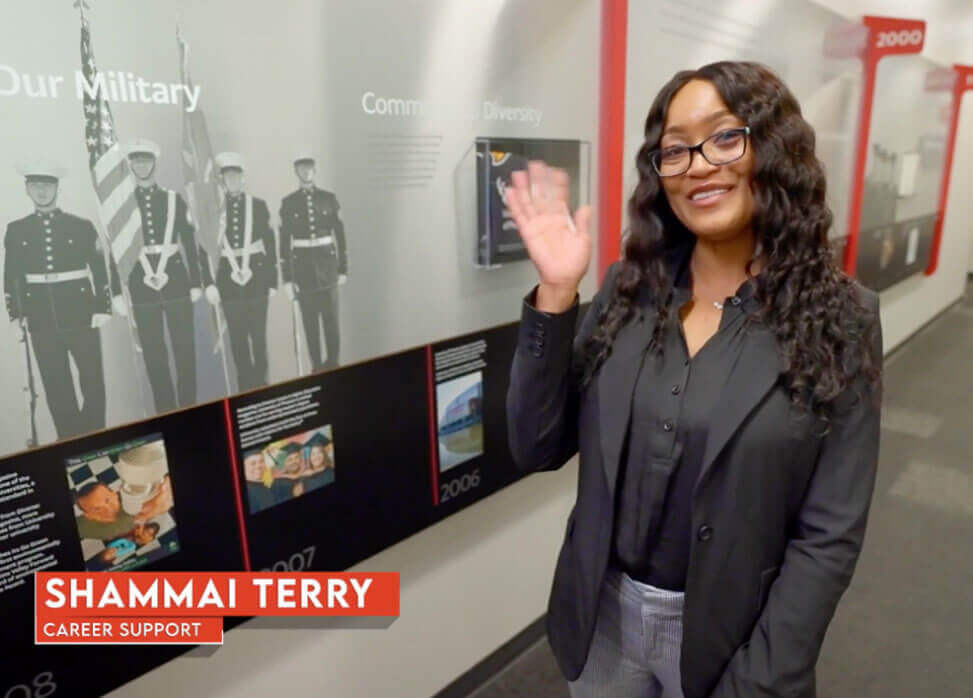
ALUMNA SHAMMAI TERRY
Career services — for life
For Shammai, career growth is a top priority. That's why we provide students with a lifetime of personalized career support, from 1:1 guidance and resume help to interview skills and more.
“My advisor empowered me to understand my dreams and go achieve them.”
Shammai Terry
AACJ 2009 | BSB 2018 | MBA 2020 | Future DM

Steer your career path
From your first day of class to graduation and beyond, you can access our Career Navigator for tools and support to help you identify and work towards your goals. Sign in to MyPhoenix to begin exploring.



[1] Student End of Course Survey, September 2024-August 2025 (207,242 respondents, 21% response rate).
[2] June-July 2025 UOPX Biennial Alumni Survey of undergraduate, graduate and doctoral alumni who reported graduating in 2024 or 2025 (1,542 respondents, 5% response rate).