





How to write a formal resignation letter, with examples


Written by Michael Feder

Reviewed by Jessica Roper, MBA, director of Career Services at University of Phoenix

It’s not uncommon to invest hours perfecting your resumé and cover letter to land a particular role. But, when it’s time to quit and move on from a position, how many of us take the same time to write a resignation letter? Is writing a resignation letter still a good idea before quitting a job?
Is it time to submit a formal resignation letter?
When do you know it's time to submit your formal resignation letter? While moving on might be the right thing to do professionally or personally, the relationships you developed with your managers and co-workers can make it difficult to do so. One way to lessen the sting is to take a professional approach to your departure, and the first step is writing a letter of resignation.
Understanding why you have decided to resign from a position can help you craft the language that will go into your formal resignation letter. It’s not always a matter of simply listing your last day, the company name and other technical information.
How to write a formal resignation letter
Once you fully understand why you’re leaving, it’s time to start writing. A professional, formal resignation letter most importantly outlines the details of your employment and departure.
A letter of resignation provides an easy-to-read format for this information, serving as a record of company name, the length of your tenure at the company and (if you decide to include it) the reason for your resignation. That can be useful for legal purposes, as it lays this information out in plain terms. It’s preferable to resigning over the phone or in person.
The goal of a good formal resignation letter is to provide an employer with as much information as possible to ease the transition for both sides. This includes giving your employer enough notice (most commonly two weeks) to find a replacement and sharing an outline of your duties at the company, so your employer has notice as to which skills to seek in a replacement.
If you’re looking to resign, it’s important to be as professional as possible. Even if your work experience has been negative, it’s still essential to write the letter professionally. You might also choose to address your employer by company name instead of directing notice toward a specific person. This further turns the resignation letter into a professional document rather than a personal one.
As you write your letter, the following steps and inclusions will help ensure a professional departure:
1. Heading: Include your contact information (name, address, city, state, ZIP code, phone number and email address).
2. Date: Document the date when you’re writing the letter.
3. Employer contact information: Insert your employer’s name and professional title if using; always include the company name and address.
4. Salutation: Open with a professional greeting. If you have a good relationship with the employer or manager, you might use their first name. But in many cases, it’s best to use their title and last name (e.g., “Dear Ms. Jones”).
5. Opening paragraph: The first paragraph should get straight to the point. State your resignation and provide the effective date. It’s customary to give at least two weeks’ notice unless you have a different agreement with the employer.
6. Second paragraph: You can explain why you’re leaving in the second paragraph, but keep it brief and professional. You’re not obligated to provide detailed reasons for your departure, and sometimes less is more.
7. Third paragraph: This section should focus on the positive aspects of your job. Thank your employer for the opportunity to work there. Even if it wasn’t your dream job, it’s important to recognize the skills and experiences you’ve gained.
8. Offer of assistance: Offer to help during the transition. You might volunteer to train a replacement or finish any outstanding projects.
9. Closing: Use a professional closing, such as “Sincerely” or “Best regards,” followed by your full name.
10. Signature: If printing your letter, leave a space for your signature and type your full name. If it’s an email, your typed name will suffice.
Remember, keep the letter professional and positive. Even if you’re leaving because of workplace issues, it’s essential to leave on good terms. The resignation letter could be kept in your file and might even be seen by future employers.
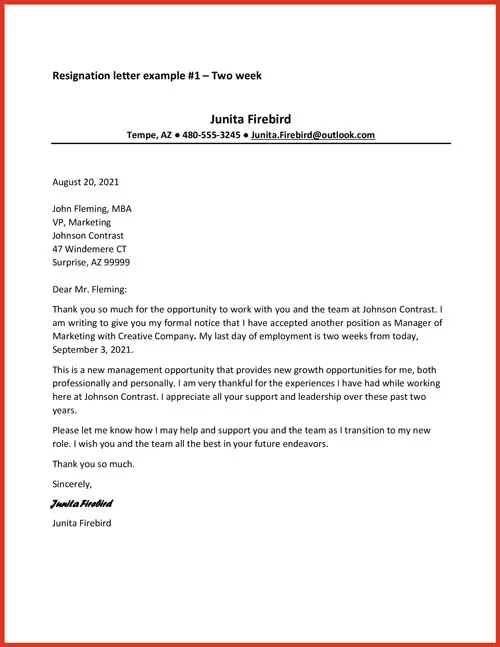
Consider the following resignation letter examples:
Click on the image to download our two weeks resignation letter example.
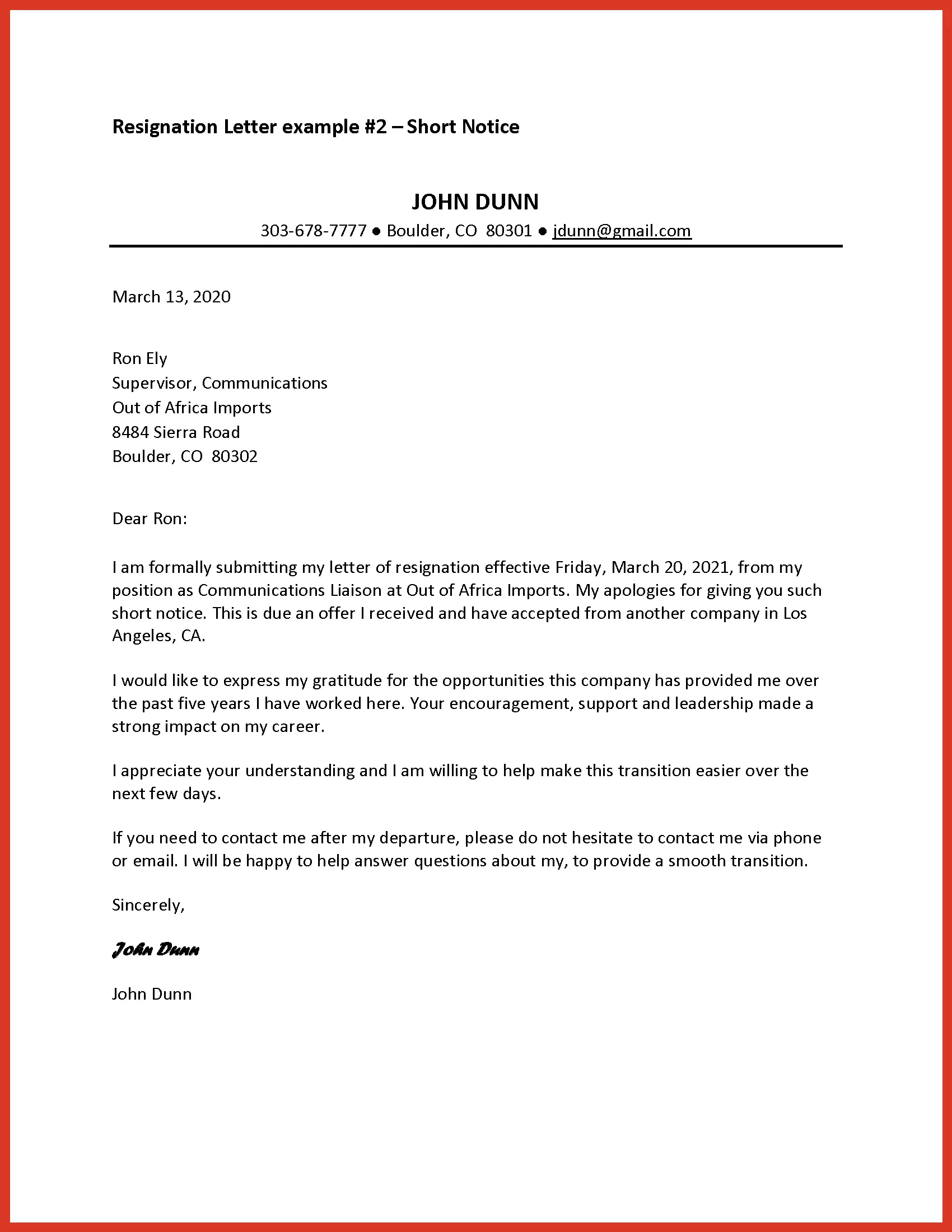
Click on the image to download our short-notice resignation letter example.
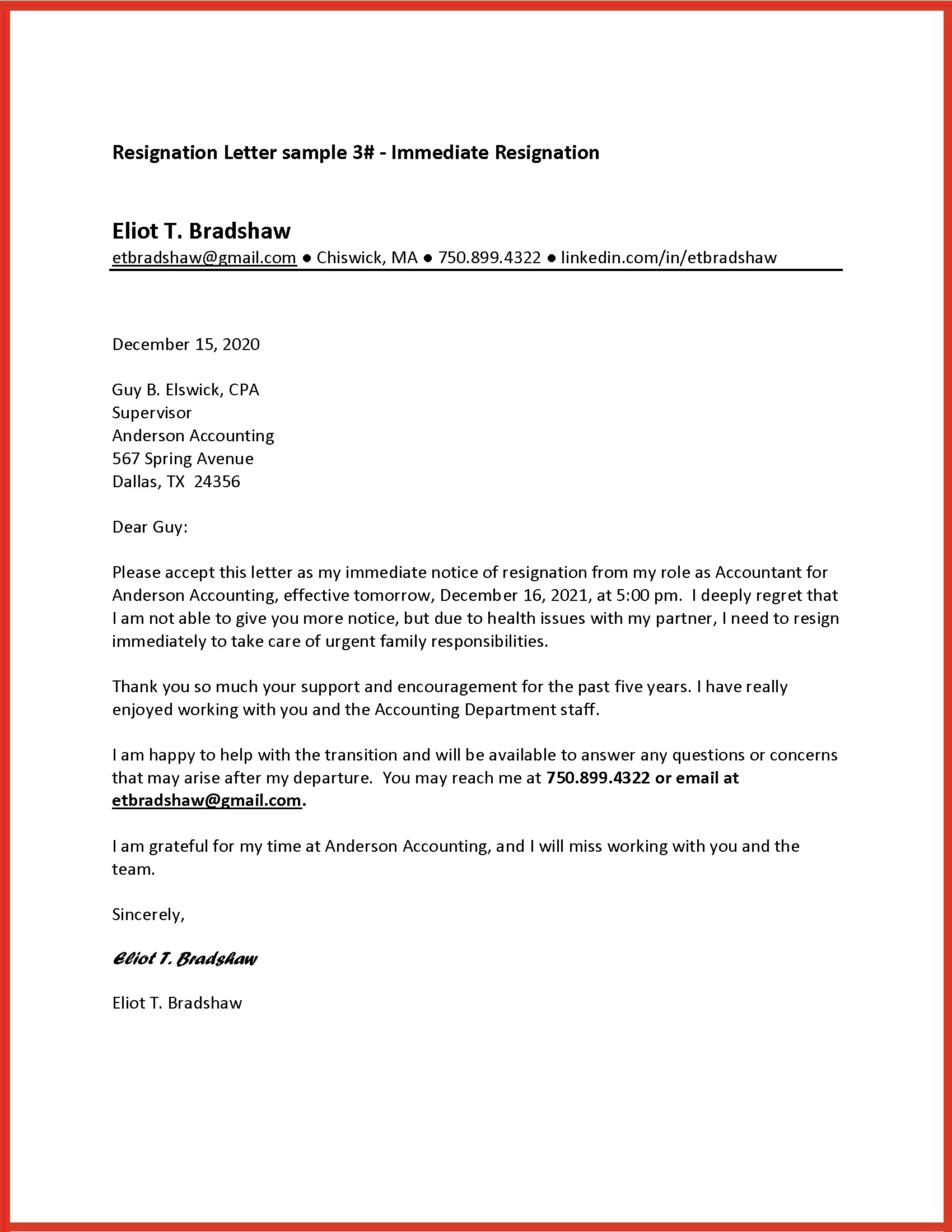
Click on the image to download our immediate resignation letter example.
Why is it important to leave a job gracefully?
Your reputation can precede you. Leaving a job on a sour note might make it difficult to get a positive reference for your next job.
Leaving on bad terms can also create personal tension between you and your former manager and co-workers, which can follow you even after you resign. At the end of the day, to resign with grace is the right thing to do if you want to maintain a positive impression with the people you used to work with.
And that positive impression has potential to pay off. For example, when former co-workers have a positive memory of you, they are more likely to speak on your behalf. This can open opportunities for career development that you may not be able to foresee right now.
Resigning professionally isn’t always easy, but it can make the transition period between employment easier. Writing a formal resignation letter shows that you are willing to resign without personal conflict. It also suggests you have both the attitude and maturity that can make your future employment much more pleasant and productive.
In short, leaving a job with grace sets the foundation for a fresh start that can build a network of potential opportunities now and in the future.
Find resources to help you write a formal resignation letter
Need assistance to write a formal resignation letter, a resumé or any other career guidance? Active University of Phoenix students and graduates have a team of career advisors to help them take that next step. Learn more about the Career Services for Life® commitment, and get career insights every week via University of Phoenix’s LinkedIn newsletter.
LinkedIn is a registered trademark of LinkedIn Corporation and its affiliates in the United States and/or other countries.




ABOUT THE AUTHOR
A graduate of Johns Hopkins University and its Writing Seminars program and winner of the Stephen A. Dixon Literary Prize, Michael Feder brings an eye for detail and a passion for research to every article he writes. His academic and professional background includes experience in marketing, content development, script writing and SEO. Today, he works as a multimedia specialist at University of Phoenix where he covers a variety of topics ranging from healthcare to IT.

ABOUT THE REVIEWER
Jessica Roper, University of Phoenix director of Career Services, is a seasoned leader with over 15 years of experience in leadership within higher education. She has honed her expertise in student services and career development and is passionate about helping others discover and refine their skills.

This article has been vetted by University of Phoenix's editorial advisory committee.
Read more about our editorial process.