


 844-937-8679
 Login
Login


Veterans Day with WWII veteran Major Fannie McClendon

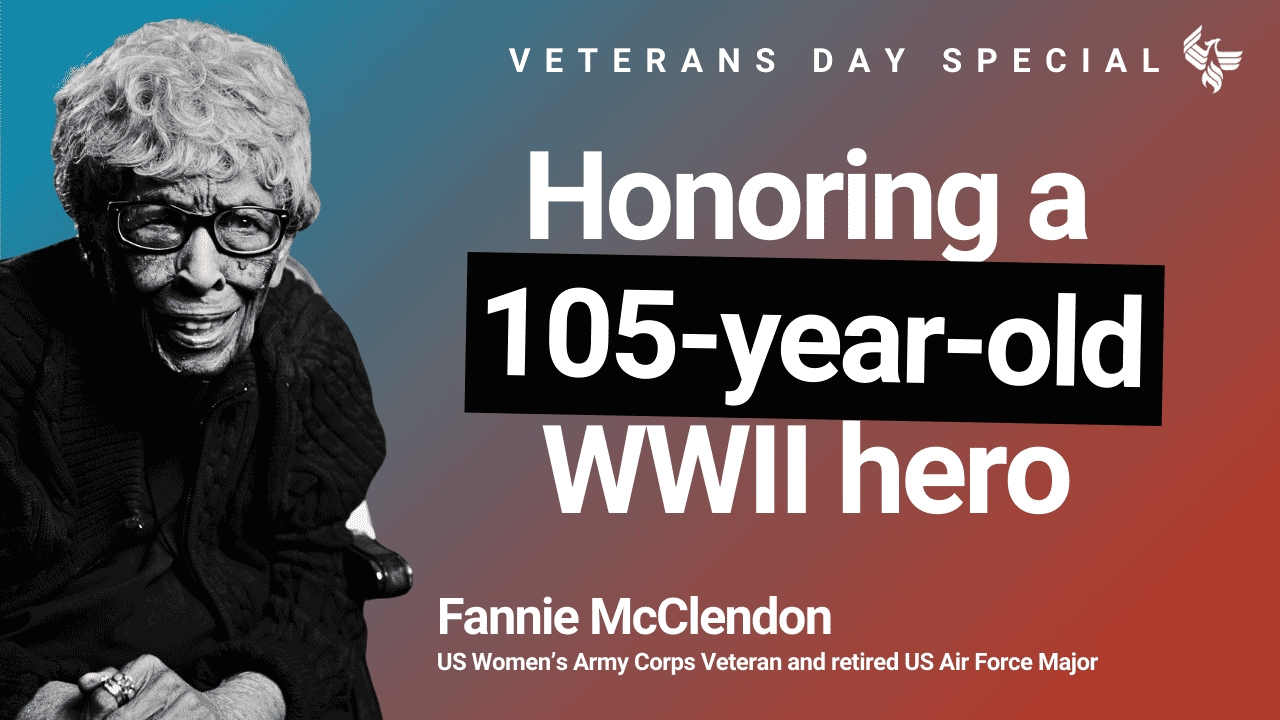
Listen to the podcast episode featuring UOPX scholarship namesake Fannie McClendon
Honoring a Hero: Major Fannie McClendon
Fannie McClendon is a World War II veteran and retired Air Force major whose groundbreaking experiences, and those of all the women of color who served in the 6888th Central Postal Directory Battalion during World War II, are portrayed in the 2024 movie The Six Triple Eight. In this episode of the Degrees of Success podcast, McClendon tells her story of resilience, service and breaking barriers.
0:00
When I got married, I didn't tell my mother. I wrote her, but I didn't tell her to come to the wedding.
0:07
Surprise, surprise, his mother's family came to the wedding in Virginia.
0:13
Mama found out, and that was hell to pay.
0:32
Welcome to the Degrees of Success podcast. I'm your host, Freda Richards, and today we have an incredible guest, Major Griffin.
0:39
She's a World War II veteran, an Air Force officer, and her life has recently been put on the big screen on a movie called 6888.
0:50
I finished the Army and then they were wanting people in the Air Force and so I got moved to the Air Force.
1:01
Fort Huachuca is where I started out and that's where I got my commission.
1:11
Fort Huachuca? Yes ma'am. You're kidding. Yes ma'am. I was born in Fort Huachuca
1:16
Uh huh. Do you remember such things as a house along the railroad tracks?
1:23
I don't, so I was born there, but because I'm an army brat, my mom left, we went to Germany and like a few other places.
1:29
So I actually don't think I've been back. Oh, I see. Well, uh they took us to uh Fort Huachuca on the train.
1:40
Wow. And I remember they actually had uh cooking things and everything from Des Moines uh to Fort Huachuca.
1:51
And when uh we got there, they had bags that they had all ready for us.
2:01
and we took our exams for uh when I became an officer.
Life in the Military: Challenges and Triumphs
2:10
And uh all the people who passed uh stayed there to go on to the next station.
2:24
But that was all army at that time. then later on,
2:31
I ended up in Des Moines, back in Des Moines, Iowa.
2:36
And that's where I met a lot of the ladies.
2:42
And I guess the rest is history. literally history, Well, let's talk about some of that.
2:51
the Air Force, it was the uh Army people in England.
3:01
obviously, England, I can't remember the name of the number of people at that time, but that's where I began to meet a lot of these people.
3:17
A lot of people. Yeah. But all of these are before.
3:22
This is Army and this is Army. Okay. Very cool. Well, let's talk about this because.
3:29
That was standing outside of our barracks. And you know, you could probably imagine that is me.
3:38
Yes. This one was from California, I know. And these two, it's in Texas, I know, but I can't remember.
3:47
Oh, okay. Okay, so they're from Texas. But we all met at the base in England.
3:58
Wow. Then we went from there to France.
4:07
From there to France. So this is a picture of you and some of the women from 6 888 is that right?
4:16
And the stories that you have here with these women, like were these your closest friends?
4:22
Were these your close friends? not too much.
4:28
because these girls, this one was because she was from New York and I was one of the few in that group that was from New York.
4:41
Okay. And, uh, they, after I got my permission, I was supposed to go to an assignment in North Africa.
The Role of Women in WWII
4:54
But the commander did not want a woman squadron commander.
5:01
And in those days they could say, no, I don't want that person.
5:07
But later on I met him and he says, where have I seen you?
5:14
And I said, well, I was supposed to go to your company and you didn't want a woman squadron commander.
5:21
And he says, oh, and he apologized. But of course this was years later. uh
5:27
I'm glad he recognized his wrong. What was that like, being a woman, a black woman, in serving the military, serving the U.S., in a country that didn't necessarily provide equality to all at the
5:42
see, you had quite a few other people who were in the same boat, you see, because we would take it in as a group.
5:51
there were a lot of black women together. And it wasn't until later on when things got different in the service that you began to be in a mixed group.
6:03
But most of the time, everything that we participated in, it was black.
6:08
uh Then Mrs.
6:14
I think it was Mrs.
6:20
and this black lady, they were very good friends and they came to visit us at the post.
6:31
At that time we were separated, black woman was in one placement.
6:37
And, but they put us together just for their visit at that time.
6:44
Well, they found out, they found out anyway.
6:50
it was between her and this lady that uh we were put together at that time.
6:59
uh me, we were there, I don't know.
Family Influence and Personal Motivation
7:07
I don't know how long from New York. ah We took tests.
7:15
And they said there were seven black women and all the rest were white.
7:22
And what would happen was that ah you take the test and then they tell you to either go to a restaurant or something like that.
7:33
And ah when we did, We waited to get the result of the test.
7:39
ah We got the results and they showed all seven black women had failed.
7:48
That was almost impossible because you had a professor, had uh many women who were teachers.
7:58
And of course me, who was uh nothing. I was uh out of high school.
8:07
And uh that's when Mrs. Roosevelt and this lady, her friend, she heard about it because her husband worked for Mrs.
8:20
Roosevelt at the White House. And she told her about it. So the next thing we knew, we were told to...
8:27
report to 29 Whitehall, 39 Whitehall Street because we were going to Du Bois.
8:36
And that's when we, that's the first we knew that we were going to be together, and instead of separate.
8:42
How did that feel for you? I don't know, I just didn't like being naked in front of white people.
8:51
You had to take your, you know, your figure holes and all that sort of thing. Yeah.
8:56
That was new to me. I completely understand that. Well, I know that you volunteered to go into the military.
9:05
Tell me why you chose to volunteer after high school.
9:10
My mom didn't want me to in the service. She just cried, she just carried on.
9:18
At the time, this is what the other people were doing and I thought I should do my part too.
9:23
So I went down to Fifth Avenue in New York and put in application to go in the service and that's how it all started.
Friendships and Bonds in the Service
9:38
So tell me about your mom because I was doing my research and I know that this is a fantastic woman and I imagine she has definitely inspired you to be exactly who you are
9:48
today. So tell me more about her and how she inspired you. My mom was born in New Orleans.
9:58
She lost her brother when she was a baby. And she had father to try to take care of her and cousins and all that sort of thing.
10:11
that's uh how... She was in New Orleans.
10:18
met my husband. uh father. ah He had difficulty.
10:28
He had kind of a drinking problem and tried to take care of children. So his cousins and everybody tried to take care of him.
10:37
But my father uh and grandmother lived in Lafayette, Louisiana.
10:43
And that's when we went to Lafayette to live in that school that I was telling you.
10:49
This school. It's actually behind it. Oh, okay, so that's a picture of you all in front of the school.
10:56
So, and we were with my grandparents from very early on.
11:02
And she would just come and see us ever so often. That's how we got started.
11:10
But insofar as the service was concerned, the first time that we went was when we, the World War, when the war started and I was in...
11:26
England twice. were sending me to this place and this commander didn't want a commander.
11:38
He didn't buy women in his outfit, but he didn't want a woman commander. And because I had gotten my commission then, I'd gone to school for that.
11:50
It took a while, you know, to get adjusted to the the different places that they sent us.
11:57
I was telling the story to someone about being in the Riviera.
12:04
And they said, will you do it out of the Riviera? I said, well, we had a path. They said, you mean you guys got to go to uh places to vacation and all that?
The Importance of Communication in Wartime
12:16
I said, well, we had to have time off. We worked and we serviced the mail and all that sort of thing.
12:24
And so I want to go to the Riviera. And that's a couple of the, one of the movie stars was married to one of the gentlemen at the base, the place we were.
12:38
And then we met some guys we knew from some of them. You just meet people all over the place.
12:44
That's one of the best things I think about being, well I'm an army brat, being a military, uh whether it be child or in the military, is that it's easy for you to network
12:55
and to talk to people and to meet people. We took advantage of whatever they offered us and we took advantage.
13:02
Absolutely. So I was listening to the radio in Paris.
13:11
ah I said, hey girls, I think we're going home.
13:17
And one girl said, well, how do you know that? She said, oh, she's from Lafayette, Louisiana and they speak French.
13:25
And so that evening we called my boss, who was in England at the time, and she says, yes, she said, drop everything, we're going home.
13:34
Wow. I mean, there were lots of things that happened. I'm probably not having it in the proper order.
13:44
ah The Air Force thing came much later. Okay, much later. Well, let's tell me for anyone who hasn't watched the movie, for anyone who hasn't watched the movie yet, since...
13:57
I have seen most of it, yes. So, and a lot of it is true, but Charity Adams was our boss and uh there were two of us girls were always going someplace and she was concerned as to where we were going.
14:21
we come in at night. And she's sitting in the window saying, well, did you girls have a good time?
Love and Relationships During the War
14:30
She was looking out for you guys. she was the guy. There were about four of us who were about 20, 21, you know, at the time.
14:39
And also, she was very upset about those girls getting killed.
14:45
uh And I was upset because I was in charge and I should have known where they were, but I didn't know they had took off with these guys.
14:54
oh And I understand that all of the girls had but one.
15:02
has been returned to the states, her parents apparently didn't pick her up.
15:08
My boss was most upset because when the soldiers died overseas, they put them in a shelter half.
15:17
Do you know what a shelter half is? Well, it's what they buried the soldiers in on the battlefield.
15:24
And so my boss said, we're not gonna do that. So... what are the offices in the other office.
15:32
They found some ah place to buy caskets and they made caskets.
15:41
ah But my boss wouldn't let me go because she said I had been through too much.
15:47
And I believe you were telling me earlier that you had to identify the young ladies, is that right?
15:53
Yes, these are the same girls I identified. uh We had a doctor and he also had a sister who was in the service in our office.
16:06
So he took care of a lot of helping us to get adjusted.
16:15
But it was hard. Most of the places we did our own work.
16:21
But at that one place in France, we had German prisoners who did all the work.
16:29
They did all the cooking and everything. The sergeant, when they reported for work.
16:36
The girls had to have their hair combed and wash their face and all that sort of thing before they went into dining hall.
16:47
That was fun in France. It was a town in France that I'll never forget?
16:56
But there were so many things. I'm sure I don't have all of them in order.
17:03
We got down to Germany. ah I got sick while I was in Germany.
Travel and Experiences Abroad
17:13
So I was in the hospital for oh a couple of weeks.
17:20
My boss said to my husband, at that time I'd be going. See, that's why I said I don't have things in order because I had gotten married by that time I had met my husband.
17:32
Before you tell me about the hospital, promise you I'll bring you back there. I wanted to talk about Roy. Can you tell me how you two met?
17:39
And it gets mixed up in my mind sometimes.
17:45
Where I was at certain times, you know and all. Yeah, things get mixed up in my mind all the time.
17:52
So you are not alone in that. But I know that you and Roy had an incredible love story.
17:59
Can you share it with us? He was from uh Pittsburgh and he went to school at Oberlin College in Ohio.
18:11
uh We met in a town in California.
18:18
We were going to classes. They were always sending me to school somewhere.
18:27
I had been playing golf, because I learned to play golf in England. Okay.
18:33
I got to the door and two guys were standing there, but I couldn't get through.
18:38
I said please may I, could you let me in? Oh yes, yes ma'am.
18:45
Well, then it became a friendship, because then they'd stop, wait for me to come by to go to...
18:57
to for food, you know, and oh would you like to have a drink?
19:03
Well, I didn't like German drinks. And it was funny because there were uh times when I wasn't particularly interested, but I thought he was kind of cute.
19:20
I'd have to agree he's very handsome Then he began to not sit with the other guys.
19:26
He waited until I came in and then he come and sit with me at the dining table.
19:33
And that's how that started. the letters I found just as recent as uh about a week ago, the letters he used to write me because we were in...
The Impact of the 6888th Central Postal Directory Battalion
19:51
in Virginia and I was in Des Moines and so we wrote letters that didn't say, I told mama, said, well, it doesn't seem like anything's happening to us.
20:08
Yeah, but later on it did happen and we got together and the letters will tell you more than I could tell you.
20:16
And so you just recently found letters? Oh, I'm trying to get rid of stuff.
20:21
We accumulate so much stuff as you move and you take it with you.
20:27
And then at one point you say, I gotta get rid of lot of this stuff. And some of the letters that he wrote me, that I found.
20:37
Cause I always told people he never proposed. No. How did he get so lucky to be your husband then?
20:45
Well, I don't know, but there was a party and uh there were several people getting married.
20:55
I thought that's the way it was done. oh You went to a party and, oh, they're getting married.
21:02
Well, we'll get married or something. I was really dumb. Yeah.
21:09
How old are you? Then I found this letter recently, about uh a month ago, where he definitely had proposed in one of his letters.
21:23
So I said, well, that takes care of that. He did it, he did it.
21:30
But it's kind of hard to tell the story because there were several things that happened.
21:40
whenever we got a chance for a path or something, we'd take it.
21:45
And one was to Brussels, Belgium. We'd heard about this little boy who got lost.
21:53
ah They were from Belgium. ah
21:59
We were on paths to go to Paris. We were always on paths to go somewhere, although we did our work.
22:07
And I ah said, let's go up to Belgium.
Overcoming Adversity and Building Community
22:13
It's a place where people go, the big bands and all, stuff in Paris and also in Belgium and all.
22:22
We never spent a cent. People just bought whenever they knew we were from the military.
22:30
they would, you know, take care of our meals, dances.
22:36
uh I can't name all the guys who played in these bands in these different countries.
22:46
And we got to meet an awful lot of them. uh
22:53
I don't know, it's hard to tell because there's so many things that did happen.
22:59
But I have been to Belgium, I've been to Paris, I've been to Germany.
23:05
I was in the hospital in Germany. but you did a whole bunch of traveling with you and your husband, which is amazing.
23:12
So you've seen the whole entire world. We traveled a lot in the States.
23:17
We hardly ever visited Louisiana? When I got married, I didn't tell my mother.
23:28
I wrote her, but I didn't tell her to come to the wedding.
23:34
But surprise, surprise, his mother's family came to the wedding in Virginia.
23:40
Mama found out. And that, you know, that was hell to play.
23:46
Oh I know! But we soon got it straightened out and I did think the world of my mother-in-law, we got along real well.
23:57
And we traveled. California, I think she enjoyed Vegas more than anything because she liked bingo.
24:09
Oh, okay. And so, right down the line.
24:15
My husband would call up when we were traveling somewhere and he'd say, let me see where the girls are now.
24:22
he'd say, In Vegas, what you doing in Vegas?
24:30
But in between, we did a lot of work. Because we were very involved in trying to see that the men got the mail as often and as
Reflections on Service and Legacy
24:43
much. And I don't know if you've seen some other pictures where it shows the girl sorting the
24:48
We we absolutely have those photos and we'll definitely make sure that we show them. I want to talk about the work Because what you've done has just been transformative.
24:57
And if it wasn't for what you all done, what you had done getting the letters to the to those serving, I don't know if they would have had the passion or the energy to be able to
25:07
succeed in the way that they did. So can you tell me about the work? Tell me what you did with 6 888.
25:13
Well, of course I was an officer then. So when we were sent to England the first time, ah they put us in an old broken down school and the girls actually worked hard, painted it, did all the things to make it look
25:36
reasonable. uh we officers were lucky. They rented houses for us.
25:41
oh And we lived across the street from where the girls were. That's when we got our boss.
25:48
She let the girls have as much uh freedom as possible to work with the mail because many times we couldn't find the people and we had to go through the mail and hope that, yeah.
26:09
And then there are times when they had a whole batch of that uh if grandma sent you cookies, you might got apples or something like that.
26:22
so the girls would put it aside and if they couldn't find a person, they sent something, whether it was what grandma sent or not.
26:34
And we gave them that privilege. Because it was very hard, because it was hard to get the mail through.
26:44
And that's one of the reasons why they sent us there, because the English were doing it, but they were not doing a very good job.
26:53
And it took us a long time to get that straightened out with trucks and everything bringing the mail and just dropping it.
27:01
And maybe in some of the old pictures, you'll see places. where the girls are sitting and sorting the mail and doing things.
27:10
But in that old schoolhouse, and they had kind of made it like a uh nice place to go by the time they finished painting and doing all the things to make it look nice.
27:23
They made it look nice. ah But as I said, uh our quarters were across the street from where the girls...
27:34
uh work. I didn't work. I you know supervised, but I didn't work.
27:40
And you put somebody out there at night, because we had three shifts, we put somebody in there at night to make sure that the girls were safely crossing the railroad tracks and
27:56
things like that. I mean, there were lot of little things that people wouldn't think of that had to be attended to.
28:04
And from then on, you move from one station to another.
28:13
There were a few marriages.
28:19
When we got together, how we're gonna get our hair done, that kind of thing.
28:25
Of course, us black women. So how did you accomplish that? We did it, we learned and we helped each other because there was nowhere to go to have this done.
28:38
Our families would send oh things to do your hair and the girls did their own.
28:48
Wow. I think so. So I mean, you don't know how much make do you do when you have to.
28:56
Right. And this is a lot of what went on. The old school, when the principal, former principal came to visit, he didn't even know the school because the girls had they had painted it, they had done all kinds of things to
29:12
make it look decent. those are the conditions that we worked under, which they really enjoyed, you know, because they were doing something besides looking at that mail all the time.
29:26
ah But it was very difficult to get the mail through, because uh many people never got anything.
29:37
And those people were on this list. The girls made a list. And whatever they found that they couldn't find somebody, they'd look on the list where they could send something to somebody who didn't get anything.
29:50
That kind of thing. That's, you know, like in addition to the things our regular duties, these are things that the girls came up with themselves.
30:08
there were things like going to London and uh I got to see Winston Churchill come out of his...
30:23
uh his quarters and we had hoped to see the Queen but they wouldn't let us get that close.
30:30
But on the weekend we'd go to London, we'd go to the theater, or go out to dinner or something like that and then catch the train and go back to our quarters back in the oh
30:46
town that we were living in. You guys were so thoughtful in making sure that everyone had something.
30:52
If grandma's apples expired, you still got them something nice. If someone didn't get a letter, they still sent them something.
30:59
Those things are so very thoughtful and I imagine was very powerful for the people who did receive those things.
31:05
What would you say you were most proud I would say the things that I'm telling you were things that we did to do our job and amuse ourselves.
31:19
Like I learned to play golf in England. I think that that is so very cool. Are you good at it? Are you still good at?
31:26
haven't played in a long time, but over into the next place that we were, you got to travel and meet people.
31:40
we had a priest who worked with all the girls all the time.
31:46
you know, so he said, well, when did you work? You worked every day because we had three shifts.
31:54
And when there was a general who came by, he wanted to see all of the girls.
32:02
And that's in one of the oh articles there. I have some of the things that we amused ourselves with and all uh that I think you would enjoy.
32:15
Because we weren't always sitting down doing mail. So tell me the other things you were doing.
32:20
So I know it was golf. And what else? And we got the hair done.
32:25
The people set the implements, you know, and uh they did each other, did themselves.
32:36
And I think it's, they'll say, well, what else did you do?
32:43
We sorted mail. That's what we were there for. That was the most important thing. uh Yeah, but I need to tell you about this one colonel, general, who came by.
32:55
He wanted to see the whole group. Well, there's a lot of women over there, and we had three shifts.
33:03
Right. So uh he showed two shifts, and showed him two shifts.
33:12
And he says, well I thought there was three shifts. Right. And so she says, well, there is. She says, well,
33:19
We have three shits because ah we can't get them all at one time.
33:24
Oh, he says, oh well, and that's in one of the articles.
33:31
And he says, well, since you can't handle this, he says, I'll send a white girl in here to straighten this place out.
33:40
And so our boss says, go right ahead, sir.
33:48
You have my permission. But later on, this was another apology.
33:54
Years later, the two of them met. But he said he wasn't going to put up with somebody telling him he couldn't do this and he couldn't do that.
34:04
Well, she never said, she never brought all of us out at one time.
34:13
She brought a certain amount and that's all we could do. Was this Captain Adams?
34:20
Major Adams Major Adams. Yeah. Yeah, that was our boss.
34:26
Most of the time, she was my boss wherever I was. France, England, uh Germany, and Spain.
34:36
Yeah, because that's where we were stationed. And while I was in the hospital in Germany, my husband and the boss flew up to see me.
34:49
So. When you were sick in Spain? Yeah. And that's when you were in the hospital for a while?
34:54
Well, there was a hospital there, but they didn't have the things that they should have had for whatever I had.
35:02
So they sent me up to Germany. I was there for about two months.
35:13
my goodness. So my husband and the Colonel, Major Adams, came.
35:24
came up to see me, they had difficulty. And they arrived like six o'clock or seven o'clock in the afternoon.
35:32
And they told them that they could only stay a certain length of time. Well, that didn't last because I don't know what Major Adams did, but they didn't leave till 10 o'clock that night.
35:49
They were gonna stay. I love that. But I forgot to tell you that we were in Spain.
35:55
In Spain? In Spain quite a while. uh The Navy is very particular about their personnel, officers especially, going in their clubs and how they're dressed.
36:11
I had to... uh The clothing for the Navy came into our warehouses.
36:20
and we were to distribute them to the Navy.
36:27
my boss said, I got to send somebody over and take these clothing for the Navy over to Italy.
36:38
Have you ever been to Italy? I said, no sir, I've never been to Italy. He says, he wrote out.
36:45
paperwork and everything and next thing you know two days later I was on my way to Italy.
36:51
But they couldn't understand why I didn't have the type of paperwork that you normally have.
37:01
We just had paperwork. We didn't have uh the, what do call it, passports.
37:09
Oh, I see. And while we had a little trouble getting in there, that's all right.
37:16
Our quarters and everything was ready. We got to get these Navy people their clothing.
37:29
The boss had put extra time on it. He said put four days on it and it really should have taken us only two days.
37:38
So you had some time in Italy. uh He said, well, why not? He said, you got to go right out there.
37:45
And we had fun. Two hours, we had delivered all that clothing.
37:53
in two hours and you had three days left. Three days left. So that's how I got to Italy.
38:00
And so what was the nearest thing? Go get a train ticket and go to Rome.
38:07
Yes. And that's how we got to Rome. And I got to see the Pope.
38:12
Not personally, but in his window. I don't know if you've seen pictures of him in the window.
38:19
And I got to see, you know, that part. And that's how I got to Italy.
38:27
But you took advantage of whatever opportunities you had.
38:34
If they're sending you to some place, whatever is there, well, what's there?
38:40
What can we go see? I feel like you gave the definition to when in Rome. And so people want to know how we existed, and that's how we existed.
38:52
When there was something going on in any place, what else is there?
39:00
And that's how I got to learn to play golf. Because there was a student who came from the States to go to school in Europe.
39:15
We were having a picnic. They speak English. Sure we speak English. We're in England.
39:21
Okay. And to find out, they were students and they were hungry.
39:29
And of course we gave them most of our food.
39:34
oh That was another experience, you know. We tried our darnest to take advantage of what was available there.
39:46
Lately I've heard, but I don't know, I didn't see it, the town that we lived in, in England, is now a museum, the whole town is a museum.
40:03
And that's where I learned to play golf. I can look at things like that, you know.
40:09
uh But we did a lot of work.
40:16
was awful hard to try to get that mail through. And there were so many men who were so upset, especially young men who had young wives, had children back in the States and everything.
40:29
It was harder on them And as I told you,
40:36
whatever chance we got, if we couldn't find somebody.
40:42
We never threw anything away. Like cookies and candies and all that sort of thing.
40:49
We never threw it away because there was always somebody who didn't get anything.
40:55
And so we would get, we'd keep it so they give it to you.
41:00
And that's what my boss is telling this Colonel.
41:06
You couldn't talk to him at that time. But he said, I apologize, I am so sorry.
41:13
But I didn't know what you guys went through to get this nailed to the people all over Europe.
41:22
My goodness. And somehow that brings us to the end of this episode of Degrees of Success.
41:28
I'm your host, Freda Richards, reminding you that your next chapter might just be your best one yet.
41:34
See you soon.
Show chat replay
Chapters in this video
- Introduction to McClendon's Journey
- Life in the Military: Challenges and Triumphs
- The Role of Women in WWII
- Family Influence and Personal Motivation
- Friendships and Bonds in the Service
- The Importance of Communication in Wartime
- Love and Relationships During the War
- Travel and Experiences Abroad
- The Impact of the 6888th Central Postal Directory Battalion
- Overcoming Adversity and Building Community
- Reflections on Service and Legacy
About Major Fannie McClendon and the scholarship in her honor

Fannie McClendon served in the barrier-breaking 6888th Central Postal Directory Battalion during World War II. Comprised of all women of color, the battalion determinedly delivered mail to far-flung U.S. troops across Europe. Their experiences are portrayed in the 2024 movie The Six Triple Eight. McClendon went on to retire as a U.S. Air Force major. University of Phoenix awards a yearly scholarship in McClendon’s honor.
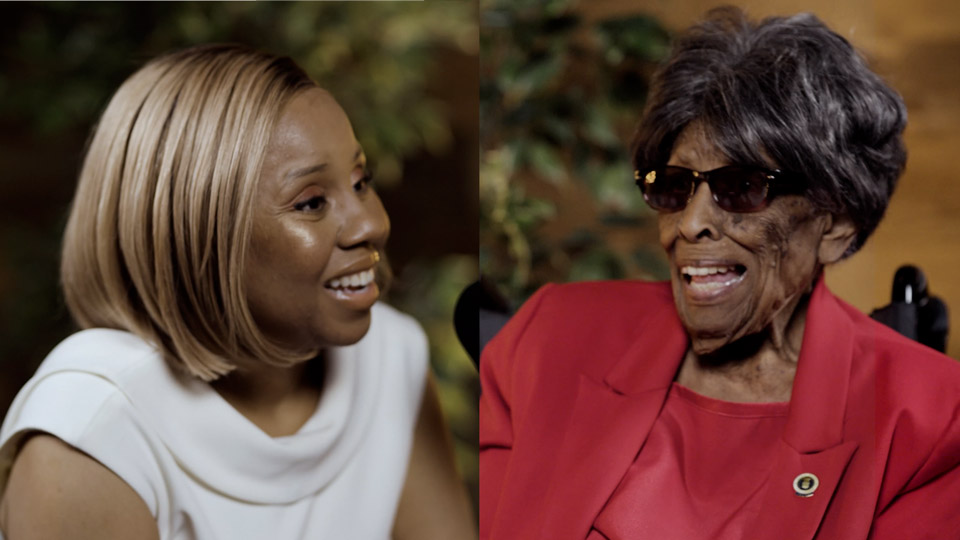
About the Degrees of Success™ Podcast
The Degrees of Success podcast by University of Phoenix brings you inspiring stories of UOPX alumni who have transformed their careers through education. Each episode highlights personal journeys of overcoming obstacles, achieving professional milestones and using education to unlock new opportunities. Whether you’re looking for motivation, career advice or guidance on how education can propel you forward, these alumni stories offer invaluable insights to help you succeed.
Listen to the Degrees of Success™ Podcast


