# Unlocking the potential of mothers in the workforce

December 08, 2023 • 3 minutes
![Lilia Ortiz](https://uop.scene7.com/is/image/phoenixedu/Lilia-Ortiz-headshot-360x360-1.webp?fmt=webp-alpha&qlt=70&fit=constrain,1&wid=360)

Written by [Lilia Ortiz](/blog/authors/lilia-ortiz.html)

![Jessica Roper](/content/experience-fragments/edu/us/en/blog/reviewed_by/jessica-roper/master/_jcr_content/root/container_copy_10389/container/image_2120429180_cop.coreimg.png/1710194401328/jessica-roper-headshot.png)

Reviewed by[Jessica Roper, MBA](/blog/authors/jessica-roper.html), director of Career Services at University of Phoenix

![Young single mother looking up and smiling at young female child standing on stack of coins.](https://uop.scene7.com/is/image/phoenixedu/blog-hero-single-mother-looking-up-at-child-while-both-smile.webp?fmt=webp-alpha&qlt=70&fit=constrain,1&wid=704)

##  

## 2023 Mothers Overcome More (M.O.M.)™ report uncovers barriers for women in the workforce

According to[data from the U.S. Census Bureau](https://www.census.gov/library/stories/2020/05/the-choices-working-mothers-make.html), women make up more than half of the U.S. population, and around 77 million are mothers. But there’s more to the story than just these statistics.

As[Pew Research Center](https://www.pewresearch.org/social-trends/2015/12/17/1-the-american-family-today/)notes, traditional nuclear families with two married parents are now the minority in our country. The rise of single motherhood is the largest influence of this trend with four in 10 births happening in homes with mothers or women living with a non-marital partner.

These shifting demographics mean more and more women are taking care of children_and_working outside the home. And, as the new M.O.M.™ report from University of Phoenix and[Motherly](https://www.mother.ly/)reveals, that’s presenting new challenges to address.

## Financial stress: A basic needs barrier

Lower-income mothers* desire career progression, but daily financial burdens and a lack of career support hinder progress for many.

 

![Black and red money icon next to red graph bar at 74% and grey graph bar at 57%](https://uop.scene7.com/is/image/phoenixedu/MOM-money-stress.webp?fmt=webp-alpha&qlt=70&fit=constrain,1&wid=580)


74% of lower-income moms**stress about money**, compared to 57% of higher-income moms.

---

![Set of two black and red icons symbolizing groceries and gas](https://uop.scene7.com/is/image/phoenixedu/MOM-utility-bills.webp?fmt=webp-alpha&qlt=70&fit=constrain,1&wid=292)


Top concerns include insufficient emergency funds and difficulty affording essentials like groceries or gas.
---

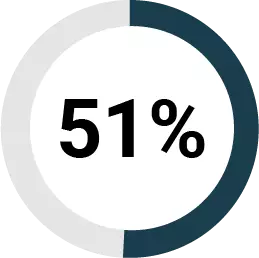
![](https://uop.scene7.com/is/image/phoenixedu/MOM-51-percent.webp?fmt=webp-alpha&qlt=70&fit=constrain,1&wid=259)


**51% of employed lower-income moms can’t afford basic needs.**

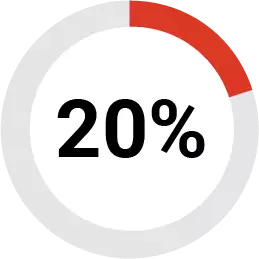
![](https://uop.scene7.com/is/image/phoenixedu/MOM-20-percent.webp?fmt=webp-alpha&qlt=70&fit=constrain,1&wid=259)


**Nearly 20% of working moms have multiple jobs to make ends meet.**

---

![Set of three black and red icons symbolizing childcare, housing and transportation](https://uop.scene7.com/is/image/phoenixedu/MOM-external-pressures.webp?fmt=webp-alpha&qlt=70&fit=constrain,1&wid=410)

External pressures like**childcare**,**housing**and**transportation**contribute to a cycle of inflexible, low-paying jobs.

---

##  

## Obstacles and opportunities for career progression

Over half of lower-income moms believe further education would enhance their career prospects. However, having a career feels like an out-of-reach luxury for**64% of them.**

![diploma icon](/blog/2023/12/unlocking-potential-of-mothers-in-workforce/_jcr_content/root/container_14213/columns/responsivegrid1/container/container_3768771_co/container_1057674717/columns_copy_copy_co/responsivegrid0/image_775618031.coreimg.png/1702069372406/ntw-scholarship.png)


58% of working moms are considering**going back to school in the next 5 years**.

---

![](https://uop.scene7.com/is/image/phoenixedu/MOM-save-time-and-money.webp?fmt=webp-alpha&qlt=70&fit=constrain,1&wid=281)


**Lack of money** (44%) and **time** (34%) are cited as top barriers to making the commitment to going back to school.

---

While many don’t have time or a clear pathway to go back to school, they are picking up valuable workplace skills. In fact, roughly nine in 10 moms, regardless of income tier, believe motherhood provides them with know-how in areas like:

![bills icon](https://uop.scene7.com/is/image/phoenixedu/MOM-multitasking.webp?fmt=webp-alpha&qlt=70&fit=constrain,1&wid=115)

Multitasking

![bills icon](https://uop.scene7.com/is/image/phoenixedu/MOM-budgeting.webp?fmt=webp-alpha&qlt=70&fit=constrain,1&wid=119)

Budgeting

![lightbulb icon](https://uop.scene7.com/is/image/phoenixedu/MOM-problem-solving.webp?fmt=webp-alpha&qlt=70&fit=constrain,1&wid=113)

Problem solving

![clock icon](https://uop.scene7.com/is/image/phoenixedu/MOM-time-management.webp?fmt=webp-alpha&qlt=70&fit=constrain,1&wid=123)

Time management

---

## The PTO dilemma

For many working moms, paid time off (PTO) isn't an invitation to vacation. It's a necessary benefit to take care of their children during illness, make sure they get to the dentist and pediatrician and to accommodate school recesses. But companies don't always provide what working moms need.

![Grey silhouette of a child 30% colored in red](https://uop.scene7.com/is/image/phoenixedu/MOM-childcare-30-percent.webp?fmt=webp-alpha&qlt=70&fit=constrain,1&wid=189)


Lower-income moms spend**over 30% of their paycheck on childcare**.

---

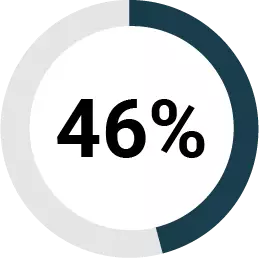
![46% grey and blue pie chart](https://uop.scene7.com/is/image/phoenixedu/MOM-46-percent.webp?fmt=webp-alpha&qlt=70&fit=constrain,1&wid=259)


**Nearly half (46%) of lower-income moms agree more paid time off would help them balance work and parenting. **
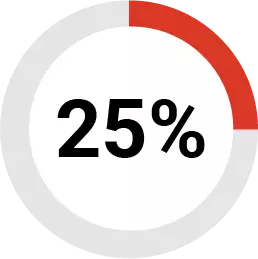
![25% grey and red pie chart](https://uop.scene7.com/is/image/phoenixedu/MOM-25-percent.webp?fmt=webp-alpha&qlt=70&fit=constrain,1&wid=258)


**25% of working moms take unpaid time off when childcare isn't available, highlighting the importance of flexible PTO policies.**

---

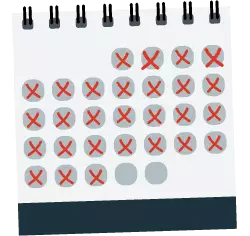
![Calendar with 28 days of the month crossed off](https://uop.scene7.com/is/image/phoenixedu/MOM-PTO-28-percent.webp?fmt=webp-alpha&qlt=70&fit=constrain,1&wid=250)


28% of working moms**need to take time off every month**to address childcare or personal reasons.

---

## What working moms want

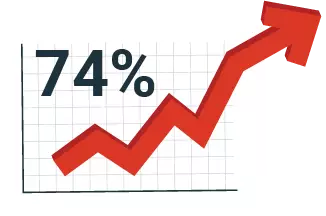
![74% on graph with red arrow rising upwards](https://uop.scene7.com/is/image/phoenixedu/MOM-74-percent.webp?fmt=webp-alpha&qlt=70&fit=constrain,1&wid=326)


74% of working moms would be**more satisfied if given the opportunity to further their education.**

---

![3 out of 10 female icons colored red](https://uop.scene7.com/is/image/phoenixedu/MOM-3in10.webp?fmt=webp-alpha&qlt=70&fit=constrain,1&wid=848)


3 in 10 lower-income moms**need help seeking education or training programs**for better job prospects. 

---

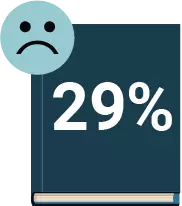
![29% on blue book with sad smiley face](https://uop.scene7.com/is/image/phoenixedu/MOM-29-percent.webp?fmt=webp-alpha&qlt=70&fit=constrain,1&wid=182)


29% of lower-income moms are**dissatisfied with employer tuition reimbursement programs.**

---

**About the Mothers Overcome More**™**or the M.O.M.**™**report**

The Mothers Overcome More™ or the M.O.M.™ report is one of the most comprehensive studies to date on the barriers American mothers face in their day-to-day lives, and the impact these barriers have on career development and advancement opportunities. The study was conducted by the[University of Phoenix Career Institute®](https://www.phoenix.edu/career-institute.html), part of the University’s College of Doctoral Studies, in partnership with[Motherly](https://www.mother.ly/)— a platform of storytellers, teachers, shoppers and advocates for mothers — in order to provide insights on lower-income mothers and to help identify solutions to support and advance them on the path to self-sufficiency.

The M.O.M.™ report comprised a 20-minute online survey of lower-income moms (n=1,000) and middle- and higher-income moms (n=500). All participants were U.S. adults (age 18 and up) who were employed or seeking employment at the time of research. Researchers conducted fieldwork between July 19 and Aug. 3, 2023. Income categories were determined using the University of Washington School of Social Work’s Self-Sufficiency Standard. A full methodology can be found at[www.phoenix.edu/career-institute](https://cts.businesswire.com/ct/CT?id=smartlink&url=http%3A%2F%2Fwww.phoenix.edu%2Fcareer-institute&esheet=53363221&newsitemid=20230321005039&lan=en-US&anchor=www.phoenix.edu%2Fcareer-institute&index=3&md5=f090229b38eeb306896c51608381e08c)

For the complete M.O.M.™ report, visit[University of Phoenix Career Institute®](https://www.phoenix.edu/career-institute/mothers-overcome-more.html).

_* Income levels were identified using the University of Washington School of Social Work’s Self-Sufficiency Standard (“the Standard”), which determines the amount of income required for working families to afford basic needs like housing, childcare, food and transportation. See study methodology._

Read more articles like this:

- [Secrets of scholarships: Your step-by-step guide to an effective essay](/blog/secrets-of-scholarships-your-step-by-step-guide-to-an-effective-essay.html) — Tuition and Financial Aid | October 26, 2021 • 8 minutes

- [Are You Getting the Most From Your Tuition?](/blog/are-you-getting-the-most-from-your-tuition.html) — Tuition and Financial Aid | April 18, 2023 • 5 minutes

- [What is Tuition Assistance and How Does It Work?](/blog/what-is-tuition-assistance.html) — Tuition and Financial Aid | November 29, 2022 • 5 minutes

![Portrait of Lilia Ortiz](https://uop.scene7.com/is/image/phoenixedu/Lilia-Ortiz-headshot-360x360.webp?fmt=webp-alpha&qlt=70&fit=constrain,1&wid=360)

### ABOUT THE AUTHOR

[Lilia Ortiz](/blog/authors/lilia-ortiz.html)is a writer and artist whose creative journey has been shaped by an appreciation for the beauty inherent in the ordinary. She earned her Bachelor of Arts in English literature from Arizona State University in 2013 and a degree in graphic design from Phoenix College in 2018. Her unique approach to visual design intertwines the tangible with the intangible: She weaves together words, thoughts and ideas with texture, color and pattern. Each result is a testament to the storytelling possibilities that emerge from the convergence of literary and visual arts. She lives in Buckeye, Arizona with her husband, Adam, and dog, Pinto.

![checkmark](/content/experience-fragments/edu/us/en/blog/article-vetted-blurb/master/_jcr_content/root/container_copy/container/image_2120429180_cop.coreimg.svg/1701890876580/differentiators-check.svg)

This article has been vetted by University of Phoenix's editorial advisory committee.   
[Read more about our editorial process.](/blog/editorial-process.html)