


 844-937-8679
 Login
Login


Why you need hard skills and soft skills in your career


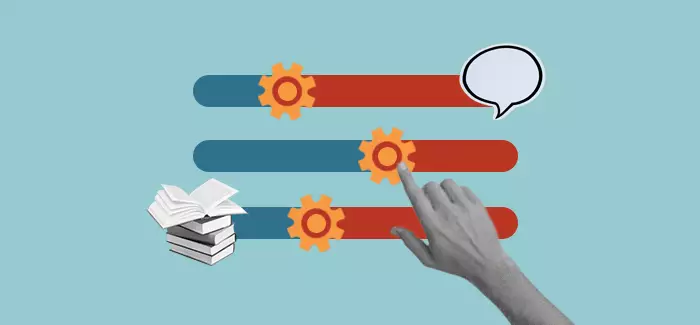
Skills are not a one-size-fits-all situation. Find out how to determine which ones you need for your career.
What are hard skills and soft skills?
To understand what makes someone successful at work, start with an exploration of hard skills and soft skills.
We naturally need hard skills, meaning job-specific abilities like programming, writing, strategic planning, accounting or marketing. “Hard skills are teachable skills. More often than not, you gain them through education, training and concrete experience,” explains Jessica Roper, director of career services at University of Phoenix.
Soft skills, by comparison, are somewhat less tangible but arguably even more important. Think proficiency in things like communication, problem-solving, critical thinking, teamwork, creativity, adaptability and conflict management — all of these are among so-called soft skills.
Because they’re so critical to career success, and much harder to teach, you might also hear soft skills referred to as “durable” or “power” skills, meaning they’re important for pretty much everyone, regardless of your industry or specific role. They’re also necessary across the span of your working life.

Jessica Roper
Career advisor at UOPX
Roper sums it up this way: “Hard skills can get you in the door. In order to land an interview, employers need to know you can do this job function. Soft skills are what’s going to help you thrive, build relationships and [potentially] move up to leadership roles.”
How strong are your skills?
If you’re following the job market, you’ve probably seen how important hard skills and soft skills are to companies. You’ll find soft skills in most job descriptions; they can now figure in ads as prominently as concrete expertise like project management, data analysis or budgeting.
That’s a key indicator that hiring managers want employees who don’t just know how to perform specific functions but can also build and sustain relationships, come up with creative solutions and ideas, and navigate complex, rapidly changing circumstances. “At University of Phoenix, we build soft skills into coursework, mapping these to assignments, so students can see where they’ve gained skills like critical thinking or communication through their work,” says Roper.
So how do you know which hard skills and soft skills you’re strong in — and which you need help building up? Hard skills are naturally easier to track by pointing to a degree, certificate or micro-credential you’ve earned and work you’ve done. Soft skills, though, are usually more nebulous. After all, simply feeling that you’re a great communicator or problem-solver isn’t enough.
A good place to start assessing your durable skills, says Roper, is by reflecting on past accomplishments and challenges. What have previous managers written or shared with you in performance reviews? What areas for improvement or challenges have you encountered in current or past jobs?
“Another option is to review the objectives in your current job description and ask yourself, ‘How do soft skills relate to these, both in my current role and for my career development?’” recommends Roper. “Or look at job postings for the role you’re in and roles you want to move into. If you keep seeing the same skill or qualification coming up and you feel uncomfortable about your ability to do that thing, or you can’t come up with a good example of having done that,” she says, then take those as good indicators of areas to work on.
Asking for feedback from colleagues, supervisors and mentors is another strong way to get honest input on your skills. This could be part of a 360-degree performance review at your job or something you initiate. “Consider asking a trusted co-worker — someone you can be vulnerable with — for direct, constructive feedback,” says Roper, acknowledging that honest input can sometimes be tough to hear. You can also turn to self-assessments like the Myers-Briggs Type IndicatorⓇ test, the CliftonStrengthsⓇ assessment or the BIG5™ personality test, all of which are available online.
How to grow hard skills and soft skills
Once you have a clearer sense of where to beef up your hard skills and soft skills, the question is how to do so. Roper sees an enticing array of opportunities to fill in skill gaps, from books and podcasts to career-focused TikTok posts and YouTube shorts. Though nothing, she says, beats real-life situations for learning these skills.
“You’re going to have to ask to put yourself in those positions,” she says. For example, tell your boss that you want to improve your communication skills and ask to lead a team meeting. Then, follow up to ask for her feedback on how you did. “Ask for a stretch project — something that isn’t exactly comfortable but will help you grow,” adds Roper.
“If you want to improve your critical thinking, volunteer to strategize or problem-solve on a project your team is working on.”
Another option is getting a mentor. “This could be as simple as finding someone you trust in your organization and asking for their feedback,” Roper explains, stressing that a formal mentoring program isn’t necessary. “A person in that position can help you identify some of those blind spots. It can be tough to work through pitfalls when things go wrong, so it can help a lot to have someone to guide you, someone who has been there.” Many professional organizations offer mentoring programs as well.
While durable skills may be harder to measure and train for, don’t forget about staying current with hard skills that are relevant to your field (or one you want to transition into). According to the National Association of Colleges and Employers’ Job Outlook 2025 Spring Update, more than two-thirds of employers surveyed use skills-based hiring tools, which assess the specific abilities needed to do a job. If your current workplace doesn’t offer training, or if the options don’t align with your career goals, search out online, in-person or hybrid courses that will give you a credential that’s meaningful in your industry.
Once you’ve acquired or improved that skill, be sure to highlight it. “When you’re applying for jobs, your resumé is still the first thing employers look at to learn anything about you,” says Roper. “Make sure you’re targeting your resumé and updating it for each position you’re applying for to ensure you’re showcasing the skills you have that align with that position.”
After your resumé, your LinkedIn® profile deserves similar attention. “It almost acts like a portfolio,” Roper explains. “If you want to showcase your communication skills, you can upload videos that speak directly to that skill. This can set you apart by providing actual examples and practical proof. Most people aren’t doing that.”
And because all roads seem to lead to AI, consider ChatGPT and related tools as potentially useful sources for brainstorming ways to build your skills and finding resources to do so. Some AI-based tools provide simulations of workplace interactions to help you build your abilities and confidence in, say, navigating conflict, improving communication and leading teams.
Remember, too, that learning is a lifelong process. “Humans are unpredictable and situations are all different. Conflict management and critical thinking, for example, are hard. So, give yourself some grace, especially if it’s early in your career and you’re not making the progress you want,” counsels Roper. “Be patient. Everyone is in the same boat. We are all trying to figure it out. So if the meeting, project or presentation didn’t go the way you wanted, ask yourself, ‘What can I learn? What can I do next time?’”
The more you practice, the stronger those skills will get.
How UOPX can help with hard skills and soft skills
To build hard skills and soft skills, you can explore virtual options, train on the job or register for a formal educational program. University of Phoenix offers a variety of educational options, including degree programs and certificates.
Also, consider watching the UOPX livestream webinar about building your skills in a rapidly changing job market: “Hard Skills vs. Soft Skills for Professional Growth.”
Request more information to learn about everything available at UOPX.
LinkedIn is a registered trademark of LinkedIn Corporation and its affiliates in the United States and/or other countries.
Myers-Briggs Type Indicator is a trademark or registered trademark of Myers & Briggs Foundation, Inc. in the United States and other countries.
CliftonStrengths is a registered trademark of Gallup, Inc.
Big5 is a trademark of big5personality.org.



ABOUT THE AUTHOR
Lorie A. Parch is a long-time journalist, editor and content strategist based in Chandler, Arizona. She primarily covers higher education, technology, public safety and lifestyle topics, and for four years led digital content strategy at the California State University Office of the Chancellor. A former Knight Journalism Fellow at the CDC and a National Magazine Award-nominated writer, Lorie's work now focuses on strategic communications and marketing. When she's not buried in a book, she loves traveling, painting and ceramics.

ABOUT THE REVIEWER
Jessica Roper has more than 15 years of leadership experience in higher education, with expertise in student services and career development. She is passionate about helping others discover and refine their skills. She previously served as director of Career Services at University of Phoenix.

This article has been vetted by University of Phoenix's editorial advisory committee.
Read more about our editorial process.