Skip to Main Content Skip to bottom Skip to Chat, Email, Text

Degrees of Success™ Alumni Podcast Episode 42– Fernando Torres

An entrepreneurial success story
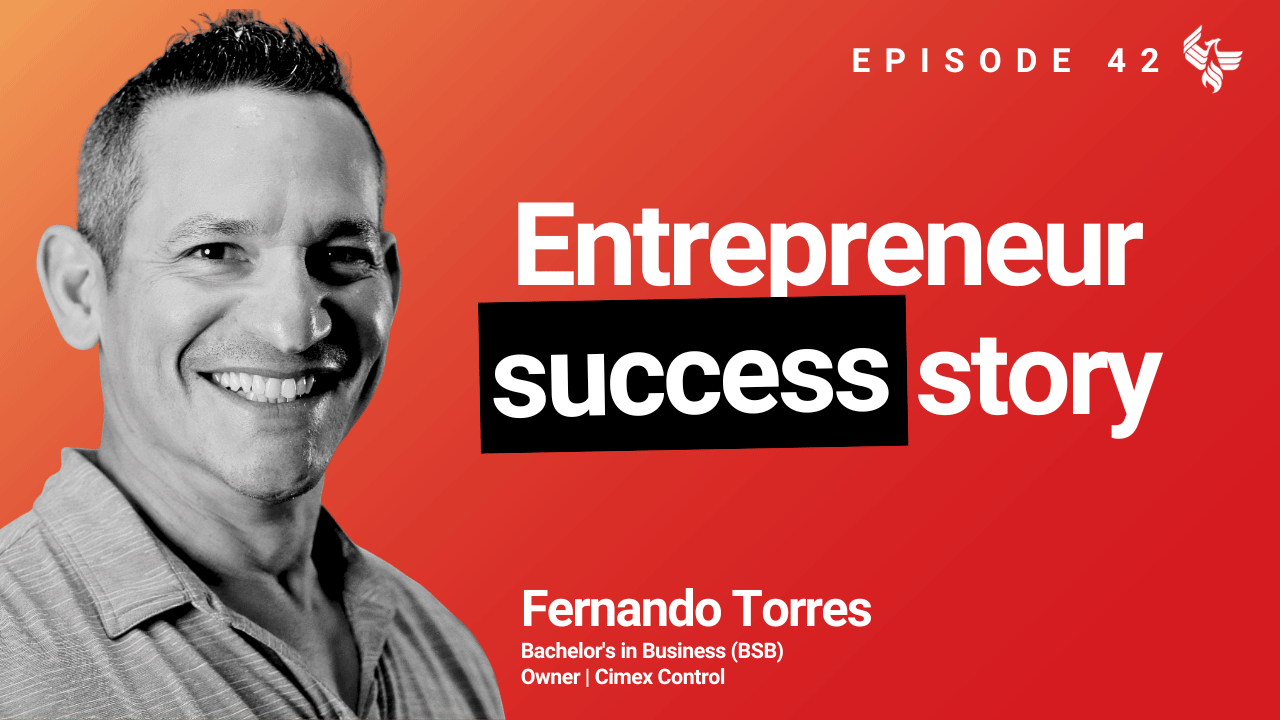
Entrepreneur Success Story with Fernando Torres | Degrees of Success Podcast | Ep 42


Chapter 1: Leadership, communication, and growth mindset 00:00 I'm kind of going a different route with a lot of the stuff that I was reading and was studying on leadership, emotionally intelligent leadership, connecting with your people, 00:09 being honest and open and upfront, but not too vulnerable that you create worry or panic within an organization and being able to, you know, openly communicate with each other, but also say, hey, you know what? 00:24 This is not working right now. Let's stop and come back to this tomorrow. We don't need to sit here and yell at each other because we're just going to yell in circles. 00:31 This meeting is no longer effective. Let's reschedule this for tomorrow. 00:35 And then I ended up getting into growth mindset theories, particularly in an education side of it, but also in a personnel management and leadership of really pushing to people that it is okay to fail. 01:01 Welcome back to the Degrees of Success podcast. I'm your host, Keith Chandler. Chapter 2: Introduction to Michael Bullock 01:05 Today's guest is Michael Bullock, Deputy Chief with the Sandy City Fire Department and a University of Phoenix alumnus whose career has been shaped by a deep commitment to healthcare, human services, and leadership development. 01:18 Michael began his education in health education and went on to earn his MBA from the University of Phoenix and continues to pursue lifelong learning today. 01:28 In addition to leading trainings and overseeing critical emergency resources, Michael has been recognized as a University of Phoenix alumni luminary for his industry leadership, an honor that reflects both his professional excellence and his dedication to service. 01:44 In this episode, we'll explore what first drew Michael to healthcare and human services and how education helped him grow as a leader and what it means to serve others when it matters most. 01:55 I'm your host, Keith Chandler. 01:56 Once again, thank you for listening and let's get started. Michael Bullock, welcome to Degrees of Success. Thank you so much. Chapter 3: Ideal day in fire service leadership 02:03 I'm very excited to be here with you guys today. Excellent. Thank you for taking the time to join us. So I'd like to start off with one question. 02:11 As a deputy chief for a fire department, you're obviously dealing with a lot of emergency situations and your days can change from day to day. 02:20 So I'm kind of curious in your professional life, what does a, I don't want to say a typical day, but what does the ideal day look like in your life? 02:32 Man, the ideal day. Boy, you know, it's kind of weird because my career has kind of been split into two halves, right? 02:40 There's the side that was running on the engines and responding on 911 calls on an ambulance and being a paramedic. 02:49 Then that transitioned about six years ago into an office position. 02:54 And you had to change that mindset to becoming not the one responding to the emergencies, but the one that's supporting those that are. 03:01 And so, you know, I was on the crews, the best part about showing up to work was that I knew that we were going to train on something, that we were going to be learning something actively, practicing something hands-on. 03:13 And then in the middle of that, we got to, you know, go help people out in their worst day of their lives, right? And that was like the perfect day. 03:21 Like if we ran calls and went and made a difference, that was a perfect day. 03:24 Moving into the office side of it, being in the admin side, doing those support roles. 03:31 The best part of me is when I get to have somebody come into my office and we get to sit down and, you know, hey, what do you need to do to get to the next step of your career? 03:39 What can we do to get you into more education classes? How can we, you know, set you up for success? 03:46 And what tools do I need to be looking at, you know, budgeting, planning for? 03:53 And, you know, I think my best days are when I feel like I actually helped out those crews and made their days better and gave them what they needed to succeed. 04:02 That's excellent. So kind of going way back in time a little bit, you're obviously someone who thrives on helping others. Chapter 4: Early interest in healthcare and public service 04:09 Was there a time in your childhood or just your past that you thought, OK, this is a career path that I want to take, like human services, helping other people? 04:18 At what point did you realize that you wanted to get into this field? I know you started your career very early in college studying actually health education. 04:28 One of your first jobs was a phlebotomist. Yeah, curious what sparked that initial interest. Growing up, my dad was a police officer for 30 years. 04:38 So I always lived around that lifestyle of the family of having somebody that, you know, I knew when he wasn't going to be home for a night, it was because he was on shift or he was at a community meeting helping out. 04:52 I got to see that growing up and knew that that was something that meant a lot. He never had a problem going to work every day. 05:01 He never complained about his job. 05:02 Maybe complained about a lack of sleep, which I can totally understand that. Other than that, you know, so I always knew it. 05:11 I knew it was there. And on top of that, at a very young age, I was four years old. I was involved in a pretty significant accident myself. 05:21 Ended up spending time in the hospital as a four-year-old, had multiple eye surgeries to the point where they didn't know if I would actually be able to function. 05:31 As an adult as I got older because of this head injury. And so being in and out of hospitals, having nurses and doctors who were taking care of me growing up through all those years really. 05:45 It was a no-brainer that I wanted to go into that field. 05:49 I wanted to be somewhere where I could make a difference on an individual basis and I don't think I knew where it wanted to go. I initially thought I wanted to go to medical school, become a doctor. 06:01 You know, went through college, or went through high school, taking anatomy and physiology and those classes and focusing on sciences. 06:11 And actually started my first degree program at the University of Utah is where I started, was biomedical engineering. 06:22 Cause I really loved that idea of building something that can help somebody with a disability or being healthy or something like that. 06:30 So I did that for a little bit and then realized that I didn't want to sit inside of a lab all day long underneath fluorescent lights and everything. 06:39 So did a lot of searching, trying to figure out where I wanted to go from there. And I went and got my EMT certification as a resume builder, to be honest with you. 06:48 Was like, I'll go get my EMT certification, get me in the door somewhere, maybe help with something. And I was newly married at the time. 06:58 And I came home after that and I told her, like, I found the career. 100%. 07:04 I want to be out there in the field on an ambulance, lights and sirens, going to people's houses. You know, it's kind of that thing. 07:11 It's like my dad, I got to feel like what my dad felt running 911 calls as a cop for all those years. 07:18 But it was even better because I got to be doing the medical side of it instead of law enforcement. They drew me in and that's where everything changed. 07:27 I changed my degree to health education, went to paramedic school, became a paramedic and then it just kind of snowballed from there. 07:38 So working in fire, working in emergency EMT services puts you face to face with individuals that may be going through one of the hardest days in their life. Chapter 5: How emergency work shapes perspective 07:48 How has that shaped the way that you think about healthcare and human services, the profession as in general, and also just the way that you approach life? 07:57 Yeah, you know, that's an interesting question. 08:00 There's a part of it where first responders, police, fire, EMS, can sometimes almost get a cynical view of the world because they're dealing with these bad or tragic, sad 08:17 day in, day out, to the point of where you start feeling like that's everything that happens on a day-to-day basis, that the world is full of tragedy every day. 08:25 And it can really shape you to start feeling, you know, ultra aware of all your surroundings, even when you're at home and you're not on duty and always looking, which I can admit that I do. 08:38 When I go to the gym, I can't wear my AirPods and block sound out because I have to be able to hear what's going on around me. 08:44 Like to talk a little bit about your experience with education a little bit more. So you earned your bachelor's degree in health education from University of Utah, later your MBA from University of Phoenix. Chapter 6: Returning to school and choosing an MBA 08:56 So I'm kind of curious how education helped you move from practitioner to leader and what exactly motivated you to choose University of Phoenix in that process. 09:06 I actually had quite the drawn-out education experience through my bachelor's degree, because I started my bachelor's degree right out of high school. 09:17 Kind of made some changes trying to figure out where I wanted to go and where I wanted to land. And then I began hired at the fire department and we had our first kid. 09:28 Was only 22 years old when we had our first kid. 09:34 I actually stepped away from school for a little bit because I needed to provide for a family. 09:38 I only had like three semesters left to get my bachelor's and I just completely walked away to take care of a family and make that priority. 09:48 Which is an interesting thing because I found like it actually gave me a different view of education when I finally came back to it. 09:59 I had about four years of a gap before I went back to finish my bachelor's. 10:03 And in that four years of working in the field, seeing a different aspect of life, particularly in this job, right, seeing a different way it goes. 10:11 When I showed up to school, it was a different level of focus and a different level of passion that fell into it than I did when I was 19 years old, 20 years old, trying to go to school. 10:26 And so I went and finished my bachelor's in health education. 10:32 And I knew immediately, was like, I have to keep going. There was an inner drive that I wanted to keep going to school. 10:41 It also didn't help that my younger brother had just finished his MBA through the University of Phoenix. And so I felt like I can't let him win. 10:49 Have to keep up with him. Friendly competition. He's a great guy. Love my brother to death. 10:56 So I started exploring, you know, where do I want to go? I want to get my master's. 11:04 What do I want to get it in? I work in public service. And so your first thought was an MPA, right? 11:11 A master's of public administration. Start looking into that and learning more about that. 11:15 But I kind of had this nag in my brain that I'm like, I don't want to study the same point of view that I'm working in on a day-to-day basis. 11:24 I want a little bit different of a view, but I want it to work similar. For my job at the time, was working a rotating schedule of 48 hours on shift and 96 hours off shift, and it's constantly rotating days of week. 11:34 Had little kids. I'm like, how am I going to make this work? I work second jobs at the hospitals on my days off to be able to provide for the family. 11:44 So I started looking into it. Now, this would have been 2013 that I was looking to go back to school. 11:51 And there were some online options, but there weren't a lot of online options for particularly for a graduate degree. 12:00 And so I really started diving into things and I found University of Phoenix and called one of the recruitment specialists or academic admissions and asked a lot of questions 12:14 about how it works and what's the schedule gonna look like and is it gonna be flexible to be able to help me still provide for my family? I can't put everything on hold. 12:22 You know, like there were some in-person programs I was looking at and 12:26 not only was the cost astronomical, but I had to be in class like five days a week and it was going to last two years and I had to be there and I'm like, there's no way I can make that work. 12:35 So that's where I ended up choosing the University of Phoenix, to get my MBA. And I absolutely loved it from day one. 12:44 Had like, these were topics that I never dealt with, right? Like I'm a firefighter paramedic. 12:53 I'm not dealing with financial sheets. I'm not dealing with inventory management. 12:58 I'm not dealing with these things. There was the leadership portion of it, which really fascinated me because we talk a lot about leadership in the fire service, but even back Chapter 7: Applying the MBA in the fire department 13:10 then leadership books that everybody wanted to read in the fire service were military books, right. 13:15 Got oh you got to read this book about this military person here and you got to do this one here and about this naval captain from the 1800s and it was really focused in that realm. 13:27 So as I was doing my studying, I was doing the MBA program. 13:30 I was looking at the track of doing some leadership stuff and some finance stuff because I just was very fascinated with retirement systems and investing and stuff like that as well. 13:40 So I did my classes. I did homework when I could at the evenings. I was at the fire station. 13:47 I worked graveyard shifts at the hospital my days off. Start my homework at like 10 p.m. and work until 4 a.m. 13:54 And then, you know, do my rounds in between at the hospital. And I did that for the 18-month period. 14:01 At that point, I decided that I was starting to get to the point where like I need to finish and keep working and keep doing things. 14:10 So I ended up dropping the extra tracks towards finance. But I can, you know, I continued that study. 14:17 I graduated in 2015 with my MBA. And I was only the second person in our department at that time that had gotten a master's degree. 14:27 So it was that same time that a promotion came up for, it's an engineer position. 14:34 Some departments call it the chauffeur, the ones that drive the engine and do all that. And so I finished my degree and went into my first promotional interview and laid out my 14:45 certificates and said, I've got an MBA and I've got this and I've got six years of experience and I got promoted to engineer. 14:55 And it was awesome. I was excited about it and it definitely pushed that. 15:02 It was something that wasn't around a lot in the fire service. And so I worked as an engineer for a few years and in 2018, 15:13 I tested for captain's position, which is the first line supervisor and came in and said, okay, I've got my MBA and my bachelor's. I've also read this whole bunch of 15:25 leadership books and we had an interview and I got promoted to captain and then didn't know where that was going to take me. 15:32 Ended up coming into the office as a training captain and seven years later I'm still here in the office and I, you know, in that time I promoted to battalion chief and now deputy chief over that time. 15:43 So the skills I learned through that MBA program were directly related to my ability to communicate ideas in my interview processes and be able to bring a different view and 16:00 a different aspect to what was going on in the fire department, which I think was very helpful. That's amazing. 16:08 Congratulations, by the way, on being the, you said, the second person in the department to have an MBA. Chapter 8: Inventory management and process improvements 16:13 I'm kind of curious as to what kind of surprised you, what surprised you that you are using today from what you learned in your MBA program that you didn't think probably would have been applicable to someone working in the fire department? 16:31 The two biggest things that I use on a day-to-day basis now in my position, inventory management and financial record keeping. 16:41 I became a battalion chief in 2020, I got put over our medical and training division, which included managing all of our medical supply, ordering, purchasing, distributing, all of that kind of stuff. 16:58 When I first started in my career, the individual that was running that part of it, we run off a fiscal year schedule. 17:09 So July 1, we get our yearly budget. And their idea was that on July 1, I order everything we need for the entire year. 17:19 And I spend every dime we have on supplies. And we just stock them down in the basement. And we work through those until 17:28 June 30th of the next year. And then we get our budget again. And then I do it all over again. 17:34 And for years and years and years, it was like we had everything we needed all the way through January and February and then March, April, May, to the point where it was like, okay, we're starting to run out of stuff. 17:48 You know, hey, be really aware of what you're doing with the supplies. Don't use stuff you don't need to use. We can't order anything. 17:56 We're out of money. 17:57 And then July 1 would hit and everything was back to good back to normal. 18:00 So when I came over and took over this position, my first objective that I took in that was to revamp our ordering and go into a much more of a model like a just-in-time ordering, like what are we using? 18:18 I'm going to make small purchases weekly or biweekly. I'm going to monitor expiration dates so that we're not throwing stuff away. 18:25 Put into place an entire inventory tracking and usage system. 18:30 A lot of the programs we already had access to that just nobody had actually taken the time to dive into. 18:38 So that became a huge thing. We've ended up, it worked really well, then COVID hit and blew it out of the water because you couldn't order anything. 18:50 So that became a challenge. We had to adjust and move through the COVID. 18:54 Inventory shortages for a little bit, but now that we've come back out of it, it works really well. We do weekly inventory counts at the stations. 19:05 We track what we're being used. We watch everything come in and out, and we make our small purchases across the board. 19:12 And then on top of that, we revamped the way we're doing contracts. 19:18 We, for a long time, had a single-source contract for medical supplies. 19:24 And again, that COVID was a huge thing. 19:30 I took over that position on March 1st of 2020, and I think the country shut down. 19:38 So I had two weeks of my job of doing that before COVID hit, and it was a shock. 19:45 So we revamped contracting, got multi-source contracts in place, 19:53 which was a little bit of a shock to some of the vendors that were used to being a single-source vendor for us. 19:58 And we put all those into place and we actually just redid that contract just this year. 20:04 And we now have three major suppliers now that we're purchasing for, which I think is great. 20:15 It creates some competition between them a little bit, brings prices down a little bit, but also ensures that we have what we need when we need it. 20:23 Excellent. So as you mentioned, your title, Deputy Chief, Sandy City Fire Department, you help oversee training, resources, people in high-stakes environments. Chapter 9: Leadership style and growth mindset 20:33 So I'm kind of curious about your leadership style. So how do you approach leadership when trust, teamwork and preparedness are so critical in your profession? 20:45 You know, I'm glad you brought that up because I kind of teased out a little bit a minute ago about the leadership style of what it was like when I first came in about, you know, very military focused. 20:55 And I don't discount that. Those are great leadership books. We still use those a lot. 21:00 I ended up kind of going a different route with a lot of the stuff that I was reading and was studying on leadership. 21:10 It was much more of a 21:15 emotionally intelligent leadership, connecting with your people, being honest and open and upfront, but not too vulnerable that you, you know, worry or panic within an organization. 21:29 And being able to, you know, openly communicate with each other, but also say, hey, you know what? 21:37 This is not working right now. Let's stop and come back to this tomorrow. We don't need to sit here and yell at each other because we're just going to yell in circles. 21:44 This meeting is no longer effective. Let's reschedule this for tomorrow. 21:48 And then I ended up getting into growth mindset theories, particularly in an education side of it, but also in personnel management and leadership of really pushing to people that it is okay to fail. 22:06 You can try putting that IV into a patient and you can't get that, you and you miss it three times. 22:11 Have to hand it over to the next guy and go, hey, I need you to do this IV. 22:16 Taking that as a lesson of learning both resiliency of like, I don't need to feel down on myself because I did this. 22:26 But also in the learning fact of like, hey, maybe I need to go practice some more. Maybe I need to do some, figure out something. Maybe my technique's not working. 22:34 And I mean, that's a very simple case of that growth mindset, but you can take that to promotional processes, right? 22:43 Hey, you went through this promotional process. You didn't get it. Now what are you going to do? You know, are you going to be able to bounce back? 22:50 Are you going to take your lessons and be ready for the next one for that promotional period? Disciplinary action, right? 22:59 Hey, you made a mistake. That's okay. Let's learn from it and let's move on. And really putting into practice that growth mindset mentality. 23:09 At an organizational level and not just an individual educational side of it. 23:16 So I'd like to talk a little bit about your recognition as a University of Phoenix luminary. You were named recently in the industry leadership category. Chapter 10: University of Phoenix luminary recognition 23:26 I'm curious what that recognition means to you personally and professionally and what part of your journey does this really do you think it represents? 23:34 It was a shock to be honest with you. I had no idea. I know when they put out an announcement they were doing this and I was like, that's really cool. 23:43 Like, that's a cool thing. Okay. And then all of a sudden, like three months later, a box shows up at my door and I'm like, what? 23:53 Like, seriously? Like, this is incredible. I think it goes down to an innate feeling of my own that I never win at anything, which is stupid, right? 24:04 But this is ridiculous. My kids reinforce it by winning every game of cards that we ever play, and they make fun of me for losing everything that we do. 24:12 But I was floored when it showed up, and I was like, wow. 24:19 I think it forced me to actually sit back and look and be like, wow, I really have accomplished a lot. 24:26 I really utilized these things that I've used to further myself and my own personal growth. 24:35 And I think that was the biggest thing at the beginning of it was that self-reflection of like, oh, wow, I really have done something and it obviously stands out. 24:44 And so I think that was a huge, like it was a big self-reflection on my own career. 24:52 You know, I joke around that I still mentally feel like I'm a 17-year-old kid running around trying to figure out what they're doing on a day-to-day basis. 24:59 You know, I tell a lot of people, like we just brought in a brand new training captain, just newly promoted and brought a man in and, you know, and he's overwhelmed. 25:07 And I'm like, I'm like, hey, you want me tell you the secret? I was like, just fake it until you make it. 25:13 Just pretend like you know what you're doing because we all feel like we are just pretending we know what we're doing. 25:18 And we're trying to do the best that we can to live up to what we are supposed to accomplish. 25:27 And when you realize that you actually have prepared, you have done a lot to be ready for that. 25:35 I think that was kind of a shock. That was the big shock to me was that, oh wow, I really, I'm not making it up. 25:42 I actually have done the work. I actually have prepared and I've actually put it into practice and I think that was the biggest part for me was that and it was really fun. 25:52 My family was so excited when they saw it. 25:54 They were all jumping up and down and so excited and then I came into work and told everybody and they were just like, whoa, really? 26:02 That's unreal. So that was very cool to have that. And I'm very honored to have it. 26:10 I feel very excited to be a part of that. I think it's a very cool thing. 26:17 It's a very awesome thing for University of Phoenix to do because I think sometimes you can feel like you are just one of many. 26:27 And sometimes you feel like you can get stuck and it's not just these schools. It's like everywhere in life, right? Sometimes you can feel like you're just stuck as one of the masses and you don't stand out. 26:35 But to have the school actually send me an award for something like that. I'm like, wow, no, I really, they really do care. 26:44 They want to see where we're all going. I mean, it's been 10 years since I graduated from there. 26:49 And the fact that they're still, you know, I mean, even just doing this podcast, I was blown away when I got reached out to do this. 26:56 I was like, really? Like, this is cool. 26:58 And, you know, to feel like you're not just one of many that the school actually, the school and the organization and the administration wants to put a spotlight on the people that have gone through their program. 27:13 It's just, it's amazing. And it just makes me proud to be, you know, an alumni of that association. 27:21 That's what they're doing. And I am very happy for it. Good. Well, congratulations on your recognition. 27:27 Many of our listeners, they're adult learners balancing demanding careers, family responsibilities. You obviously have a very demanding career on top of family responsibilities. Chapter 11: Advice for adult learners 27:36 So what advice would you give someone considering the notion of going back to school or pursuing their education in some way? Go for it. 27:44 Don't sit and think on it. Don't go, I'm gonna wait for the perfect time to do this. 27:49 You have to start because you could start today and in two or four years, you could either have your degree and be done or continuing on to the next one. 28:05 Or you could still be sitting there thinking about doing it and moving on. You know, it's a balance. You have to find what is the priority at that time. 28:13 There's never a great time. Sometimes they're better than others, but, you know, just go for it. 28:22 Dive in. Time is always hard. You know, having a spouse and kids, having them on board is a big part of it too. 28:31 Making sure that they're all set to go because I could never succeed in any of this if I didn't have a family that supported me through the process. 28:41 Gave me that time to go lock myself in the office for three hours to go write a paper. You know, there's times where I've had to tell my little kids of like, okay, I really do want to come play. 28:52 Give me two hours and I'll be out there and do that. Yeah. 28:56 And I think that's the biggest thing about that is that life keeps going and just, you know, know your goals, know your why. 29:09 You know, why you want to do it is the biggest aspect. Cause if you don't know why you're doing it, you're never going to be able to push through to the end. 29:16 You're going to hit that first slog of it and that's just going to halt you. 29:24 And I have to tell that to new recruits here when we hire them in the fire department is, you know, you can't start fire academy for 16 weeks and not know why you're doing this because you will just burn out and you have to have a bigger why. 29:37 So I think those are a few of my big advice to anybody looking back to go to school is, you know, just 29:48 go for it and know your why. Exactly. And finally, last question. Chapter 12: Personal and professional milestones 29:55 So the university is now celebrating its, we're celebrating our 50th anniversary this year. A huge milestone for us. 30:03 It got me thinking about just milestones. And as you've been reflecting on your journey thus far, what personal or professional milestones really stand out to you as being one of the most meaningful in your life? 30:14 I think personally, when I completed my bachelor's degree after being gone for so long and feeling that sense of pride that I was able to put myself back into that position, into 30:29 that uncomfortable position of being an adult student on a campus full of, you know, fresh out of high school kids and being like, wow, I don't know if I can keep up with this. 30:39 Like that was a big accomplishment to go back and finish that after that. 30:43 Multi-year gap, which then just propelled me onto the next one, right? I'm like, okay, I'm just going to keep going. This was so awesome. 30:50 So I think that was a huge one personally. 30:52 Professionally, I think that to be honest with you, that first promotion to engineer, that was probably the first one where it was like, okay, I have put in some work. 31:09 Have put in some time. 31:12 You know, I 31:14 I did what I needed to do to get here and that was a great feeling of that first step promotion, which I still say by far is the best seat in the house and the fire service is driving the engine. 31:27 If I could still do that every day, that's the golden spot right there. Michael Bullock, thank you so much for joining Degrees of Success podcast. Chapter 13: Closing thoughts 31:36 And thank you so much for your service as a first responder up in Sandy, Utah. 31:43 Greatly appreciated for everything that you're doing for the community up there and for what you do for our community at large. So once again, thank you so much for joining Degrees of Success. 31:52 Thank you so much, I appreciate it. Thank you for joining us on this episode of the Degrees of Success podcast. 31:58 Michael Bullock's story reminds us that leadership begins with service and grows through education. 32:04 From emergency response to organizational leadership, his journey shows how learning can expand your impact, not just within your profession, but in the lives of the people you serve. 32:15 If today's conversation resonated with you, be sure to like, comment, and subscribe, and share this episode with someone who's considering their next step. 32:23 I'm your host Keith Chandler and thank you for listening. 32:26 Join us next time as we continue sharing inspiring stories of perseverance, growth, and success through education on Degrees of Success, where every journey matters.

University of Phoenix Fernando Torres explains his entrepreneur success story, including how education, hospitality experience, sales, confidence, and lifelong learning shaped his move into business ownership and growth.

The video was uploaded on 06/18/2026.
The video lasts for 31 minutes and 11 seconds.

Key Moments
00:00 Welcome to Degrees of Success
02:04 Golf, focus, and personal reset time
04:57 Education, perseverance, and early encouragement
06:38 Hospitality, service, and reading people
09:05 The push toward entrepreneurship
16:10 Early doubts and staying the course
17:11 Hiring the first technician
20:03 Expansion plans and building a team
23:53 Lifelong learning and finishing college
29:03 Advice for starting something new and closing thoughts