Skip to Main Content Skip to bottom Skip to Chat, Email, Text

Knowledge Without Boundaries Keynote 2023 with Dr. Cheryl Lentz
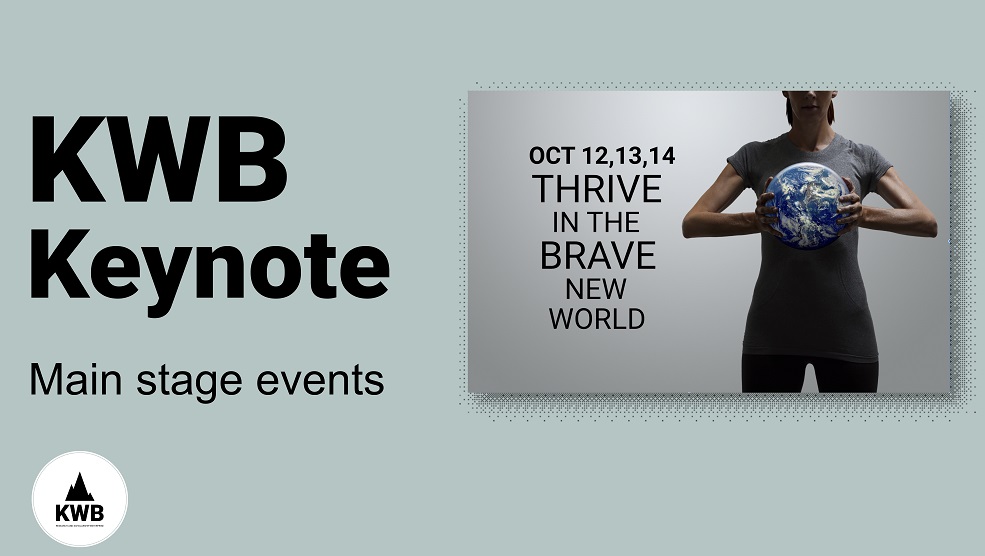
Knowledge without boundaries Research Summit Day 1


00:05 It is such a thrill to be able to have my career come full circle knowing that I sat in those chairs back in December of 2003 and to come more than 20 years later to have the honor and privilege to take the stage here today is more honor than you'll ever know. 00:19 So this is something that's very unique with regard to me and a research without boundaries, a research summit, Knowledge Without Boundaries and this whole brave new world, because I am someone who's really an Einstein disciple, if you will. 00:35 And I call it my Einstein perspective. The idea is we're going to answer the question today of what's next. 00:43 Part of the reason I like this is the ability to welcome you to the next step. I look at the ideas you had me at hello. I've been a professional researcher for a very long time. 00:51 Part of this is because of Einstein and his influence on me because he has a fabulous quote that applies here called never lose a holy curiosity. 00:58 That's what research is. We're asking a question and we're going to see what the answers might be. 01:06 I want to offer some of the things we're going to be talking about today: Knowledge Without Boundaries, this idea of Gela, my concept of refractive thinking that anyone who knows me either faculty or student has been hearing about for years. 01:22 Now I've actually made a career about what I have offered to contribute to the greater body of knowledge. 01:30 We’re going to talk about leveraging your career and building one and what the next path forward is. 01:38 I might even offer you a few little trinkets from our growing up with and some interesting lessons we can learn from Alice in Wonderland. 01:47 The idea we really have right now is choice. Dr. Rodney alluded to my TED Talk called failure, and this is where failure lives in the brain. 01:55 We'll deviate a little bit because I find it amusing that I've actually made a career out of failure. 02:03 We’ll talk about Napoleon Hill, your final pillars, and the final question called legacy. 02:10 A little bit about me. Rodney will post a slide here that will have both my video bio as well as my TED Talk for you. 02:19 The links will be very easy. If you want the whole PowerPoint, we can have it sent out to everyone. 02:28 I use technology as a way of an icebreaker. I have a YouTube channel that I did years ago. 02:36 I am faculty, and I want to have that personal touch. You're going to see that I'm one of these connection and engagement kinds of folks because I understand the importance of the human dynamic. 02:52 I want to tell you some things about my background. As they mentioned, I am a Doctor of Management graduate. 03:00 I put on my wings, so to speak, in May of 2007. 03:08 I have six of my colleagues who traveled their doctoral program together. 03:15 We graduated on stage, hooded right next to each other side by side at the University of Phoenix Stadium in 2008. 03:21 It was just magical. Most of what I've done is a culmination of my career since then. 03:30 I've been teaching for more than 23 years as college faculty. 03:38 I have published about 58 times now. My mentor is hopefully on the call today, and I will always ask him, “Is that enough yet, oh mentor of mine?” 03:47 I also am a business owner, several businesses that I own, and I do a variety of things. 03:55 Part of what I wanted to do, and we will end this presentation with, is the idea of legacy. Legacy really is our research. 04:03 Let’s talk about a little bit of what comes next. I want to look at this idea of Knowledge Without Boundaries. 04:12 Think about that question, how profound it is. 04:20 We’ve spent years coming off of COVID. We were forced to have that isolation, and now we are in a world where we want to stay connected. 04:28 Research has that ability. 04:36 I take my responsibility as a scholar very seriously. We are in the one or two percent, and the world is going to look to us for answers, particularly in academia as professional researchers. 04:45 I will ask you a very simple question: If not you, then who? If not now, then when? 04:55 Our world is in desperate need of answers, leaders, and the ability to go forth and do things. 05:03 The business world doesn't always have time, and yet we have the time because that's our focus as scholars. 05:10 We are the ones that know how to do research. 05:18 We spend years trying to meticulously craft this research because we're going to ask a question and go in search of all possible answers. 05:26 That is why, when I took a look through your presentations, you have over 70 of them in three days. 05:34 I can't wait to attend as many as I can, from building social capital and belongingness to transitioning employee to entrepreneur. 05:42 I'm known as the academic entrepreneur. I had a colleague coin this for me years ago in Spain. 05:51 It means I've got one foot in the academic world and one foot in the business world, and I have combined them. 05:58 We need to get research out of the halls of academia and into the hands of people who can actually use it. 06:05 Part of the reason I am asked to speak all over the world is the fact that I get action. 06:13 I want you moving in your seat. I want you to look at what's next. 06:20 Our world moves fast, and I want to find out whether you can move faster, keep up, and lead the curve. 06:27 This is where I’m excited about refractive thinking. I have been looking at this for a long time. 06:36 I was faculty for the University of Phoenix for about 19 years and six months. 06:43 I used to teach philosophy and critical thinking courses. 06:50 I was always amazed because thinking was defined as inside the box and critical thinking as outside the box. 06:58 I always thought that was incomplete. My question was, what’s beyond the box? 07:06 What if it isn’t a box at all? 07:14 Refractive thinking is really where we live as scholars, and we want to know what your story is. 07:21 I have been curious about this for years, and I am not a fan of the box. 07:30 Let’s play with what we know as researchers. We like that bell curve and that 80 percent. 07:39 That is not exactly where we live as scholars. We live as the outliers. 07:47 If I have 10,000 people running one direction, I am going to ask what that one person running the opposite direction knows. 07:54 Part of this was coined during me questioning that holy curiosity. 08:02 That box is just not enough for me, so I added the third leg of a stool. 08:11 With refractive thinking, it is like refraction of light through a prism. 08:18 The questions we ask are: What if? What's next? Why not? Where does it live? 08:26 That's where Einstein came in. 08:34 This is where I want to pause and ask, what’s your story? 08:41 Do you have that question of where scholars live? 08:48 Now that you're a graduate, or now that you've hit these pinnacles in your life, what's next for you? 08:55 One of my favorite scholars is Peter Senge. 09:02 Peter Senge wrote The Fifth Discipline, a book I was introduced to during my doctoral program way back in 2003. 09:10 This is about systems thinking, because how we do one thing is how we do everything. 09:19 There are specific things we have to do about method, design, frameworks, and participants. 09:26 It all has to align and have all of our ducks in a row. 09:34 Part of what I teach is what I call the systems efficiency metric, SEM. 09:41 There is a way to do research, and there is a way to be efficient about doing research. 09:50 Part of that is I systematize what students are doing as researchers. 09:57 I help them create research systems, writing systems, thinking systems, and time management systems. 10:05 How we do something is as important as what we do. 10:13 For new doctoral students, be patient. We have a lot of history with you, and we can teach you many things. 10:22 We need you to trust us. We're not above you. We're not below you. We're just a little ahead of you in the process. 10:31 I want to dovetail into this F-word that nobody likes to talk about, and it's not the one you're thinking of. It’s failure. 10:37 I also do a lot of presentations on failure across the world. 10:45 Fail faster, succeed sooner. Think about that idea. 10:53 We don't like failure. We don't like how it hurts or how it feels. 11:01 I think we have to change the conversation with failure. Failure is really a gift. 11:09 Failure is simply that we haven't succeeded yet. 11:16 I found zero, zip, nada, nothing in my research. It made for an interesting chapter five and an interesting conversation with my mentor. 11:23 I thought I failed because I didn't find something. 11:31 It took my mentor saying that finding nothing was finding something. 11:39 We found a way to build a light bulb that didn't work. 11:47 Ask Edison how many times he had to try that light bulb. 11:54 He kept systematizing what didn't work until he finally got to the end. 12:01 My fail faster, succeed sooner story starts with my undergraduate work at the University of Illinois. 12:08 I am one of the only people ever to be dismissed from the classical organ program. 12:15 I sit before you a scholar only because I failed at being a musician, according to my professor. 12:24 We are not our research. We are not our failures. We are detectives asking questions. 12:32 We go in search of answers regardless of where they are. 12:40 My journey is that I have failed at everything I have ever done, sometimes twice. 12:48 The question is where it has led me. It has led me to discoveries. 12:56 Had I not failed at the University, I would not be a scholar because I never thought of graduating. 13:04 Part of it is, what’s your story? 13:12 I could have sat on the sidelines. I could have let failure beat me. 13:20 Thirty years later, during COVID, I had an opportunity to fix that failure. 13:28 Failure is not something to be avoided. It is something to be embraced. 13:35 I want my students to get their failures out of the way as quickly as possible so we can get to the good stuff. 13:42 That is part of why I teach the systems efficiency metric. 13:51 How we frame something is how we solve something. 13:59 Sometimes you spend so much time on that problem statement asking what you really want to know. 14:06 All research starts with a problem and a question. 14:14 Researchers have to be prepared for all possible answers. 14:23 We often go into research expecting what we will find. 14:31 With my mentees during their first oral defense, I ask them to write down what they expect to find. 14:39 They sign it, date it, and seal it. 14:47 At the final oral defense, we bring it out so they can compare what they expected and what really happened. 14:55 There is no perfect research, but scholars know how to mitigate, work through biases, and value unexpected findings. 15:02 It is valuable nonetheless. 15:10 I want to ask how you are leveraging your research, particularly for building a career. 15:19 I am a former military wife of 25 years and have moved 38 times around the world. 15:26 I had to reinvent myself every time we moved every two to three years. 15:34 That is what we do for research. 15:41 Instead of having only one career, I have had more than eight, and I am about to reinvent myself again. 15:50 Watch me on social media because it's coming. 15:57 This crossroads takes us back to Alice in Wonderland. 16:06 Alice comes to a fork in the road and asks the Cheshire Cat which way to go. 16:14 The Cheshire Cat said, if you don't know where you're going, any path will do. 16:29 Where do you want to go? 16:38 If you program your GPS, you're going to get pretty close. 16:46 Do you know those SMART goals? Do you know where you want to go? 16:53 Research will tell you that when you have SMART goals, you will have a plan. 17:02 The idea is choices. 17:09 How do we look at the results? Do we see the glass as half full or half empty? 17:16 Finding nothing is finding something. 17:24 It was a choice for us to abandon research that was not bearing fruit and move in a different direction. 17:33 It was valuable nonetheless. 17:39 What choice do you have? What choice are you making, or are you simply reacting? 17:49 Not making a choice is still a choice. 17:57 This is part of the idea of an exit strategy. 18:04 When I graduated from the University of Phoenix, I did not have a plan. 18:12 I had no clue what the next step was. 18:21 Then I went back to my mentor and said I had published about 58 times. 18:28 He smiled and said it was amazing to watch me to see what was coming next. 18:36 Think about how you are going to leverage your career and your research. 18:45 The choice could be being the expert. 18:52 It took me years to hone my craft as an educator. 19:01 I want learning to be dynamic. 19:09 A mentor once asked me, “What’s the why that makes you cry?” 19:18 Think about an outcome-based approach. 19:25 If you read the last page of a novel and knew who did it, you would read the whole book differently. 19:34 You start at the end and work backward so you know where you're going to end up. 19:42 Think carefully about what you want to do when you grow up and what you want to reinvent yourself as now. 19:50 You do not have to make just one choice. 19:58 Here is why I survived: forced compliance and what we learned during COVID. 20:06 We learned about isolation and boundaries to protect health. 20:14 Some people did not let COVID stop them. 20:22 Some people built a career in spite of or despite COVID. 20:31 How we do one thing is how we do everything. 20:38 Do we see the glass as half full or half empty? 20:45 Who says there are only two choices? 20:52 What if I gave you a new tool: fill the glass, and then you don't have to make a choice. 21:07 That’s what research does. It fills our glass because we are willing to be in the fight regardless of the outcome. 21:14 That is a different way to look at things. 21:22 The last thing I’m going to talk about is a book I wrote during my TED Talk called Failure Has No Alibi. 21:31 It talks about my story and failure at the University of Illinois. 21:39 With your attendance today, I have a gift for you all. 21:48 Napoleon Hill said, as a man thinketh, so you are. 21:56 If you think you're a failure, you are. If you think you're a success story, you are. Either way, you're right. 22:03 This is the most amazing tool you will ever have, so let’s use it. 22:11 Failure has no alibi means you cannot hide in the shadows, and neither can your research. 22:19 Own it, discover it, and share it. 22:28 The answers we do not expect are where innovation lives. 22:35 Stay in that curiosity. 22:43 Ask why, why not, what if, and what's next. 22:50 The three pillars are publishing, presenting, and perspective. 22:58 You have to tell the world what you found. 23:06 Get it out there, whether by publishing a book, publishing a series, or creating a company from publishing. 23:15 Presenting is an amazing energy. 23:24 I want you to look at everything I did that was wrong and everything I failed at. 23:33 What are you going to be known for? 23:41 The final question for your summit, Knowledge Without Boundaries, is legacy. 23:47 What do you want to be, and what do you want the world to know you for? 23:56 I have done this exercise every time I've had a new degree in my life. 24:04 It started sophomore year in my undergraduate program at the University of Illinois. 24:11 They said, write your obituary or your own eulogy. 24:20 I get to share this idea while celebrating the life of a dear friend. 24:27 The reason she had an amazing life was because she had choice. 24:34 The reason I have is because I made choices. 24:43 I did not have the traditional genetic legacy to leave behind. 24:50 I chose another path. 24:58 If you're uncomfortable with the obituary, change it and think about a humanitarian award at the Academy Awards. 25:06 What do you want to be? What do you want the world to say about you when you're no longer here? 25:13 Write that story today. 25:21 Write what will be and will it into the future. 25:30 If I died tomorrow, I think the world would know Dr. C was here. 25:38 Dr. C has a legacy from refractive thinking to being an academic entrepreneur to my publishing company to SEM. 25:46 I want no regrets. 25:55 When that time comes, it will be after I have had my say. 26:04 A dear friend and University of Phoenix graduate gave me very sage advice. 26:12 He said it doesn't matter what you do in life, but it matters who you do it with. Choose wisely. 26:20 That helps us answer Alice’s question: Which way do I go? 26:36 My story is not done yet, and neither is yours. 26:43 I am Dr. Cheryl Lentz, and I look forward to hearing your stories because the world is waiting for you, and so am I. 26:51 Thank you for letting me have the honor to speak today. 27:00 I'm so excited to see how the rest of this journey goes. Have a good day.

University of Phoenix's Dr. Cheryl Lentz’s presents the keynote address at the Knowledge Without Boundaries 2023 Summit on doctoral research, refractive thinking, failure, career direction, publishing, presenting, and defining a research legacy.

The video was uploaded on 10/24/2023.
The video lasts for 27 minutes and 35 seconds.

Key Moments
00:00 Keynote opening
00:35 Curiosity and what comes next
03:55 Knowledge Without Boundaries and research responsibility
06:27 Refractive thinking beyond the box
08:55 Systems thinking in doctoral research
10:31 Failure and research findings
15:10 Leveraging research for career direction
17:57 Exit strategy and career choices
21:22 Failure, publishing, and presenting
23:41 Legacy and closing reflections