


 844-937-8679
 Login
Login


What is Montessori education?


While traditional classrooms tend to follow a teacher-led format, one of the most recognized alternative approaches centers the learning experience on the child rather than the instructor.
Core principles of Montessori education
Montessori education is a child-centered approach to learning developed by Italian physician Maria Montessori in the early 1900s. It emphasizes hands-on exploration, mixed-age classrooms and self-directed activity. The teacher serves as a guide rather than a lecturer.
Origins and philosophy
Maria Montessori opened her first school, the Casa dei Bambini, in Rome in 1907. Her idea was that providing children with stimulating, self-directed activities would be more effective than facilitating rote memorization and academic drills. The method spread internationally within a few years, and by 1912, her book describing the approach had been translated into English and published in the United States.
Rather than following a rigid curriculum at a uniform pace, students choose from a range of activities designed to match their developmental stage and interests.
The prepared environment of a Montessori education
A defining feature of this method is a prepared environment. Classrooms are designed with child-sized furniture, open shelving and carefully arranged materials that students can access independently. These materials are designed to be self-correcting, meaning children can identify and fix their own mistakes without waiting for a teacher to intervene. An example might be blocks of graduating sizes: They must be stacked in a certain order if they are to be built into one tower.
Rather than textbooks and worksheets, students work with physical objects designed to make abstract concepts concrete. A child learning multiplication, for example, might use bead chains that represent quantities visually and tactilely. This hands-on approach is intended to build understanding before introducing written symbols and formulas.
The role of the teacher
In a Montessori education setting, the teacher’s role looks different from what people might traditionally expect. Rather than standing at the front of the room delivering lessons, the teacher observes, guides and introduces new materials based on each student’s readiness. The teacher can prepare the environment, link children with appropriate activities and then step back to allow independent exploration.
How Montessori education is structured in the classroom
The day-to-day structure of a Montessori school classroom differs from traditional settings in several ways.
Mixed-age groups
One of the more distinctive features is mixed-age grouping.
Rather than separating students by birth year, classrooms may span a three-year age range, such as ages 3 to 6 or 6 to 9. This structure may allow younger children to observe and learn from older peers, while older children reinforce their own understanding by helping younger ones. It can also provide helpful social development.
This structure can mirror real-world social dynamics. In workplaces, families and communities, people may interact across age groups regularly. The mixed-age model gives children early experience navigating those dynamics, developing both leadership and collaboration along the way.
Materials and curriculum areas
The curriculum is organized into several interconnected areas, which may include:
- Practical life: Activities like pouring, folding and food preparation that build coordination, concentration and independence
- Sensorial: Materials that help children sharpen their sensorial perception and use it to organize the world around them
- Language: Activities that develop vocabulary, writing and reading through hands-on materials rather than worksheets
- Mathematics: Concrete materials such as beads and number rods that make abstract concepts tangible
- Cultural studies: Geography, science, history and the arts, introduced through exploration and hands-on activities
Daily routines and work cycles
A day of education may include extended, uninterrupted blocks of time called work cycles. During these periods, students can choose their activities, work at their own pace and move freely within the classroom. This structure can support deep concentration and learning at each student’s individual level. Transitions between activities can be student-driven rather than dictated by a bell or set schedule.
Work cycles may last two to three hours, which can be longer than standard instructional time in conventional settings. This intentional time frame may benefit students who need time to select an activity, engage with it meaningfully and complete it without interruption.
How does this learning compare to traditional classrooms?
The differences between Montessori education and traditional education are both philosophical and structural. In a traditional classroom, the teacher typically delivers the same lesson to the entire class at the same time. Students sit at assigned desks, follow a fixed schedule and are assessed through standardized tests at regular intervals.
In a classroom following the Montessori method, learning can be more individualized. Students may work on different subjects at the same time in the same classroom, moving at their own pace and choosing which activities to engage with during a given work cycle. The teacher circulates, observing and offering guidance, but the student drives the learning. Assessment tends to be observational and portfolio-based rather than test-driven.
Neither model is inherently superior. Each can serve different learning styles and educational goals. Some children may thrive in the structure and predictability of a traditional classroom, while others could respond better to the autonomy and flexibility alternative methods provide. The choice can depend on the individual child, the family’s values and the quality of the specific program available.
What does research say about Montessori education?
There have been several large-scale studies examining Montessori education and its effects on academic and social-emotional outcomes.
Academic and developmental outcomes
A 2025 national randomized controlled trial funded by the Institute of Education Sciences followed children who entered public programs at age 3 through the end of kindergarten. The study found that children in the programs had significantly higher scores in reading, short-term memory, executive function and social understanding compared to peers in other early education settings. The study also found that three years of public programming from ages 3 to 6 cost districts less per child than traditional programs, largely due to higher child-to-teacher ratios.
A separate systematic review of 32 studies found that the method had modest but meaningful positive effects on both academic and nonacademic outcomes, including self-regulation, social skills and well-being, compared to traditional education settings.
Implementation quality can matter when it comes to results. Programs that closely follow the original method’s principles may show stronger results than those that adopt only some elements while retaining traditional classroom structures. This variability could be one reason studies sometimes produce mixed findings.
Limitations and criticisms
Some educators and parents have raised concerns about Montessori education, including:
- Social development: Since students often work independently, some critics question whether the method provides enough structured social interaction compared to traditional classrooms.
- Creativity and play: Some educators have expressed concern that the emphasis on structured materials and practical tasks in early years may leave less room for open-ended imaginative play, particularly for younger children.
- Freedom vs. structure: The method gives students significant autonomy within a highly organized environment, which some parents find contradictory, though practitioners argue the two are designed to reinforce each other.
- Access and cost: Private programs can be expensive, and availability can vary widely by region.
- Transition to traditional settings: Students who move from this type of classroom to a traditional school may need time to adjust to teacher-directed instruction, fixed schedules and standardized testing formats.
- Implementation variability: Because the term “Montessori” is not trademarked, the quality and fidelity of programs can differ significantly. This can make it difficult to evaluate the method in its purest form.
Family involvement
Families are encouraged to participate in their child’s education, which may include observing classrooms, attending conferences and reinforcing the method’s principles at home by facilitating independence and hands-on exploration. This partnership between school and home can help create continuity in the child’s learning environment and may help teachers build relationships with students.
Families may adopt elements of the method at home in different ways. For example, on a small scale, parents could teach their children how to tie their shoes instead of doing the task themselves. Or they can provide child-accessible shelves, limit screen time in favor of hands-on activities and allow children to participate in everyday household tasks such as cooking, cleaning and organizing. These practices can help reinforce the independence and self-direction children experience in the classroom, as well as potentially helping them learn valuable life skills.
Learn more about Montessori education
While University of Phoenix does not offer Montessori education or certificates, it does offer education programs at various degree levels. These include:
- Bachelor’s degrees in education
- Master’s degrees in education
- Doctoral degrees in education
- Education certificates
- Continuing teacher education
For more information, contact University of Phoenix.


ABOUT THE AUTHOR
Ana Gotter is a freelance content marketer and strategist who has been breaking down complex topics into accessible resources since 2012. She specializes in technical and regulated industries, helping brands connect with their audiences through content that's clear, compelling, and actionable.
ABOUT THE REVIEWER
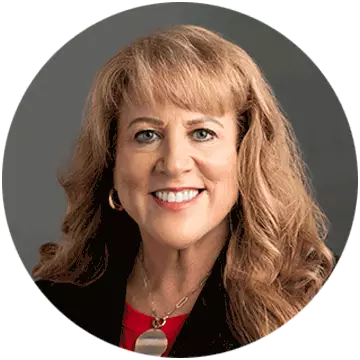
As dean of the University of Phoenix College of Education, Pamela Roggeman has spent over a decade in higher education teacher preparation in both the public and private sector. Her experience has included national partnerships that help to advance thought leadership in the field of education. Dr. Roggeman also serves as the President of the Arizona Educational Foundation’s Board of Directors.

This article has been vetted by University of Phoenix's editorial advisory committee.
Read more about our editorial process.