844-937-8679
 Login


Leadership lessons from alumnus Jim Bradfield

Listen on Spotify
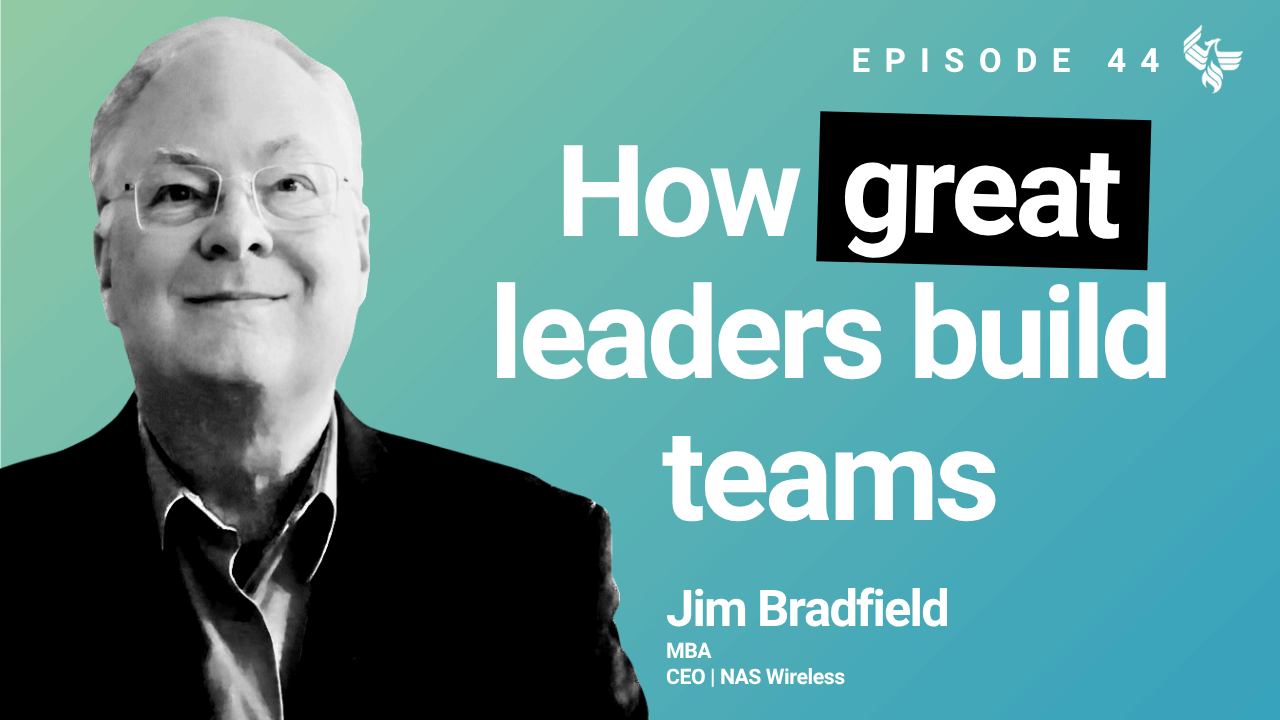
Leadership takes center stage as University of Phoenix MBA graduate Jim Bradfield shares lessons from a career spanning wireless communications, entrepreneurship, technology innovation, and education.
Chapters in this video:
00:44 Meet wireless technology CEO Jim Bradfield
07:09 A family history of wireless innovation
09:07 Why saying yes creates opportunity
13:04 Building NAS Wireless
14:26 Expanding internet access to rural communities
16:50 Why Jim earned an MBA
21:31 Growing a business with business strategy
27:07 Leadership lessons for navigating AI
29:00 The future of wireless and artificial intelligence
30:01 Where to connect with Jim Bradfield
31:12 Final leadership takeaways
Chapter 1: The First Cell Phones and a Family Legacy
Jim Bradfield (0:00)
My dad worked for the telephone company, and he was one of the guys who had the very first cell phones back in 1959. People don't know that's when that happened, but these things were giant.
They were a big thing in between the seats, and then they lived in the trunk. They had 200,000 subscribers back in '59, so that was a lot.
Jim Bradfield (0:24)
Most people don't even know. They think cell phones were invented in 1980, but these were car phones working on the cellular system.
Chapter 2: Meet Wireless Technology CEO Jim Bradfield
Host (0:44)
Welcome back to the Degrees of Success podcast. I am your host, Keith Chandler.
Today's guest is someone who has spent decades shaping the future of wireless communication, and today he is helping others understand it.
Jim Bradfield is the CEO and director of NAS Wireless, a nationally respected technology firm delivering mission-critical wireless solutions across healthcare, transportation, government, and security.
He is also a proud University of Phoenix alumnus, where he earned his MBA while actively leading complex organizations.
In this chapter of his journey, Jim has taken on a new role as an educator and host of a nationally recognized show, Everchanging Technology, where he breaks down innovation and helps business leaders navigate rapid change with confidence.
Jim's story spans family legacy, lifelong learning, and leadership at scale. Today, we're going to explore how education helped him evolve from CEO into educator.
Jim, welcome to Degrees of Success.
Jim Bradfield (1:40)
Thank you for having me. Appreciate it.
Host (1:49)
Anytime. Thanks for taking the time to chat with me today.
I want to start off first. As I've mentioned, I've been listening to some of your podcasts and interviews recently, and I know that you're a big music fan.
In fact, I was looking through your résumé a little bit, and I know in high school you listed musician. You had triathlete, actor, musician.
As a fellow musician, I'm curious to learn about your relationship with music. What do you do with music, and what was the inspiration for your musical interests?
Chapter 3: Music, Creativity, and Lifelong Passions
Jim Bradfield (2:20)
Interestingly enough, a former Beach Boy, who recently died a couple of years ago around Christmastime, and I kind of grew up together down in the San Jose area.
We knew each other and some of the same guys, so we got together now and again. I work with a lot of guys who are still active in the business.
I was pretty young back then, and they were a little older. Now they're in their 70s and 80s, so they're not as active as they could be.
We toured with a lot of those guys and backed up a lot of those guys.
Jim Bradfield (2:59)
My grandma knew some people, and she got me interviews over at Disney for walk-on parts and little parts here and there for TV shows.
That was pretty cool. I enjoyed that. It was a lot of fun, and it led to some bigger parts and other parts with different shows and a little bit of walk-on work with movies.
We do voiceovers now and varying degrees of TV and movies, but it's all pretty much uncredited and walk-on. I have an IMDb, but I don't update that very much.
Jim Bradfield (3:44)
We also record music with my grandkids, my daughter, and my grandkids.
We have a studio that you can actually see the door to behind me here.
Host (4:05)
You keep it nearby.
Jim Bradfield (4:05)
Yeah, we have a studio here, and the youngest one is 10. We do a lot of recording, and we put the best ones up on Facebook, typically.
That's what we still do. I love doing that, and it makes me happy. I get to do things I like to do, and I've got my grandkids doing it with me. That's just awesome.
Host (4:33)
What a wonderful thing to share with your family, especially your grandchildren.
Are you a singer? Are you a musician? Do you play any specific instruments?
Jim Bradfield (4:45)
With the other guys, the big guys, I was typically a backup singer. I sang harmony and all that. Occasionally I would do lead singing, depending on the song.
Now with the kids, of course, I do the lead singing and all the programming and that kind of stuff.
I used to play a nice Gibson guitar, a nice Les Paul guitar. At one point, my entire left arm became a metal left arm with just a little bit of bone.
I can't really do much anymore. I can't play guitar or anything, really. Just tambourine maybe, or something like that.
Host (5:47)
But you still have the joy of music in your life. We make adjustments as we get older, right?
You also mentioned that you sang backup. This is just a fun question, but what are your thoughts on karaoke, and do you have a go-to karaoke song whenever you get a microphone in front of you?
Jim Bradfield (6:04)
One of my favorite songs of all time that we did is "Rhythm of the Rain" by The Cascades.
I sang that a lot of different times, and that's one of my favorite things to sing.
Anything I can do with the kids is a great song. I really don't have any other special song.
Host (6:42)
As a music lover, it's hard to pick one in particular. I have that same sentiment.
You've mentioned a little bit about your family. You have a number of grandkids in your life that you're really involved with.
Speaking of family, you also have this really broad family history, and it's connected to what you do today professionally.
Your family goes back in the telecommunications industry over a hundred years. Tell me a little bit about your family history and how they got into the business.
Chapter 4: A Family History of Wireless Innovation
Jim Bradfield (7:13)
My great-great-great-grandfather, or however far back, in 1897 was a partner of Marconi Radio.
He developed wireless for the Titanic and a bunch of other things, including communications for marinas, ship-to-shore, and ship-to-ship.
The Titanic obviously hit that iceberg, but they were able to use his radio to let people know that they had hit an iceberg.
Typically, before that, you didn't have any way to let anybody know anything.
They radioed SOS, and people came out to help them. They were late, but at least they helped them.
Jim Bradfield (8:02)
So we started developing wireless in the family.
My dad worked for the telephone company, and he was one of the guys who had the very first cell phones back in 1959.
People don't know that's when that happened. These things were giant. They lived in the trunk, with a big piece between the seats.
They had 200,000 subscribers back in '59. Most people think cell phones were invented in 1980, but these were car phones working on the cellular system.
Jim Bradfield (8:50)
People would ask us, "Hey, we know these guys over at NASA, and they're having a problem with something. Can you help us?"
And we'd say, "Yeah, sure."
As I've said before in several different interviews, I was lying. I had no idea that I could do any of that. I just told them, "Yeah, I could do it."
Chapter 5: Why Saying Yes Creates Opportunity
Jim Bradfield (9:15)
I got together with teams of people, everybody I knew or could find who was technologically savvy.
And you know what? We actually figured out how to do things.
We put antennas and monitors in spacesuits. We worked on the landing gear at Edwards for the spaceships.
We worked on the E-ZPass and PrePass systems that you use when you go through bridges or toll systems for trucks.
Jim Bradfield (9:56)
We worked on all those things, and it was all a result of saying yes to somebody when I didn't know how to do it.
That was kind of the key to things. Don't just give up and stay in your sweet spot. Try to figure out how to expand and how to do excellent things.
Host (10:22)
In that process, did you ever have any hesitation about saying yes whenever people came to you with those sorts of issues?
Chapter 6: Leadership Through Collaboration
Jim Bradfield (10:34)
No. I never had any hesitation.
I knew that I could do it, and I knew I was able to find people who were doing it.
One of the biggest issues is that people think they have to be the smartest person in the room. That's not going to work for you because then you're limited by your own capabilities.
Jim Bradfield (10:50)
I get to know a whole lot of people. I meet people at trade shows, online, and through different webinars.
I get to understand their knowledge because there are things now that I don't know much about with all the new stuff coming out.
The biggest thing is making sure you understand who can do what for you and what they can actually do.
You don't need to know how it's done. You just need to know who can do it, and those are the people you want to participate with.
Host (11:30)
That's a very good piece of advice.
I'm curious if that's how your family business has operated throughout its entire existence in this industry.
Is that how you learned the ropes of being a leader in the industry?
Jim Bradfield (11:46)
Yes. Again, I would meet people, like the guy who invented RFID tagging.
He had this thing and didn't know what to do with it. He said, "Well, what can we do?"
I started thinking with a bunch of other guys. We'd sit on a ledge somewhere and put ideas together.
We said, "What about tagging for cattle?"
That was one of the biggest problems they had because cattle tagging used to involve an ear tag that was this big, and it wasn't very reliable.
Jim Bradfield (12:31)
So we developed how to do RFID tagging out in Colorado.
They sent me out there on a pack horse into the wilderness with my equipment, and I figured out how to design it and make it work.
Now RFID tagging is kind of a worldwide thing.
That's why you just don't give up. You say, "I'm going to think about this. Let me figure out some people I can work with."
And boom, that's what you do.
Chapter 7: Building NAS Wireless
Host (13:04)
You've been with NAS Wireless for about 40 years now? Was it 1985 when NAS was founded?
Jim Bradfield (13:12)
Yeah.
Host (13:13)
Was that an offshoot of the family business? What was the motivation for founding your business?
Jim Bradfield (13:21)
My dad said, "Hey, you need to get some training."
When I was about 22, I did a lot of training. They sent me to all kinds of schools in various states.
I spent probably three years getting training and another three years implementing the training I got.
Then we said it was time to start this company.
Jim Bradfield (13:44)
We started an initial company and a secondary company from his, and it went really well.
But I got rid of that and started NAS.
Basically, from 1997 on until today, we've been working in NAS Wireless all over the world.
Right now we're working with Koreans, the Japanese, in Mexico, and pretty much everywhere in the world.
Host (14:24)
That's fascinating.
Speaking of around the world, I was watching an interview you did back in 1997 with Leonard Nimoy.
It was based around bringing wireless networks to rural communities.
What was that time in your life like when you were making those impacts on communities, giving them access to information?
Chapter 8: Expanding Internet Access to Rural Communities
Jim Bradfield (14:53)
What was happening is that AT&T, because we work with AT&T a lot, said, "We have this thing called Last Mile, and we're getting paid to build out Last Mile for farms and rural places."
All those places you'd drive by with silos and everything, they didn't have internet access. They didn't have phones. They didn't have much of anything.
All we did was string a wire along their fence. Well, that's not all that special.
Jim Bradfield (15:24)
So we went out and helped them develop what they needed to provide internet access, phone access, and network access.
We spent months and months out in the boonies trying to figure out exactly what to do.
We came up with the plans, they adopted them, and it became their Last Mile approach.
Of course, they hired us to put it in and configure it.
Jim Bradfield (15:59)
We put in what were called MSPs. They're now called managed service providers, but back then there were ISPs and MSPs: internet service providers and managed service providers.
That's how it developed.
We set up clinics for everybody in rural towns, in hotels and hotel rooms, for people who wanted to put up ISP services.
That's developed into an amazing thing.
We worked with everybody to figure out what was best for them.
Host (16:48)
That's an amazing part of the journey.
I know around that time you were also a student at University of Phoenix, working to attain your MBA.
You were almost a decade, or more than a decade, into your professional career as a leader in the industry.
What was your inspiration and motivation for going back to school and getting your MBA?
Chapter 9: Why Jim Earned an MBA
Jim Bradfield (17:20)
I wanted to be the big man on campus in the business world.
Most guys didn't have MBAs back then, and most people weren't doctorates in business. They were doctors in the medical field or whatever, but not typically in business.
I really wanted to be the guy people looked at and said, "He has an MBA. This guy actually knows what he's talking about."
Jim Bradfield (17:54)
I did that, and I'll tell you, the University of Phoenix experience was probably one of the best things I've ever done.
It validated the fact that I could still study and still do things.
We did a lot of presentations, and that really helped me.
Just about everything was a presentation of your work, and people rated you.
Jim Bradfield (18:20)
Most people don't get in front of anybody anymore. It's all online, and they read something and do whatever. They're not actually doing presentations, even though it's online.
That was fantastic for me. It really helped develop my feeling of self-worth and my confidence in my ability to do things.
Host (18:56)
Thank you for sharing that.
Were there any gaps you were hoping education would fill for you in the process of your leadership journey?
Jim Bradfield (19:07)
Yes, because I was targeting high-level executives.
Those executives learned through hard knocks and a long time in their offices.
I wanted to be able to talk turkey with them.
I wanted to understand what ROI was, what their business goals were, what they were trying to reach, and how they were trying to do it.
Jim Bradfield (19:36)
That's another reason I wanted to take it.
Once I got out of there, I was able to talk with anybody. I could quote references, I could look them up, and I knew how to do it.
It worked out great. I was able to work with high-level personnel that most people can't work with.
Host (19:59)
It's always a good skill to have.
A lot of people don't consider those soft skills whenever they return to school or take on an educational experience, and the value those skills bring.
I'm curious how earning your MBA changed the way you approached leadership and strategy, either professionally or personally.
Chapter 10: How Education Shaped Leadership
Jim Bradfield (20:25)
We had training modules and all kinds of things you had to go through to understand how to be a leader and what was happening in those modules.
That was really important to me because I followed the outlines of the projects and the various outcomes.
I knew what to say to whom, how to say it, and how to position myself.
Jim Bradfield (20:55)
That's what I used.
I wrote up outlines for each of those things. We had executive summaries and overall summaries.
That was really good for me because I was able to get my writing and my ideas across to everybody.
That's what I used it for most.
Host (21:14)
Very nice example of practical application and how you take that into your everyday work.
I'm curious how education helped you scale both the company and your teams. Any insights into how it helped with that aspect?
Chapter 11: Growing a Business with Business Strategy
Jim Bradfield (21:31)
When you have to go for loans, or if you want to expand your business more than a crawl, you have to get loans and get somebody to actually speak to you.
If you don't know what you're talking about, you can't explain it well. You can't put the business case forward.
You can't talk about ROI, return on investment, numbers, and things like that.
Jim Bradfield (22:00)
If you can't do that, they're only going to give you a cursory 15-minute talk, and that's going to be it.
But if you can develop a presentation showing how something will benefit both them and you, that's different.
It means you'll be able to work with them in the future on very large projects and funding.
That's the kind of thing that really helped me.
Host (22:40)
Very nice.
I'd like to talk a little bit about leadership philosophy and something you call collective intelligence.
You talk about the power of collective intelligence and teamwork. How did education help shape that leadership philosophy?
Chapter 12: Collective Intelligence and Team Leadership
Jim Bradfield (22:54)
When we did projects at University of Phoenix, we had projects where you had to have a team, and you had to elect somebody who was going to be in charge.
You had to make sure you developed the leadership skills to do that. Otherwise, nobody's going to listen to you. They're all going to do it on their own, and you're all going to get Bs.
That's the way things go if you don't have a leader.
Jim Bradfield (23:21)
University of Phoenix really helped me develop leadership skills because of all those different things we had to do.
I learned what worked and what didn't work, and I applied all that to my leadership.
A lot of times people just go do things, and nobody likes that. It's more collaborative.
Jim Bradfield (23:44)
Basically, you take everybody's collective IQ.
This person can do this, this lady can do that, this guy can do this. These are their skills.
That's why we're a group. We get everybody working together, and it makes more than just each person by themselves.
It creates a giant collaboration, and it works so much better than doing things one at a time.
Host (24:20)
How do you balance being an expert while also empowering others? Where do you find that balance?
Jim Bradfield (24:29)
The main thing people should understand is that they need to listen.
They need to understand and articulate what we're going after.
Then say, "Okay, let's listen to your recommendations. Let's talk about them."
Don't interrupt them. Don't make them wrong. Give them what they need to feel safe providing the information they want to recommend.
Jim Bradfield (25:04)
Then we all get together and whiteboard it. We play with it and go through it.
That's how the collective thing works. Collaboration is so good when you do that.
Don't be the smartest guy in the room. Be the smartest guy who knows the smartest guys.
Jim Bradfield (25:20)
I know the technical stuff. I read up on it. I have to be a little fluent in it, but I can't be fluent in everything.
That's where the other people come in, who may not be able to communicate well, but they sure know what they're doing.
Host (25:45)
It's great that you give them a voice, no matter what that voice sounds like or how that opinion comes out.
It's always a place to be heard, and that's a great leadership quality to have.
I know you're presently the host of Everchanging Technology. What was the motivation for wanting to do something like that at this stage in your life?
Chapter 13: Helping Others Understand Technology
Jim Bradfield (26:09)
I want to have a very broad experience with people about very different things that are technically based.
Just about anything people do can be technically based.
AI is a big deal right now, so that's really what we're trying to go for.
I want to make sure we get those things out to people and let them know that if they have questions, they can always contact me.
People do that all the time.
Host (26:38)
As someone who often finds themselves overwhelmed, I don't want to say afraid, but overwhelmed by the level at which technology can change and evolve, and not necessarily having the ability to keep up with it, what advice do you give people?
Whether professionally or a layperson like me, how should we approach new technology when we're feeling overwhelmed?
Chapter 14: Leadership Lessons for Navigating AI
Jim Bradfield (27:06)
The biggest thing I tell everybody is, first of all, don't be afraid.
I know it's new, but don't be afraid. Go ahead and give it a try.
Get as much online training as you can. Get as much schooling as you can about it. Talk to as many people as you can.
Listen to YouTube guys and people who actually give you training on it.
Go to a school like the University of Phoenix. It's a really big deal now.
Jim Bradfield (27:32)
Make sure you understand the limitations of it.
There are negative limitations. If you only use chat, maybe you've made a mistake and maybe it's repeated that mistake.
Same with AI. It's garbage in, garbage out.
Maybe you've got a giant pile of garbage that AI developed for you, but none of it's accurate or real.
Jim Bradfield (28:06)
You need to spend enough time understanding what you're trying to develop.
Once you go through the development, go back through it again. Check it again. Make sure it's right. Make sure it's what you wanted.
Add whatever little piece is needed, because remember, it's relying upon you.
It's not just going to do it for you. You have to apply your learning and your skills.
When you do that, it's really powerful.
Host (28:37)
That's really good advice.
You've been hosting Everchanging Technology for a little over a year now.
I'm curious what you have in store for the future and whether there are any guests you'd ideally like to interview.
Who really interests you in the tech world as a dream guest for your show?
Chapter 15: The Future of Wireless and Artificial Intelligence
Jim Bradfield (28:59)
There's a lot going on.
Our primary focus has been wireless, obviously from 1897 on.
What I want to do is understand and have people bring in information about what's happening with the newest versions of Wi-Fi.
There's all kinds of new Wi-Fi technology going on out there, and there's a whole bunch of geeks working on this stuff. They sit in the background and really try to make things happen.
Jim Bradfield (29:35)
I want to be able to show how that applies to working with AI.
There are so many new things with AI coming out.
Wireless and AI, and the development of AI technologies, are the two things I really want to look at most in the future.
Chapter 16: Where to Connect with Jim Bradfield
Host (30:01)
Finally, Jim, one thing I've always been impressed with as I've listened to your interviews is that you're always willing to share your contact information with listeners.
I'd like to give you that opportunity now for anyone interested in contacting you to learn more about technology or any of the things you do.
Jim Bradfield (30:18)
Absolutely. You can call me directly. I will answer the phone, and if not, leave a voicemail and I'll get back to you.
You can also look at our website at www.naswireless.com.
My TV show is on NOW Media, so you can look at nowmedia.tv, Everchanging Technology, and my contact information is there as well.
Anybody who wants or needs some help, or a little bit of mentoring, just let me know.
Host (31:01)
Thank you so much for sharing that information, Jim, and thank you for sharing your journey and your story with us today on Degrees of Success.
Jim Bradfield (31:08)
Thank you very much for having me.
Chapter 17: Final Leadership Takeaways
Host (31:11)
Jim Bradfield, thank you for sharing your journey with us today on Degrees of Success.
Your story is a powerful reminder that success isn't about standing still. It's about staying curious, continuing to learn, and being willing to evolve.
From leading mission-critical technology projects to educating others as the host of Everchanging Technology, your journey shows what's possible when experience and education work together.
If today's episode resonated with you, be sure to like, comment, and subscribe, and share this conversation with someone navigating change in their career or life.
I'm your host, Keith Chandler, and this has been Degrees of Success, where education transforms lives and every journey matters.
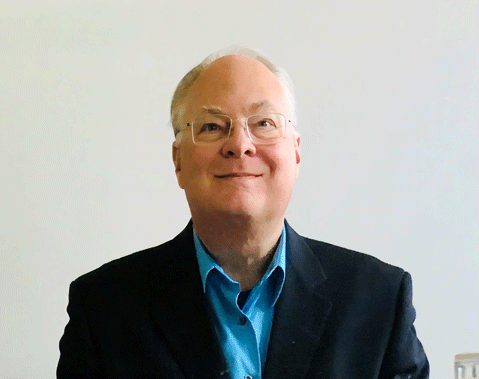
“Most most guys didn't have um MBAs back then…So I said, 'Yeah, I I really would like to be the guy that people looked at and said, he he has an MBA. This guy actually knows what he's talking about. And so, you know, I did that and I'll tell you that University of Phoenix experience was probably one of the best things I've ever done. It validated the fact that I could still study and still do things.”
About the Degrees of Success® Podcast
The Degrees of Success podcast by University of Phoenix brings you inspiring stories of UOPX alumni who have transformed their careers through education. Each episode highlights personal journeys of overcoming obstacles, achieving professional milestones and using education to unlock new opportunities. Whether you’re looking for motivation, career advice or guidance on how education can propel you forward, these alumni stories offer invaluable insights to help you succeed.
Watch all episodes of Degrees of Success on YouTube.
Listen to the Degrees of Success® Podcast