


 844-937-8679
 Login
Login


Coping strategies for online students


Written by Elizabeth Exline

Reviewed by Christina Neider, EdD, Associate Provost of Colleges
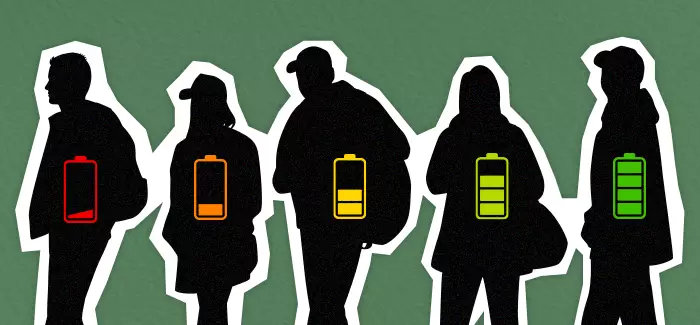
Going back to school as an adult brings its own set of challenges. Fortunately, there are ways for online students to bolster emotional well-being while pursuing their educational goals.
What to do when online students feel isolated
Kim Keating, MA, LMFT, understands both the challenges facing adult students and the value of effective coping strategies. She knows this firsthand because she returned to school for her master’s degree several years after completing her bachelor’s. She also knows it as an instructor. As a lead faculty area chair with the College of Social and Behavioral Sciences at University of Phoenix, Keating often works with students who are going back to school while holding down a job and raising a family.
One of the first challenges Keating sees among adult online students is the sense of isolation. The irony of course is that many of these students are constantly connected. But they can lack relationships with others who know what they're managing. Children, spouses, relatives and coworkers, after all, often lead busy lives, but only the student knows what it's like to lead a busy life and go back to higher education.
Coping strategies can include intentional connection
Students considering coping strategies can start by making it a priority to connect, even if only virtually.
Schedules are busy. It’s hard to make time for another call, to commit to switching on the camera. But, Keating says, it’s worth it.
Like eating vegetables when the menu has cake, taking the time to meet your peers and instructors outside of required interaction can seem like one more thing to do, but it can also yield feel-good benefits for online students.
Putting herself in an online student’s shoes, Keating says: “Even though my schedule is really busy, I can hop on for maybe 15 minutes or half an hour just to meet with my peers and my instructor and make that face-to-face connection. Then when I see them in the online discussion, I have a vision of who they are, and it’s easier for me to connect.”
So, if your instructor offers a meet-up time, or if your classmates arrange a virtual meeting to get to know one another, prioritize making an appearance.
Whtat to do when suffering imposter syndrome
One branch of the isolation tree for online students is imposter syndrome, that feeling of not belonging or being unequal to the task at hand.
Keating knows the syndrome well. “I had taken eight years off in between getting my undergraduate degree and going for my graduate work,” she says. “It was just so awkward to be back in the school environment again.”
When online students doubt their abilities or qualifications, it can stymie both participation and progress.
“Those negative beliefs can undermine an online student’s self-confidence and sense of well-being,” she adds.
Coping strategies can include staying focused
Students should be aware these feelings can crop up, so it can help to build connections with peers who can validate one's concerns and legitimacy. Staying focused on one's goals in going back to school can help too.
“Self-doubt is a normal feeling, especially when adult learners are returning to school as online students after a hiatus,” Keating says.
Coping strategies to push through it include revisiting one's reasons for going back to school. Keeping that motivation front and center will help students quash self-doubt or at least ignore it long enough to gain some traction in their educational journey. After all, nothing builds confidence like success.
What to do when facing burnout
“There’s this pressure to succeed academically while juggling multiple roles and responsibilities,” Keating says of working adult online students. “That can lead to stress and anxiety and burnout.”
Coping strategies can include building a structured schedule
Just as the antidote to chaos is structure, the antidote to overwhelm for online students is a schedule.
“For instance, after work and family, from 8 to 9 p.m., [you can] spend an hour doing your reading,” Keating says. “Or while you’re eating your lunch, [you can] to do some schoolwork.”
Building schoolwork into your daily schedule means that you can ensure you’ve set aside enough time for everything, and you don’t leave schoolwork to the last minute.
For example, skipping a reading one night to attend your child’s band concert is fine if you have time built in to make it up the rest of the week. If that concert evening was the only time you had allotted to schoolwork all week, however, the situation becomes more dire.
A pro tip for coping strategies is for online students? Preview the week’s projects and assignments as soon as you get them. If you need extra time for something, it’s easier to build it in at the start of the week rather than the day before it’s due.
Taking the whole week to review, learn and process information ensures timely completion and it can also potentially improve retention.
“If I let material kind of marinate over a few days, if I think about it and I can post questions about specific things that I don’t understand, that not only benefits other students who may have the same questions, but it’s also another opportunity to feel engaged and less isolated,” Keating says.
Coping strategies are easier in a program that supports online students
At the end of the day, online students at Univeristy of Phoenix have coping strategies to consider, such as university resources. They also have instructors and advisors who care. The University’s early alert system helps pinpoint students who might be struggling so that academic advisors can reach out to offer tailored support.
Resources for University of Phoenix students include the Center for Writing Excellence, which offers compositional tools and resources, and the Center for Mathematics Excellence, which offers live math tutoring and ways to refresh your skills.
The University also offers a sea of resources in its library, as well as librarians who can help online students track down information. A browser extension called Lean Library can alert you to resources related to your internet searches.
“I think academic advisors can help with encouraging online students to use the resources, and they can emphasize the importance of perseverance, problem-solving and learning from setbacks, because setbacks can happen,” Keating says.
“The sense of perseverance is so important in achieving that degree that’s been a dream,” she adds.

Kim Keating, MA, LMFT
Lead Faculty Area Chair, College of Social and Behavioral Sciences, University of Phoenix
“A lack of face-to-face interaction with peers and instructors can lead to those feelings of isolation and loneliness for online students, and this can negatively impact well-being and mental health,” Keating says.
Read more articles like this:




ABOUT THE AUTHOR
Elizabeth Exline has been telling stories ever since she won a writing contest in third grade. She's covered design and architecture, travel, lifestyle content and a host of other topics for national, regional, local and brand publications. Additionally, she's worked in content development for Marriott International and manuscript development for a variety of authors.
ABOUT THE REVIEWER
Christina Neider is the associate provost of colleges and former dean of the University of Phoenix College of Social and Behavioral Sciences. Neider’s career spans more than 30 years in academia, healthcare and the U.S. Air Force. She has held several academic leadership roles at University of Phoenix, and she is the Vice President of membership for the Arizona Chapter of the Healthcare Information and Management Systems Society.

This article has been vetted by University of Phoenix's editorial advisory committee.
Read more about our editorial process.