# Skills development: Identify and address workforce skills gaps

## Organizations can support performance by identifying workforce skills gaps and aligning development to real work and business priorities.

Skill gaps often emerge when workforce development is not aligned to real job demands. Structured skills development can help leaders identify gaps, prioritize capability-building and improve workforce execution.

[Address workforce skills gaps](https://www.phoenix.edu/workforce-solutions/identify-skill-gaps.html)
## Understand workforce skills gaps

Organizations identify workforce skill gaps by comparing current employee capabilities to the skills required for role performance. Effective analysis requires data that reflects applied skills rather than training activity alone.

- [The Hidden Cost of Fragmented Skills Signals](/workforce-solutions/workforce-resources/posts/skills-development/the-hidden-cost-of-fragmented-skills-signals) | April 29, 2026 • 8 minutes

- [Get Started Upskilling And Reskilling](/workforce-solutions/workforce-resources/posts/skills-development/get-started-upskilling-and-reskilling) | February 16, 2026 • 5 minutes

---

## Evaluate skills development strategies

Organizations address skill gaps by aligning development to real work and business priorities. Effective approaches focus on building applied capability rather than delivering standalone training.

- [Prepare Your Workforce for the Future](/workforce-solutions/workforce-resources/posts/skills-development/how-to-prepare-your-workforce-for-the-future) | November 10, 2025 • 5 minutes

- [Upskilling Employees Can Benefit Business](/workforce-solutions/workforce-resources/posts/skills-development/how-upskilling-employees-can-benefit-a-business) | November 12, 2025 • 5 minutes

- [How To Use A Skills Gap Analysis](/workforce-solutions/workforce-resources/posts/skills-development/how-to-use-a-skills-gap-analysis-in-the-workplace) | January 05, 2026 • 5 minutes

---

## Apply skills development strategies

After identifying skill gaps, organizations apply structured development strategies to build capability and improve workforce performance. These strategies align learning to real-world application and measurable outcomes.

### How to identify and fill skills gaps (PDF)

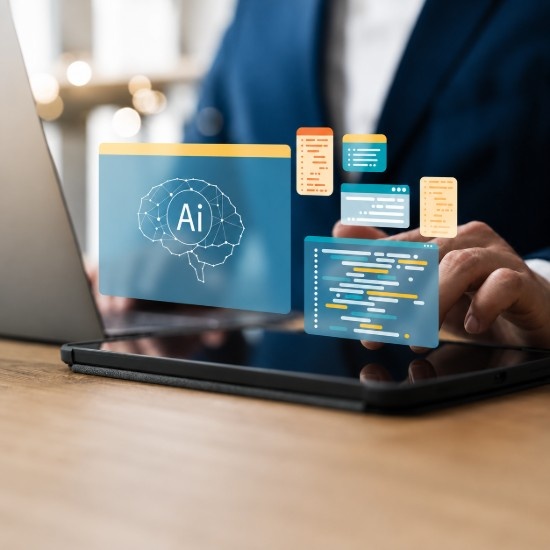
### Bridging skills gaps with AI and scenario-based learning (PDF)

### Addressing employee skills gaps (PDF)

### Skills gap performance brief (PDF)

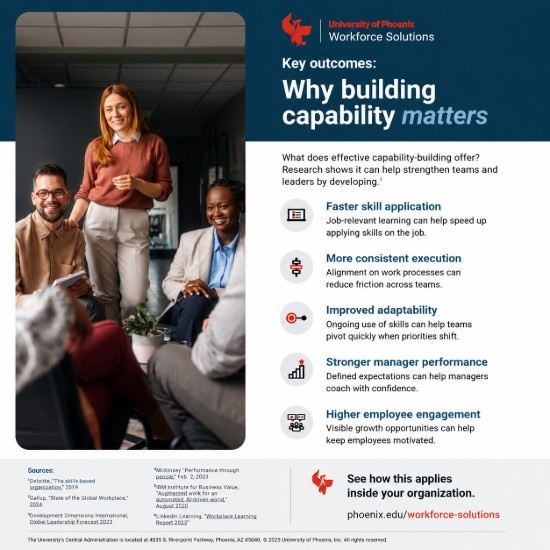
### Why building capability matters (PDF)

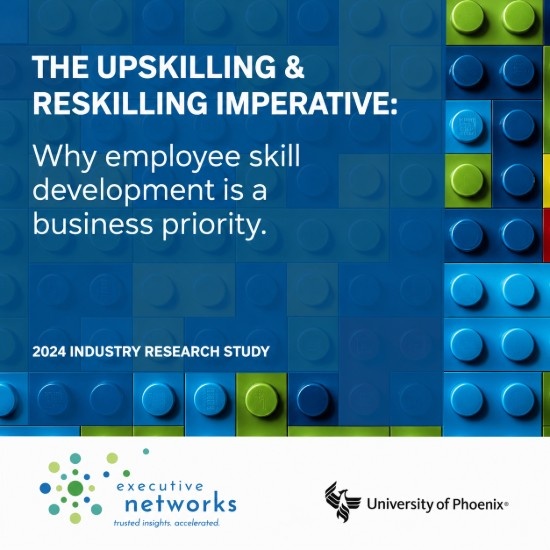
### Research study: The upskilling and reskilling imperative  (PDF)

---

## See how skills development works

These examples show how organizations implement skills development approaches in practice, including how leaders align learning, capability and business outcomes.
## Workforce Adaptability | University of Phoenix Workforce Solutions

[Embedded content](https://www.youtube.com/embed/G0R-xoyiuxo?rel=0&controls=1&fs=0&modestbranding=1&cc_load_policy=1)

×  
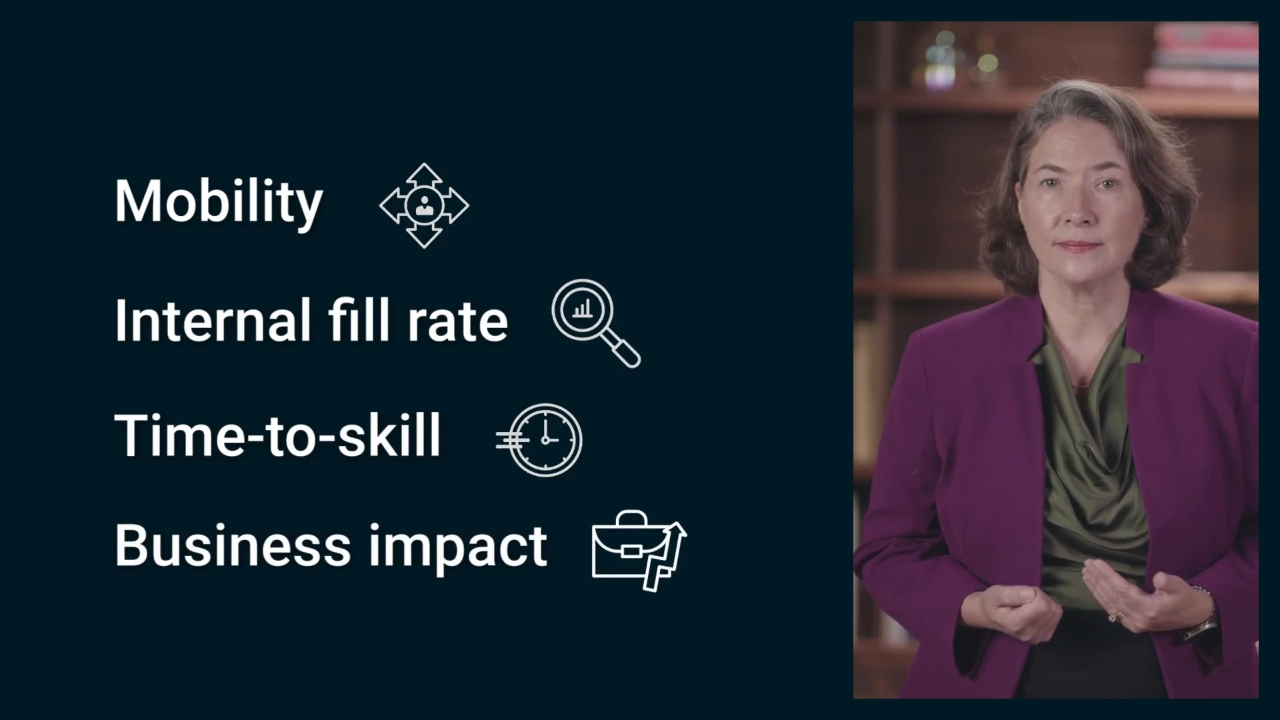
Workforce development has made its way to the boardroom. Why? Because we understand that it is a business driver. Turnover, employee stress, and skills shortages aren't people problems. They're business problems that hit revenue, risk, and reputation. We have to reframe workforce development as an ecosystem for adaptability, not fragmented development efforts. Here are three moves we can make. First, tie skills to strategy. Name the critical capabilities for your next 12 to 18 months. Second, build learning into the flow of work. Short, stackable development pathways, role-based projects, manager-led coaching, and practical training employees can apply immediately. Third, plan for the medium term. C-suite leaders should set a clear roadmap, establish priorities, and track outcomes like mobility, internal fill rate, time to skill, and business impact. In a volatile market, your advantage is how fast your people adapt. Treat workforce development as an enterprise system, and you'll reduce turnover, lower stress by giving people clarity and growth, and address skills gaps before they become business gaps. That's how workforce development becomes a growth engine.
### How leaders drive workforce capability as a business system
## Adaptable Skills Solutions | University of Phoenix Workforce Solutions

[Embedded content](https://www.youtube.com/embed/nXJKrJWybWg?rel=0&controls=1&fs=0&modestbranding=1&cc_load_policy=1)

×  
It's time to rethink how your people build the skills they need. Backed by decades of experience in online adult learning. Our adaptable skills solutions are designed to support the demands of the changing workplace. From addressing skills gaps to developing future leaders, we can help your people build skills for what's next. Explore our tailored, flexible, adaptable skills solutions to help you harness the power of a skilled workforce. Build the workforce you need for the work ahead with University of Phoenix.
### How adaptable skills solutions support workforce capability 

---

## See real-world outcomes

Case studies demonstrate how organizations close skills gaps, improve workforce performance and create pathways for employee growth through structured development strategies.
### Wabash Case Study (PDF)

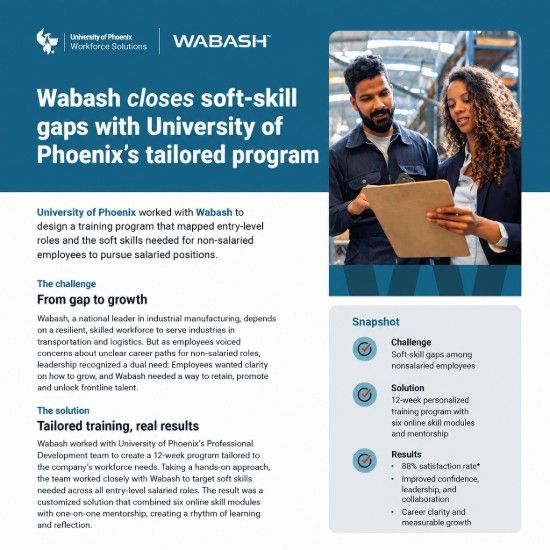
See how Wabash used a tailored professional development program to close soft skills gaps, build employee confidence and create clear pathways into salaried roles.

---

## Tools and frameworks

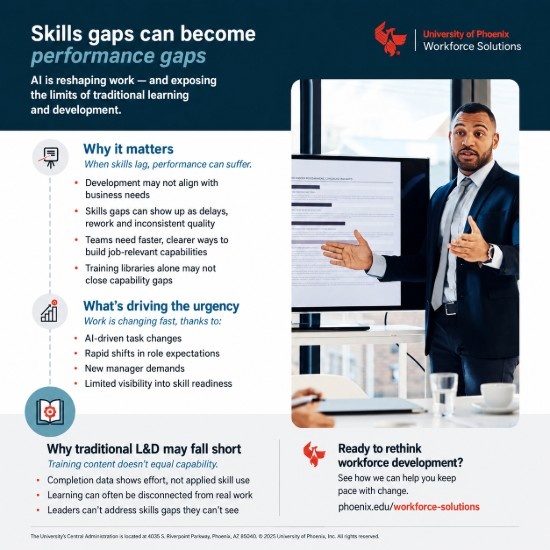
Tools and frameworks help organizations operationalize skills development by providing repeatable methods to identify gaps, align stakeholders and reinforce skill building in daily work.
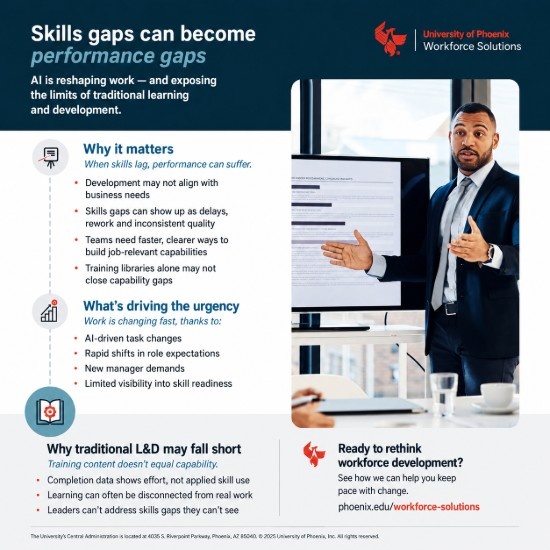
### Skills gaps can become performance gaps (PDF)

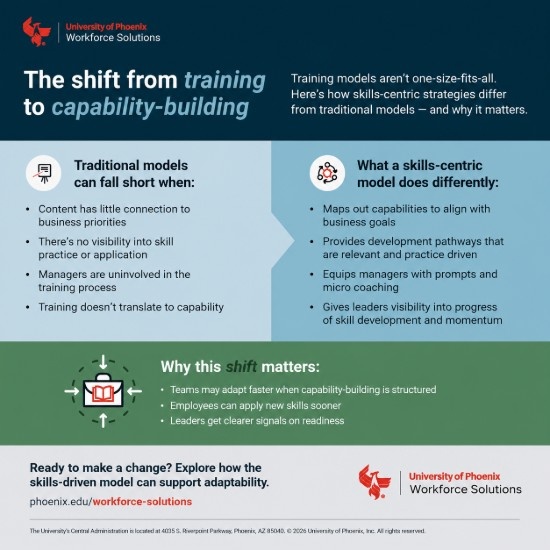
### The shift from training to capability building (PDF)

### Why continuous learning is critical to closing skills gaps (PDF)

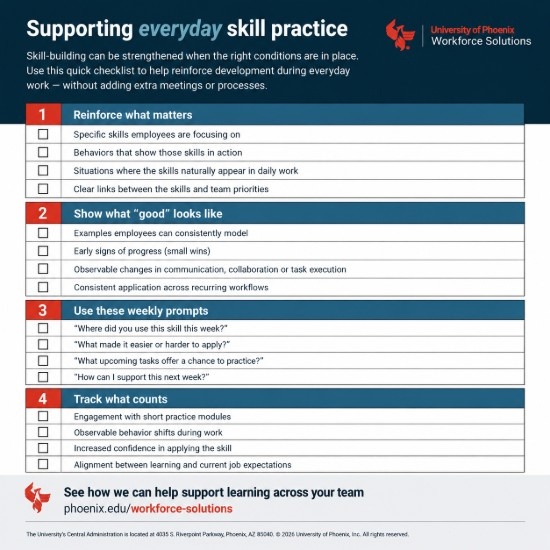
### Checklist: Supporting everyday skill practice (PDF)

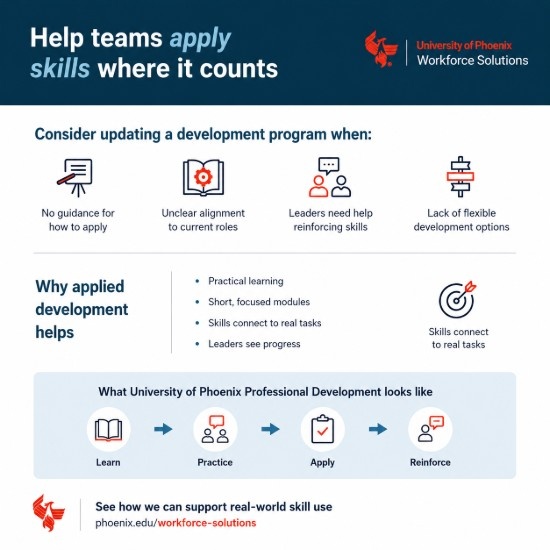
### Help teams apply skills where it counts (PDF)

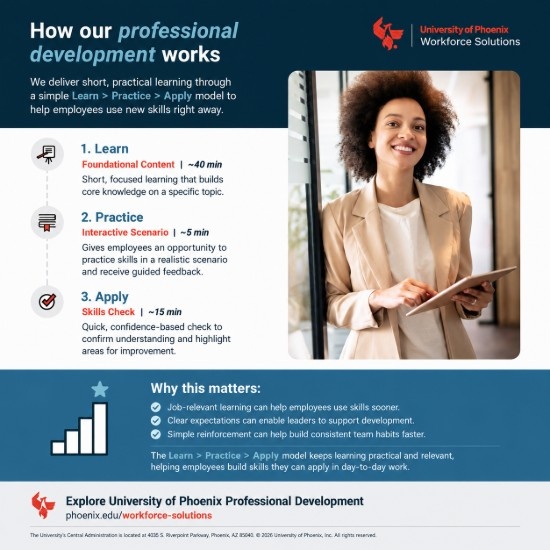
### How our professional development works (PDF)

---

## Frequently asked questions about skills gaps

These frequently asked questions provide clear, concise answers about workforce skills gaps, development strategies and how organizations improve workforce performance.

Expand AllCollapse All
### What is a workforce skills gap?

A workforce skills gap is the difference between the skills employees have and the skills needed to perform their jobs effectively.

### How do organizations identify skills gaps?

Organizations can identify skills gaps through performance reviews, skills assessments, employee feedback, workforce data, and AI-powered skills intelligence helps analyze employee capabilities and identify development needs.

### Why do skills gaps impact performance?

Skills gaps can reduce productivity, lower work quality, and make it harder for employees to meet organizational goals. 

### How can organizations close skills gaps?

Organizations can close skills gaps by offering employee training, mentoring, upskilling, and other professional development opportunities. 

### How does AI support skills development?

AI can support skills development by identifying skill gaps, personalizing learning, and recommending training based on employee needs.

### Address the workforce skills gaps impacting performance and build capabilities aligned to your business needs. 

[Address workforce skills gaps](https://www.phoenix.edu/workforce-solutions/identify-skill-gaps.html)