


 844-937-8679
 Login
Login


Fear and Leadership Research Stream
Advancing fear literacy as a pathway to healthy leadership


Elevating Scholarly Insights for Everyday Execution
Led by Senior Fellows Dr. Alfreda Goods and Dr. Lisa Langford
An official Researcher-led iniative within the Center for Leadership and Entrepreneurial Research (CLER)
Welcome to the Fear and Leadership Research Stream
The Fear and Leadership Research Stream is a faculty-led initiative within the CLER research center that examines a pivotal question most leadership scholarship overlooks: how leaders experience, interpret, and respond to fear and how that response shapes broader trust, psychological safety, decision-making, and organizational health. Its central contribution, fear literacy, seeks to advances the broader Healthy Leadership Initiative within CLER by naming the emotional mechanism through which healthy, or unhealthy, leadership emerges under circumstances of uncertainty and/or perceived threat.
The stream is our naming convention and open invitation for other researchers to join our focused initiative. The initiative provides the discourse and further examination through practitioner-informed scholarship, applied research, professional engagement, and public conversation. Through leader interviews, white papers, short surveys, podcast conversations, microlearning demonstrations, and partner collaborations, this work will explore how fear may be wielded as a weapon or interpreted as a signal that has the power to reshape leadership, ethical decision-making, alongside the cultures leaders may build.
This research stream also supports the College of Doctoral Studies broader mission to advance applied, career-relevant scholarship at the intersection of leadership, human development, and organizational health.
What is the Fear and Leadership Research Stream?
The Fear and Leadership Research Stream is an applied research initiative focused on a crucial but under-studied dimension of leadership: fear. Leadership scholarship has long emphasized strategy, communication, and team development while treating fear as incompatible with the perception of a leader. Yet in an era defined by volatility, uncertainty, complexity, and ambiguity (VUCA), the consequences of overlooking fear are profound.
The stream, as we refer to this initiative, studies the pneomenon of fear as a contributory mechanism, an inevitable condition of leadership, and examines its complicated duality. Left unexamined, fear drives control: micromanagement, intimidation, and guarded communication that can devolve and erode psychological safety, damage trust, and diminish morale, creativity, and overall performance. Interpreted with awareness and ethical intent, that same fear becomes a signal, and more importantly, a catalyst for the possibility of growth, resilience, and more deliberate, transparent decision-making.
At the center of this work is the emerging construct of fear literacy: how leaders recognize, interpret, regulate, and respond to fear under conditions of uncertainty and perceived threat. Framed as a healthy-leadership capability, fear literacy helps explain how leaders transform experiences of fear into either adaptive, relationally grounded behavior or how it cascades into defensive, psychologically constraining responses. The "stream" grounds this construct in authentic leadership comprised by self-reflection, relational transparency, balanced processing, and an internalized moral perspective as a guiding pathway through which leaders acknowledge and can become mindfully aware of fear without being driven by it.
Our Current Areas of Interest
The following are explorative areas in which our research stream is extremely interested in further understanding:
- Fear literacy: how leaders recognize, interpret, regulate, and respond to fear
- The duality of fear in leadership - control versus catalyst
- Fear literacy as a capability within healthy leadership
- Authentic leadership as a framework for navigating fear
- Psychological safety, voice, and the freedom to speak up
- Emotional regulation through self-reflection, ethical decision-making, and courage under uncertainty
- Leading through VUCA conditions, change, and perceived threat
Research and Scholarship
Founding essay. The stream is anchored by the founding theoretical essay by Dr. Alfreda Goods and Dr. Lisa Langford, published in Phoenix Scholar™, How Authentic Leaders Confront Fear and Build Trust During Workplace Crisis, which distinguishes fear from anxiety, examines the duality of fear in leadership, and argues that authentic leadership provides a framework for constructively navigating fear through courage, perseverance, and resilience—traits essential for sound decision-making and ethical leadership. The article positions authentic leadership as a pathway through which leaders may channel fear toward growth, creativity, and relational trust rather than use fear as a tool of control.
[How Authentic Leaders Confront Fear and Build Trust During Workplace Crisis]
Fear literacy theory. Building on that foundation, Drs. Goods and Langford are developing a constructivist grounded theory of fear literacy — a theory explaining how leaders interpret and respond to fear, and how those interpretive and behavioral processes become linked to healthy or unhealthy leadership outcomes. This work extends the Healthy Leadership Initiative by illuminating the emotional mechanisms through which trust, ethics, and psychological safety are built or eroded under pressure.
Who is it for?
This research stream is designed for scholar-practitioners, organizational leaders, managers, coaches, consultants, people and HR leaders, faculty and doctoral researchers, students, and organizational partners interested in how fear shapes leadership, and how fear literacy and authentic leadership can be cultivated.
- Leaders and managers navigating fear, risk, and high-stakes decisions
- Coaches and consultants helping clients lead authentically through uncertainty
- People and HR leaders building psychologically safe cultures
- Faculty and doctoral scholars researching fear, courage, and authentic leadership
- Organizational leaders guiding teams through VUCA conditions and change
- Community and industry partners interested in practitioner-informed research
Research and Engagement Pathways
There are many ways to join our stream, here are a few examples.
Leader Conversations on Fear. Structured conversations with leaders about the fears that shape their work — what they are afraid of, how it shows up, and how they interpret and move through it.
White Paper Pipeline. Applied white papers extending the founding essay and the fear-literacy theory — fear-based versus authentic leadership, psychological safety, emotional regulation, and organizational trust.
Leadership Pulse: Fear at Work. Short-form surveys capturing where fear lives in organizations and how leaders respond, generating insight reports and practitioner briefs.
Podcast & Microlearning. Candid leader conversations and short learning examples on naming fear, building psychological safety, and leading authentically through uncertainty.
Future development may include a Fear and Leadership Case Lab, a public case library, a workshop series, and partner-based research projects.
Ready to share your story of fear and leadership?
Are you a leader, manager, coach, or consultant who has faced fear in your work — and found a way to lead through it with courage and authenticity? The Fear and Leadership Research Stream invites leaders to contribute through interviews, brief surveys, LinkedIn discussions, white-paper collaborations, podcast conversations, or applied case examples.
An Invitation
We welcome insights, ideas on potential related topics, and constructive relationships as researchers endeavoring into this phenomenon. Please feel free to connect with us at the buttons below.
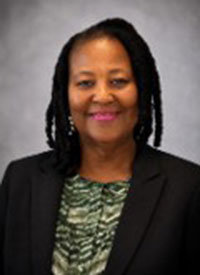
Dr. Lisa Langford
Dr. Lisa Langford is a Senior Fellow with CLER and a native of New Orleans, Louisiana. She holds a Master of Science in Organization and Leadership from Pfeiffer University and a Doctorate of Management from the University of Phoenix. A Senior Project Manager with the federal government in Washington, DC, she brings 21 years of service in the Navy and Naval Reserves, along with a deep commitment to mentoring young adults and strengthening her community.Dr. Lisa Langford is a Senior Fellow with CLER and a native of New Orleans, Louisiana. She holds a Master of Science in Organization and Leadership from Pfeiffer University and a Doctorate of Management from the University of Phoenix. A Senior Project Manager with the federal government in Washington, DC, she brings 21 years of service in the Navy and Naval Reserves, along with a deep commitment to mentoring young adults and strengthening her community.
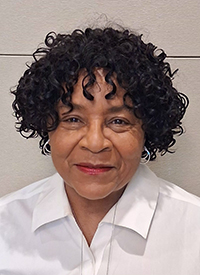
Dr. Alfreda Goods
Dr. Alfreda Goods is a Senior Fellow with CLER and a veteran who holds a Doctor of Management from the University of Phoenix. She brings over 18 years of corporate experience in the Electronic Funds Transfer industry and more than 20 years of teaching, and currently serves as a doctoral dissertation chair. Her research centers on ethical leadership, organizational change, and decision-making under uncertainty.